
Custom Shopping Bags vs Plain Bags: Cost, Brand ROI & Buying Decision
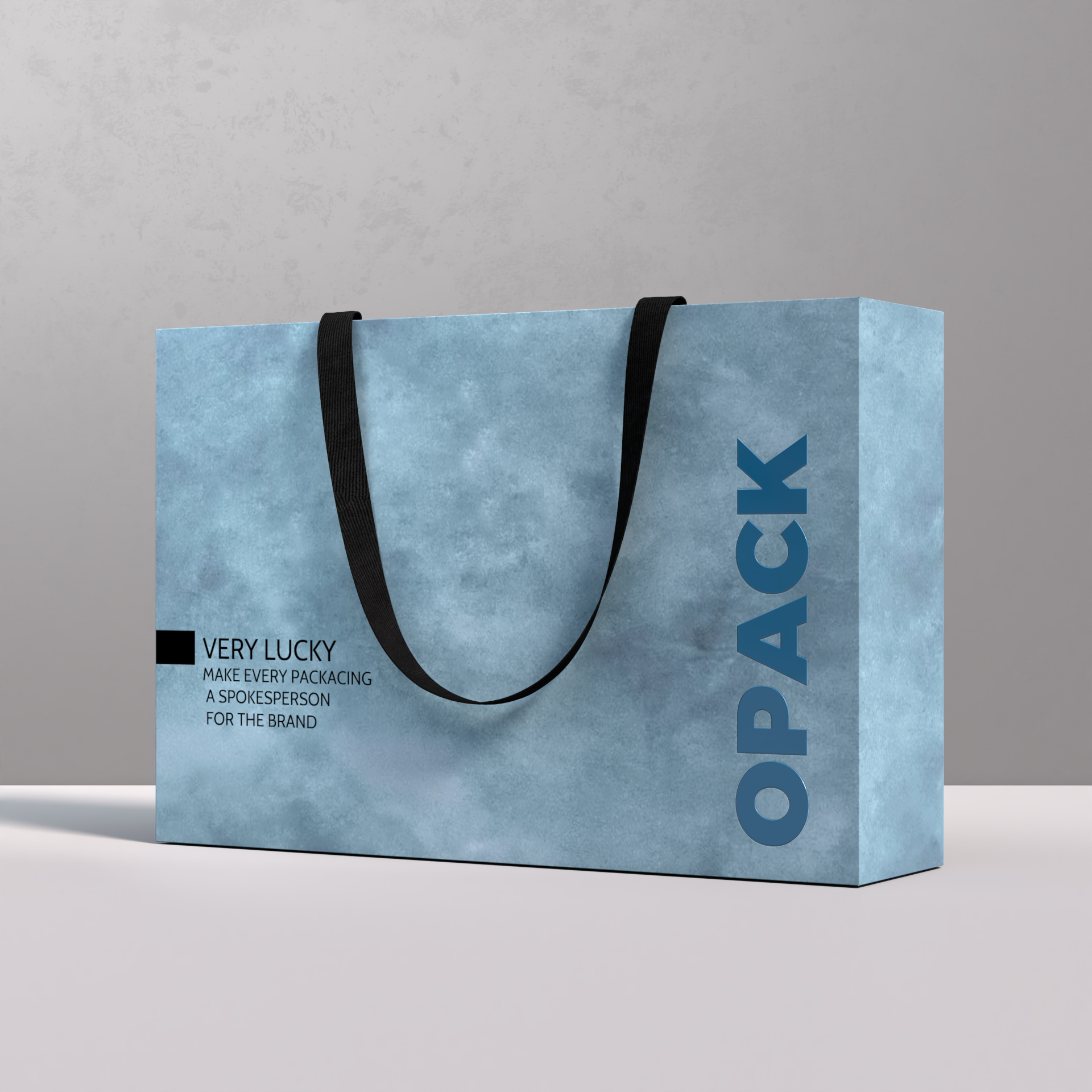
Custom printed shopping bags are a brand touchpoint that travels beyond the checkout counter.
Custom Shopping Bags vs Plain Bags: Cost, Brand ROI & Buying Decision
If your business is evaluating packaging for retail, e-commerce, or gifting, the final choice is often between plain stock bags and custom shopping bags. The commercial difference comes down to a trade-off: custom paper shopping bags cost roughly 3%–10% more up front, yet they are associated with 20%–30% higher repeat purchase rates and measurable improvements in referrals, satisfaction, and social sharing. This article compares the two options across cost, brand impact, performance, and buyer decision criteria, and helps you judge when the investment in custom printed paper bags with logo is justified.
This is a decision-stage guide, not a general overview. Because Opack is an experienced custom packaging manufacturer, we include verified production and quality-control facts where they help you make a more confident supplier decision. Where a figure is specific to our internal testing or a verified third-party market data source, that source is named.
Problem Definition: Why the Custom vs Plain Shopping Bag Decision Is Hard
A procurement or branding team rarely struggles because one bag is obviously better. The problem is that custom printed shopping bags and plain bags serve different jobs, and the value of the custom option is not always visible on a unit-cost comparison sheet.
Plain shopping bags may be supplied by multiple local vendors with similar prices and unremarkable shelf impact. Custom paper shopping bags with logo require decisions on material grade, printing method, handle type, size, proofing, and lead time. That extra decision load can push buyers toward the lower-risk, lower-cost option even when their brand goals point the other way.
Yet the data shows that the cost gap is narrower than many buyers assume. Industry and internal comparison data from the custom packaging sector indicate a 3%–10% higher initial cost for the custom option, while the brand-side effects include higher repeat purchase rates and a more memorable unboxing experience. In short, the core challenge is measuring the custom bag against lifetime brand value rather than against the lowest possible bag price.
Industry Background: A Market Moving Toward Branded, Sustainable Paper Packaging
Paper bags are not a commodity category only. Global third-party research puts the custom printing segment of paper bags at USD 2.78 billion in 2024, projected to grow at a 13.9% CAGR through 2030 (Grand View Research). The broader paper bags market was estimated at USD 6.06 billion in 2024 and is expected to reach USD 7.81 billion by 2029 (MarketsandMarkets).
China plays a central role in this supply chain as the leading exporter of paper sacks and bags, with exports of approximately USD 1.91 billion in 2023 (UN Comtrade / WITS). Asia Pacific is the largest paper bag market, representing over 36.5% of global share in 2025 (IMARC Group). This explains why international retailers, apparel brands, cosmetics companies, and gift brands commonly source custom shopping bags from Asian manufacturers.
Sustainability preferences have also reshaped the category. Brown kraft paper remains the dominant material segment, estimated at 58% of total material demand by 2026 (Future Market Insights). The Forest Stewardship Council (FSC) certification is the primary standard for verifying sustainable paper sourcing, with 56% global consumer recognition (FSC). For retail buyers, an FSC-certified custom paper shopping bag with handles is no longer a niche request; it is increasingly a baseline requirement for compliance-aware brands.
Against this backdrop, the decision is not simply “paper bag vs plastic bag.” It is whether a plain, off-the-shelf bag or a custom printed paper bag is the better carrier of your brand promise.
Detailed Solution: What Custom Shopping Bags Deliver That Plain Bags Do Not
The clearest statement of the difference comes from the custom packaging comparison data: compared with plain shopping bags, custom shopping bags offer full customization, higher brand visibility, a more memorable unboxing experience, and a more high-end look. They use eco-friendly material options, FSC-certified materials, and water-based printing inks, and they remain fully recyclable after service life.
These features create brand outcomes, not just aesthetic outcomes. In the same dataset, custom shopping bags are associated with a 20%–30% higher repeat purchase rate, a 10%–30% improvement in customer satisfaction, a 5%–15% increase in customer referrals, and 5%–10% more social media shares. The figures are directional effects reported by brands using custom packaging rather than guarantees for every project.
The technical package behind those outcomes is also different. Custom bags are typically made with more sturdy paperboard, durable printing, and reinforced handles, which means less tearing and handle breakage during repeated use. This is particularly relevant for heavy or premium products and for retailers who expect customers to reuse the bag.
What the Cost Difference Really Means
Let us address the most common hesitation directly. The custom shopping bag has a 3%–10% higher initial cost than a plain shopping bag. That is the number decision-makers notice. What is often missed is that the calculation usually compares one custom bag unit against one plain bag unit. It does not count the marketing value of every time a customer carries a branded bag in public, posts it online, or keeps it for future use.
At 3%–10%, the added investment is modest compared with the cost of social media advertising, influencer placements, or promotional discounts. A bag that travels through a shopping street is a one-time acquisition cost with repeated exposure. When the bag is designed to be reusable and well-printed, that exposure compounds every time it re-enters public space.
Key Performance Differences
- Repeat purchase: A 20%–30% higher repeat purchase rate is the most cited brand benefit; customers who receive a polished branded experience are more likely to return.
- Satisfaction: Branded packaging contributes to a 10%–30% improvement in customer satisfaction by making the purchase feel complete and premium.
- Referrals: A distinct custom bag gives customers a reason to mention the brand, contributing to a 5%–15% increase in referrals.
- Social visibility: Well-designed packaging appears in unboxing photos and organic posts, supporting a 5%–10% increase in social media shares.
These are the mechanisms that convert a small unit-cost increase into a return on brand attention.
Step-by-Step: How to Make the Custom vs Plain Decision
The decision process can be structured in five practical steps. Use this workflow when comparing options for a new retail launch, rebrand, event, or e-commerce packaging update.
Step 1: Define the Bag’s Job
Start with your primary use. A custom paper shopping bag with handles may be a transactional carrier at checkout, a gift container, a takeaway bag for foodservice, or a premium carrier for a fashion or jewelry purchase. A plain bag may be acceptable when the bag is invisible, e.g., internal transfer or low-touch commodity packing. But if customers will carry the bag where others can see it, the bag is already a brand medium.
Step 2: Decide the Performance Requirements
Write down the required load weight, dimensions, handle type, and material. Custom paper bags with handles need load-bearing verification before mass production. At Opack, load-bearing tests are conducted before mass production to verify handle strength, paper durability, and structural stability, ensuring the packaging can safely support the intended product weight.
Step 3: Compare the Full Cost of Ownership
Put three numbers on the table: unit price, branding value, and failure risk. Unit price is typically 3%–10% higher for custom. Branding value includes repeat purchase, satisfaction, referral, and social-share effects. Failure risk includes tearing, handle breakage, or color mismatch that can damage the customer’s perception. Custom bags built with sturdy paperboard, reinforced handles, and durable printing reduce that risk.
Step 4: Choose the Customization Level That Fits the Budget
Customization is not one product. You can order custom kraft shopping bags with a single-color logo, custom printed paper bags with full-color artwork, custom luxury paper bags with special finishing, or custom gift bags with logo for seasonal programs. Each level changes the cost within the 3%–10% band, or slightly above it for premium finishing. Define the minimum brand treatment that supports your buyer journey.
Step 5: Qualify the Supplier on Quality-Control Capability
When you compare suppliers, the most decisive information is not the price list but the quality assurance process. In the custom packaging industry, two of the most common risks are printing color variation and insufficient load-bearing strength. A supplier should be able to describe how they manage both. Opack, for example, uses professional spectrophotometers to measure and monitor color consistency throughout production, with color difference controlled within approximately ΔE 1.5. It also performs pre-production color approval, in-process quality inspections, load-bearing and durability testing before production, and final quality inspections before shipment.
Use Cases: When Custom Shopping Bags Are the Better Investment
The comparison data identifies five application areas where custom shopping bags outperform plain alternatives: cosmetics retail, apparel stores, gift packaging, trade shows and events, and e-commerce stores.
Cosmetics and Skincare Retail
Cosmetics purchases are driven by sensory experience and shelf appeal. A custom luxury shopping bag reinforces the premium positioning of the product inside. Recipients are also likely to reuse an elegant bag, extending the brand impression beyond the store.
Apparel and Fashion Stores
For apparel, the shopping bag is part of the outfit’s presentation. A branded shopping bag with a logo communicates the label immediately. Custom printed shopping bags in this segment often use specific sizes for folded garments, shoes, and accessories.
Gift Packaging
Gift purchases raise the emotional stakes of packaging. Custom gift bags with logo turn a simple transaction into a presentable experience. This use case also benefits from sturdy handles and premium paper finishes because the bag often travels to a celebration or is opened in front of others.
Trade Shows and Events
At trade shows and events, every attendee walking with your branded bag is a moving billboard inside a concentrated buyer audience. Custom printed paper bag with logo is one of the most cost-effective visible giveaways because it is useful, memorable, and carried throughout the event.
E-commerce and Subscription Brands
E-commerce brands use custom paper shopping bags as an unboxing touchpoint even when the bag is not strictly required for shipping. A branded bag inside the parcel lifts the perceived value of the purchase and increases the chance that customers photograph and share their unboxing online.
Comparison: Custom Shopping Bags vs Plain Shopping Bags
The following table consolidates the verified comparison points. It reflects the general comparison data provided for custom packaging decision-making.
| Comparison Dimension | Custom Shopping Bags | Plain Shopping Bags |
|---|---|---|
| Customization | Fully customizable: size, material, printing, handles, finishes | Limited to available stock sizes and standard designs |
| Brand visibility | Higher, with logo, colors, and finish carrying the brand in public settings | Lower; no brand message on the bag |
| Unboxing experience | More memorable, especially for retail and gift purchases | Functional but less distinctive |
| Perceived quality | More high-end look with premium materials and printing | Plain or commodity appearance |
| Initial cost | Approximately 3%–10% higher than plain bags | Lower initial unit cost |
| Repeat purchase rate | 20%–30% higher than alternative bag options | Baseline |
| Customer satisfaction | Reported 10%–30% improvement | Baseline |
| Customer referrals | Reported 5%–15% increase | Baseline |
| Social media shares | Reported 5%–10% increase | Baseline |
| Material options | Includes eco-friendly materials, FSC-certified paper, water-based inks; fully recyclable after service life | Varies by supplier; often standard paper without brand-specific certification programming |
| Durability in use | More sturdy paperboard, durable printing, reinforced handles, less tearing and handle breakage | Performance depends on the stock quality selected |
| Best for | Cosmetics retail, apparel stores, gift packaging, trade shows and events, e-commerce stores | Basic retail bagging where branding is not a priority |
Note: This table compares typical characteristics from the verified custom packaging dataset. Actual performance can vary by supplier, material, bag design, and print method.
Supplier Considerations: What Separates a Reliable Custom Bag Manufacturer
If you decide to proceed with custom shopping bags, the supplier choice is your next decision point. Several factors deserve attention.
Production Transparency
A full-service manufacturer should be able to show its production scale and facilities. Opack, for example, operates a 10,000 m² factory in Longgang, Wenzhou, the Printing City of China, with around 160 employees and an annual output capacity of 10,000,000 units. It has served clients since 2010 and exports approximately 80% of its output to the EU, USA, and Middle East. These facts indicate a manufacturing operation built for international retail compliance and volume, not a trading desk alone.
Print and Quality-Control Capability
Custom printed paper bags require consistent color reproduction. Ask suppliers what equipment they use to measure color. A concrete answer, such as a spectrophotometer with a target of approximately ΔE 1.5, is more reliable than a vague “we check colors visually.” Look for a documented process: pre-production color approval, in-process printing inspection, load-bearing tests, and final inspection before shipment.
Material and Certification Transparency
If sustainability is central to your brand promise, ask for a clear material sourcing statement. For custom paper bags with logo, FSC certification is the primary industry standard for sustainable sourcing, with 56% global consumer recognition (FSC). If your bags will contact food, confirm whether the material and inks meet relevant food-contact requirements, e.g., US FDA 21 CFR Part 176.170 for direct food contact. This is a compliance discipline that should be confirmed in writing rather than assumed.
Load-Bearing Verification
Your custom bags need to carry your actual product weight. A reliable manufacturer verifies this before mass production. At Opack, load-bearing tests are conducted before mass production to check handle strength, paper durability, and structural stability. Ask how many kilograms the bag can support for your proposed size and material. If a supplier cannot provide a clear testing process, consider it a red flag.
Market Positioning of Manufacturers
Large global fiber packaging groups such as Mondi Plc, Smurfit Kappa Group, and International Paper Company serve high-volume industrial packaging needs, often with minimums and pricing built around large corporate programs. A manufacturer like Opack serves a different segment: mid- to large-volume custom runs for retail, apparel, cosmetics, and gift brands that need flexibility in customization, lower MOQs, and direct communication. Neither model is objectively better; the right choice depends on your volume, speed, and desired level of design involvement.
Realistic Limitations and Risks
A balanced comparison must also state what custom shopping bags cannot promise.
Customization is not an automatic sales driver. The 20%–30% higher repeat purchase rate is a brand-effect figure reported across custom packaging users; it depends on product quality, brand consistency, and the overall customer experience. A bag alone will not fix a weak product or a poor retail environment.
Unit cost is genuinely higher. The 3%–10% premium is real. For highly price-sensitive commodity businesses where customers never perceive the bag, plain bags may be the more rational operational choice.
Lead time and approval loops are longer. Custom production includes proofing, color approval, and potentially load-bearing testing before mass production. If you need bags within days, a custom run is not the right route; keep a stock of plain bags for emergencies.
Quality risk moves to the supplier relationship. Color variation and insufficient bag strength are among the most common production risks. That is why pre-production approvals, in-process inspections, and final batch checks matter, and why a manufacturer with systematic process controls has a distinct advantage over one without.
Frequently Asked Questions
Are custom shopping bags worth the extra cost compared with plain bags?
Custom shopping bags involve an initial cost approximately 3%–10% higher than plain bags. The justification is the brand value returned: the same comparison data links custom bags to a 20%–30% higher repeat purchase rate, a 10%–30% improvement in customer satisfaction, a 5%–15% increase in referrals, and 5%–10% more social media shares. For businesses that want their packaging to reinforce brand recognition and premium perception, the small increase in unit cost is therefore a marketing investment rather than pure spend.
What technical differences should a buyer check when comparing custom and plain bags?
Buyers should verify three areas: material, printing durability, and handle strength. Custom bags are commonly made from more sturdy paperboard with reinforced handles, which reduces tearing and handle breakage during repeated use. They can also be produced with FSC-certified materials and water-based printing inks and remain fully recyclable after their service life. A supplier should be able to demonstrate load-bearing testing, color measurement, and final inspection processes rather than only describing them.
What is the price difference between custom and plain shopping bags?
The verified comparison data indicates that custom shopping bags have a 3%–10% higher initial cost than plain shopping bags. The actual difference depends on bag size, paper weight, printing complexity, handle type, quantities, and finishing options such as lamination or hot stamping. For a firm unit price, request a quote from the manufacturer with your full specification.
Which businesses benefit most from choosing custom shopping bags over plain bags?
The strongest fits are cosmetics retail, apparel stores, gift packaging, trade shows and events, and e-commerce stores. These use cases depend on visual presentation, unboxing, public visibility, or gifting. By contrast, a plain bag may be acceptable for low-visibility, price-driven transactions. The decision should be based on how much the bag contributes to the customer experience and brand recall in your specific channel.
What sample and documentation should I request before placing a custom bag order?
Before mass production, request a production sample or pre-production sample with your proposed material and printing finish. Ask for color approval evidence, and if you plan to claim sustainable sourcing, request the relevant certification documentation. When the artwork is approved and the material is confirmed, the next practical step is to ask the supplier for a quotation and production lead time. Opack provides custom packaging consultation and can share its company profile for buyers who want a clearer view of its production facilities and process.
Next step for your project: If you are comparing custom printed paper bags with logo against plain stock bags, request a sample or quotation from Opack. You can review the Opack company profile to see the factory scale and service scope, then contact the Opack team to confirm specifications, load-bearing testing, lead time, and FSC-certified material options.
Conclusion
Custom shopping bags and plain shopping bags belong to different budget lines. A plain bag is purchased as a cost item. A custom bag is better understood as a brand asset with a tangible performance profile: roughly 3%–10% higher initial cost, but a 20%–30% higher repeat purchase rate, stronger satisfaction, more referrals, and more organic social visibility.
The commercial logic becomes clearer when you connect the bag to the customer journey. For cosmetics, apparel, gifts, events, and e-commerce, packaging is part of the product experience. A custom paper bag with handles, priced only a few points above a plain alternative, travels with your customer, announces your brand, and extends the lifetime value of the transaction.
When you choose custom, do not shop on unit price alone. Evaluate the manufacturer’s quality-control discipline, material certifications, load-bearing verification, and printing consistency. Those are the factors that turn a small upfront premium into a reliable, repeatable brand return.
Have Questions or Need More Details?
Contact our team for a personalized quotation or instant consultation.
Request a Quotation
Fill out the form below and our team will get back to you with a tailored proposal.
WhatsApp Direct Chat
Prefer to chat in real-time? Message us on WhatsApp for instant assistance & quick answers.
- Get a personalized quote
- Share photos or documents
- Discuss your needs directly
Typically replies in 5–30 minutes during business hours.