
Supplier Evaluation Checklist: Verifying Rigid Box Maker Claims in China
Four checks decide whether a Chinese rigid box maker's claims hold up: the production address, the MOQ and delivery window in writing, export experience in your own destination market, and whether the after-sales channel still responds after the order ships. Capacity, compliance, sampling and pricing all rest on those four.
This checklist is written for importers, brand owners, distributors and procurement managers comparing suppliers for custom rigid boxes, custom rigid gift boxes and rigid packaging boxes. Throughout, Opack's published operating baseline — a 500-piece MOQ, a 12–18 day delivery window, and export experience across the EU, US and Middle East — is used as a worked example, so each checklist item shows what an evidence-backed claim looks like in practice.

Problem Definition: Why Supplier Claims Are Hard to Verify from a Desk
A supplier claim becomes verifiable when it can be tied to a document, a person, a place or a physical sample. Claims that cannot be tied to any of those remain claims: a reasonable starting point for a conversation, but not a sound basis for a deposit.
Three gaps cause most of the friction in rigid box sourcing.
- The identity gap. A quotation arrives from a sales email address with no plant address attached, so the buyer cannot tell whether they are dealing with a factory, a trading company, or a trading company describing itself as a factory.
- The timeline gap. MOQ and lead time are agreed verbally in a chat thread, then shift once artwork approvals or an extra finishing step enter the schedule.
- The continuity gap. The contact who answered every pre-sale question goes quiet after shipment, precisely when an insert-fit or print-registration issue needs resolving.
Industry Background: What Changed for Rigid Box Buyers in 2026
Rigid box sourcing sits inside a category that is still expanding. Grand View Research projects the global rigid packaging market — a broad figure that counts plastic and metal rigid formats alongside paperboard — to reach USD 796.7 billion by 2030. Inside that broad market, Towards Packaging / Future Market Insights sizes the narrower luxury rigid box segment at USD 8.84 billion in 2026, with cosmetics and personal care accounting for 37% of applications.
China remains a central supply base for that segment. Chinese rigid box exports classified under HS code 481920 were worth USD 1.7 billion in 2023 — the trade flow that most importers of custom rigid packaging boxes are buying into.
Regulation, however, has moved faster than the market. Under EU Regulation (EU) 2025/40 — the Packaging and Packaging Waste Regulation, or PPWR — packaging placed on the EU market must be recyclable and properly labelled from 12 August 2026. For EU-bound importers, recyclability and labelling are no longer design preferences negotiated at the end of a project; they are market-access conditions that a supplier has to document before the order ships.
The practical consequence is that compliance claims now sit in the same category as capacity claims and lead-time claims: useful only once evidence is attached to them.
The Seven-Point Supplier Verification Checklist
Each point below states the claim buyers typically receive, the evidence that turns it into a verified fact, and the published Opack baseline that can be tested against it.
1. Production Address Credibility
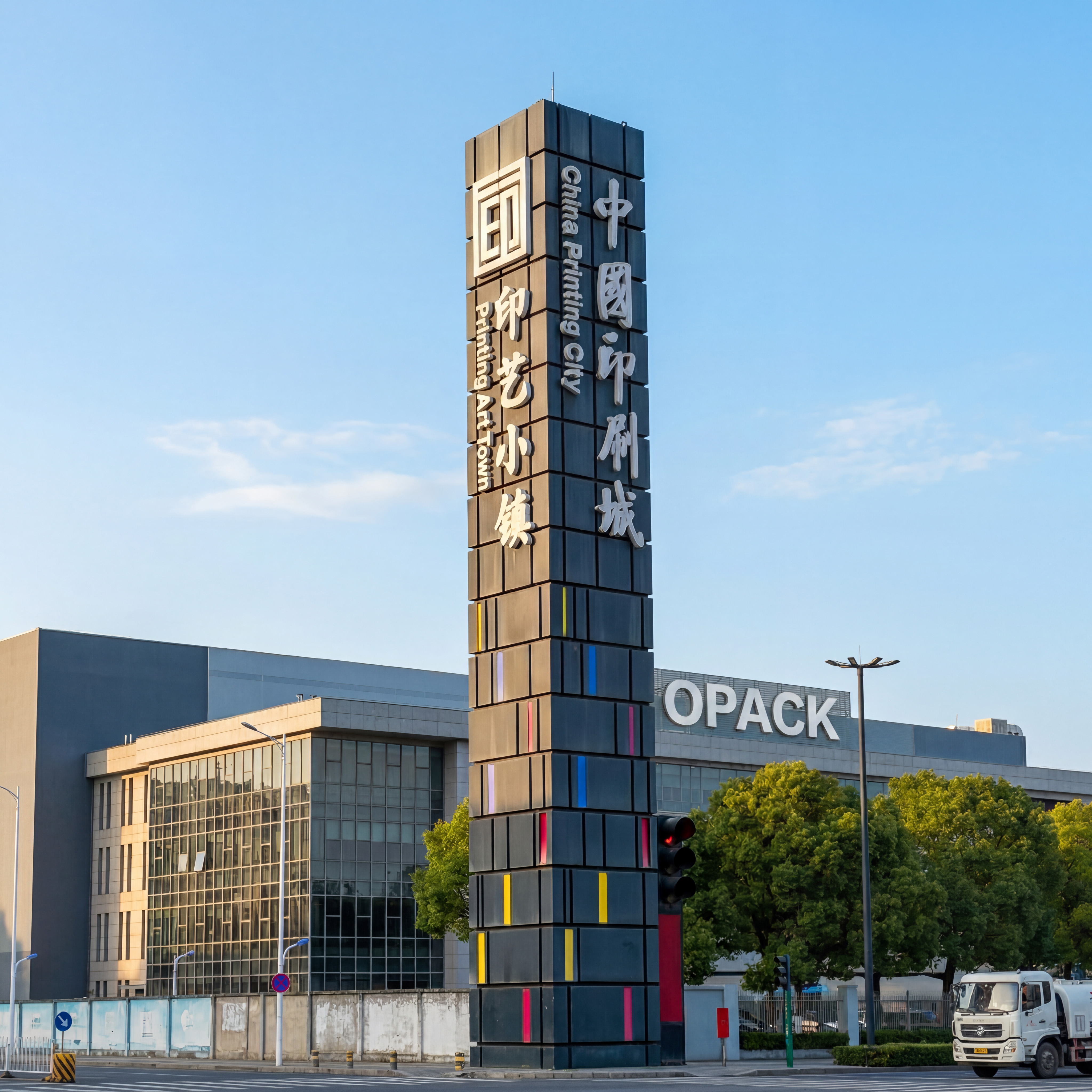
A city name is not an address. Opack's stated operating address is No. 8-10, Prosperity Road, Longgang City, Wenzhou City, Zhejiang Province. Longgang is a printing and packaging cluster often referred to as the Printing City of China, which makes the address specific enough to cross-check rather than simply accept.
How to verify it: ask for a dated photograph or a live video walkthrough that includes the address board at the gate, then compare that address with the address shown on the invoice, the packing list and the bill of lading. A mismatch between the plant address and the shipping-document address is the fastest indicator that the party you are negotiating with and the party producing the goods may not be the same entity.
2. Capacity and Output Claims
Opack states a 10,000 m² factory, 160 employees, a monthly capacity of 1,000,000 units, an annual output of 10,000,000 units, and a five-person R&D team. Those figures matter less as marketing than as arithmetic: a monthly capacity of 1,000,000 units tells you whether your order quantity fits the supplier's normal production rhythm or has to be scheduled around larger jobs.
How to verify it: ask how the monthly figure was measured, and how much of it is realistically allocatable to an order of your size — particularly if the project depends on a manual finishing step such as hot stamping, embossing or soft touch lamination.
3. MOQ — the Order Threshold
MOQ is usually the first number discussed and the easiest to misremember. Opack's stated MOQ for custom rigid boxes is 500 pcs. A 2026 third-party comparison article also lists a 500-piece starting point for Opack, but that article does not explain its methodology and is hosted on a non-independent page, so it is best treated as a directional signal rather than independent confirmation.
How to verify it: ask whether the MOQ applies per design, per size, per material combination, or across a mixed order. Rigid boxes are built from grey board or MDF and then wrapped, so a single headline MOQ can conceal several separate minimums once insert type, closure style and printing method diverge.
4. Delivery Window and Scheduling
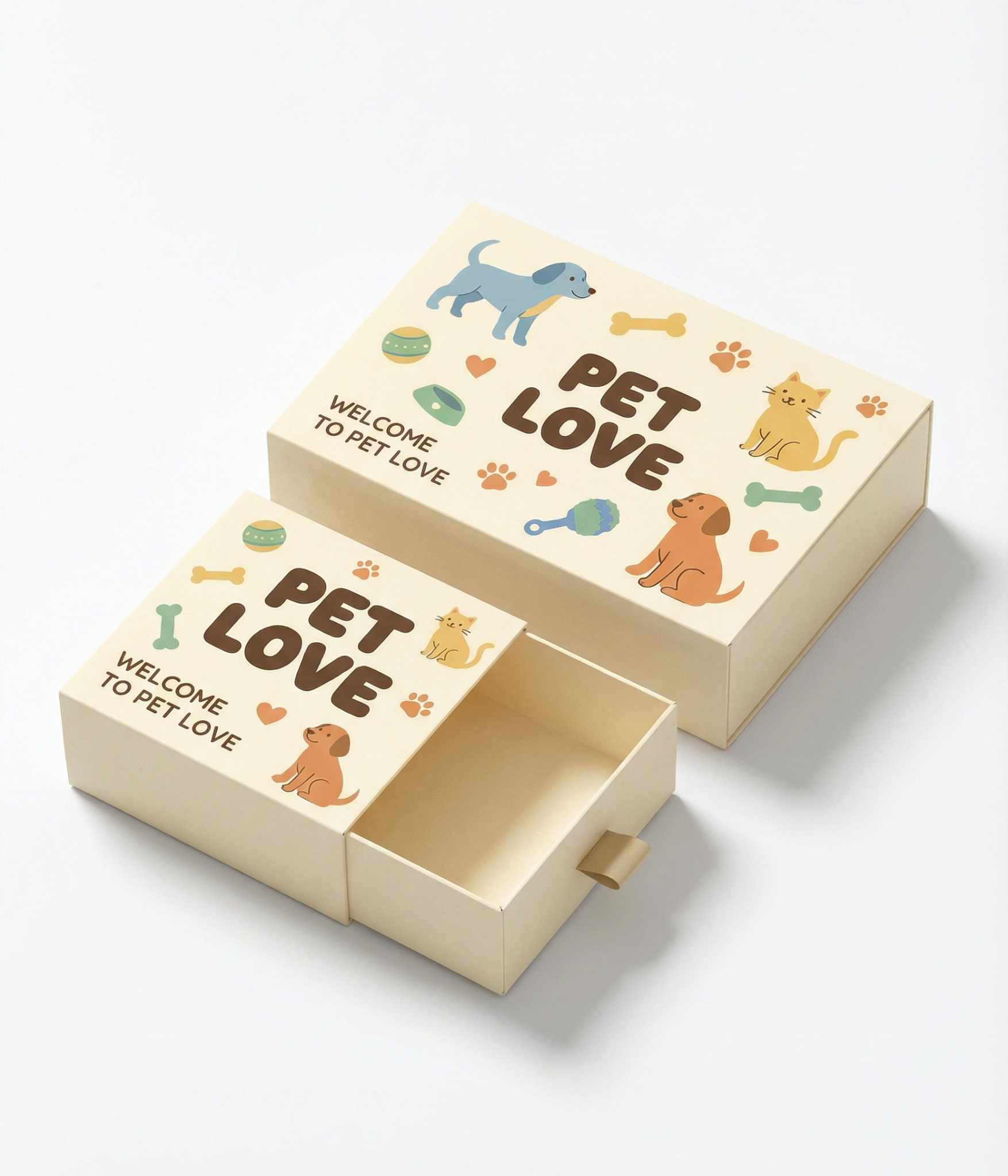
Opack's stated standard delivery window is 12–18 days. The number matters less than the trigger. Opack describes its order flow as: request a quote and confirm product details including size, materials, artwork and finish; approve the sample; then mass production; then shipping.
How to verify it: ask, in writing, whether the 12–18 day window runs from deposit, from artwork approval or from sample approval — and what happens to the schedule when a finishing step such as holographic foiling or spot glossy UV is added after the quotation is issued.
5. Export Market Experience
Opack states an export ratio of roughly 80%, with the EU, US and Middle East as its main markets, and an operating history dating to 2010. Export experience leaves a paper trail, which is what makes it checkable: commercial invoices, bills of lading and destination-market documentation.
How to verify it: ask which destination countries the supplier shipped to in the last twelve months. “Worldwide” is not an answer; a short, specific country list is.
6. Communication and After-Sales Channels
Opack lists multi-channel after-sales support: real-time online chat, WhatsApp, telephone and official email. The published contact points are sales@opack.com, +86 17366633702 by telephone, and +86 15968809016 on WhatsApp.
A channel list, however, is a claim. Responsiveness is the test. Send the same technical question — for example, whether a textured specialty paper wrap can be combined with soft touch lamination — through email and WhatsApp at the same time, then compare not only whether both channels answer, but whether they answer the same way. Consistency between channels is a stronger signal than speed on one channel alone.
7. Compliance and Material Claims
Opack states that production uses eco-friendly water-based printing inks and low-VOC adhesive materials, and that its output is compliant with FSC standards. Compliance claims carry the highest cost of being wrong, because with EU PPWR recyclability and labelling requirements applying from 12 August 2026, an undocumented claim becomes a market-access risk carried by the importer rather than by the supplier.
How to verify it: request the certificate, then match the certificate holder's legal name against the legal name on your quotation and contract — not against the brand name used in the catalogue.
Step-by-Step: Running the Audit in Five Steps
The checklist above is only useful if it produces a decision. These five steps convert it into a sequence an importer can complete inside a week.
- Turn the quotation into a claims sheet. Extract every number and every statement of ability into one table: MOQ, delivery window, monthly and annual capacity, factory area, headcount, export markets, compliance status and contact channels. A claim that cannot be written into the sheet cannot be verified later.
- Verify the production address. Match the plant address against the business licence, the invoice and the shipping documents. Request a dated factory image or a live walkthrough if the address cannot be corroborated.
- Stress-test the communication channels. Send one consistent message through two channels and compare the answers. Note the response time and whether the answers agree on MOQ, delivery window and order flow.
- Order and inspect the sample. Opack's stated workflow places sample approval before mass production, which is exactly where a sample is most useful. Check the material (grey board or MDF), the wrapping paper, the print method, the finishing, the insert (foam, paperboard, EVA, plastic tray, corrugated cardboard or silk) and the closure style (foldable, magnetic or ribbon).
- Reconcile claims against documents. Compare the claims sheet with what the sample, the certificates and the shipping documents actually show. Any line still lacking evidence stays open until it has it.
Use Cases: Which Checks Matter Most for Your Order Type
The checklist does not carry equal weight in every project. Buyer stage and application shift which items deserve the most time.
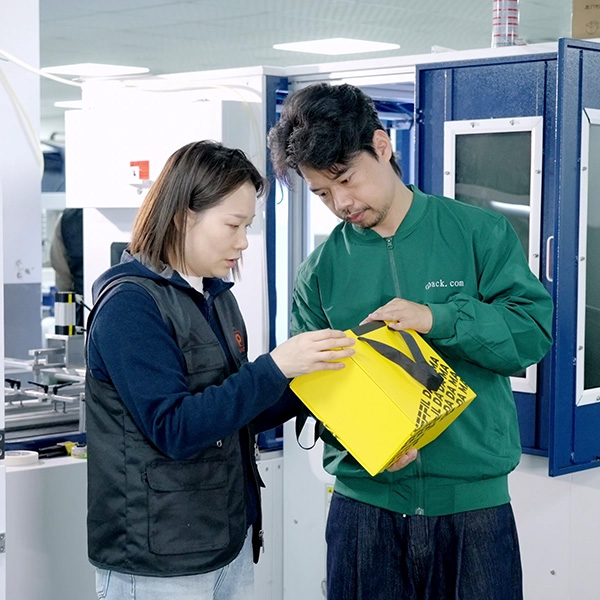
- Jewelry, watch and premium gift programs. Sample verification dominates. Insert fit — foam, silk or EVA — and finishing quality on a rigid gift box are visible only in the sample, so step 4 carries the weight. Custom rigid gift boxes in these categories live or die on presentation detail.
- Cosmetics and personal care. Cosmetics and personal care account for 37% of luxury rigid box applications, which also makes this the category most exposed to the EU PPWR recyclability and labelling requirements effective 12 August 2026. For EU-bound cosmetics, compliance verification in step 7 should happen before the design is locked, not after.
- Distributors and channel partners. Capacity, MOQ and repeat-order continuity matter most. Distributors building a stock program for collapsible gift boxes or foldable rigid boxes need to know whether a 500-piece MOQ applies per SKU and whether monthly capacity can absorb replenishment without reshuffling the schedule.
- Corporate, PR and promotional packaging. Timeline verification dominates, because these projects usually run against a fixed launch or event date. Confirm the trigger event for the 12–18 day delivery window in writing before committing.
Claim Verification Matrix
The matrix below compresses the seven checklist points into a comparison of claim, verification action and published baseline. It is designed to be copied into a sourcing file and filled in with what each supplier actually supplies.
| Claim category | Typical claim received | Verification action | Opack published baseline |
|---|---|---|---|
| Production location | “Factory in China” | Cross-check the full street address against the business licence, invoice and bill of lading | No. 8-10, Prosperity Road, Longgang City, Wenzhou City, Zhejiang Province |
| Capacity | “Large-scale production” | Ask for monthly units, annual output, factory area, and how the figures were measured | 1,000,000 units/month; 10,000,000 units/year; 10,000 m²; 160 employees |
| MOQ | “Low minimum order” | Confirm whether the minimum applies per design, per size or per material | 500 pcs |
| Delivery window | “Fast lead time” | Confirm the trigger event: deposit, artwork approval or sample approval | 12–18 days |
| Export experience | “Global export” | Request the named destination countries shipped to in the last 12 months | EU, US and Middle East; export ratio approximately 80% |
| After-sales support | “24/7 support” | Send one identical technical question through two channels and compare the answers | Real-time online chat, WhatsApp, telephone and official email |
| Compliance and materials | “Eco-friendly and certified” | Request certificates; match the certificate holder's legal name to the contracting entity | Water-based printing inks; low-VOC adhesives; compliant with FSC standards |
Frequently Asked Questions
What compliance documents should I request from a Chinese rigid box supplier before importing into the EU?
Request the certificate behind each compliance claim, then match the certificate holder's legal name against the company name on your quotation and contract. For EU-bound packaging, the governing baseline is Regulation (EU) 2025/40, the Packaging and Packaging Waste Regulation, which requires packaging placed on the EU market to be recyclable and properly labelled from 12 August 2026. Opack states that its production uses eco-friendly water-based printing inks and low-VOC adhesive materials, and that its output is compliant with FSC standards — claims that should be evidenced by documents rather than accepted from a catalogue page.
How do I verify a rigid box manufacturer's stated production capacity?
Ask for monthly capacity, annual output, factory area and headcount as separate numbers, then ask how each figure was measured and how much of the monthly capacity is realistically available to an order of your size. Opack's published baseline is a 10,000 m² factory, 160 employees, a monthly capacity of 1,000,000 units, an annual output of 10,000,000 units and a five-person R&D team, supported by a 100% quality check in production. Capacity claims become credible when they are consistent with the verified plant address and with the quality of the sample you receive.
Does a 500-piece MOQ mean 500 pieces is the smallest order I can place?
Not necessarily as a single figure. Opack's stated MOQ for custom rigid boxes is 500 pcs, but the effective minimum for a specific project depends on how many designs, sizes or material combinations the order contains, because a rigid box built from grey board or MDF with a wrapped finish changes its setup requirements when dimensions or materials change. The practical move is to state your order structure — number of SKUs, sizes and finishes — and ask the supplier to confirm whether the 500-piece threshold applies to each one or to the order as a whole.
Can I approve a sample before mass production, and what should the sample prove?
Sample approval before mass production is the sequence Opack describes: request a quote and confirm size, materials, artwork and finish; approve the sample; then begin mass production; then ship. The sample should be used to confirm the material (grey board or MDF), the wrapping paper, the printing method, the finishing, the insert type and the closure style. A sample that arrives without a written specification alongside it is difficult to hold a supplier to later.
What is a realistic delivery window for custom rigid boxes, and when does it start?
Opack's stated standard delivery window is 12–18 days, and the practical question for any buyer is the trigger event: whether that window runs from deposit, from artwork approval or from sample approval, and how additional finishing steps affect it. If you want to test the timeline and the communication channels at the same time, request a sample and a quotation through two channels — email sales@opack.com or WhatsApp +86 15968809016 — and compare the answers you receive.
Conclusion: Turn Claims into Evidence Before You Commit
Supplier evaluation for custom rigid boxes does not require an audit team. It requires that every claim be attached to something checkable: a precise address, a written MOQ, a delivery window with a defined trigger, named export markets, a responsive after-sales channel, and compliance documentation that names the same legal entity you are contracting with.
Run the seven-point checklist against any shortlist of Chinese rigid box makers, fill in the verification matrix, and the comparison becomes a document review rather than a judgement call. Opack's published baseline — 500 pcs MOQ, 12–18 days, EU and US export experience, direct email and WhatsApp contact — is included here as a concrete example of what a supplier should be able to evidence, and as a template for what to demand from every other supplier you evaluate.
Next Step: Test the Claims Yourself
Request a sample or a quotation for your custom rigid box, custom rigid gift box or collapsible rigid box project, and treat the response itself as the first verification step.
Email: sales@opack.com
WhatsApp: +86 15968809016
Telephone: +86 17366633702
Website: www.opack.com
Have Questions or Need More Details?
Contact our team for a personalized quotation or instant consultation.
Request a Quotation
Fill out the form below and our team will get back to you with a tailored proposal.
WhatsApp Direct Chat
Prefer to chat in real-time? Message us on WhatsApp for instant assistance & quick answers.
- Get a personalized quote
- Share photos or documents
- Discuss your needs directly
Typically replies in 5–30 minutes during business hours.