
Custom Rigid Box Closure Options Compared: Magnetic vs Ribbon vs Foldable
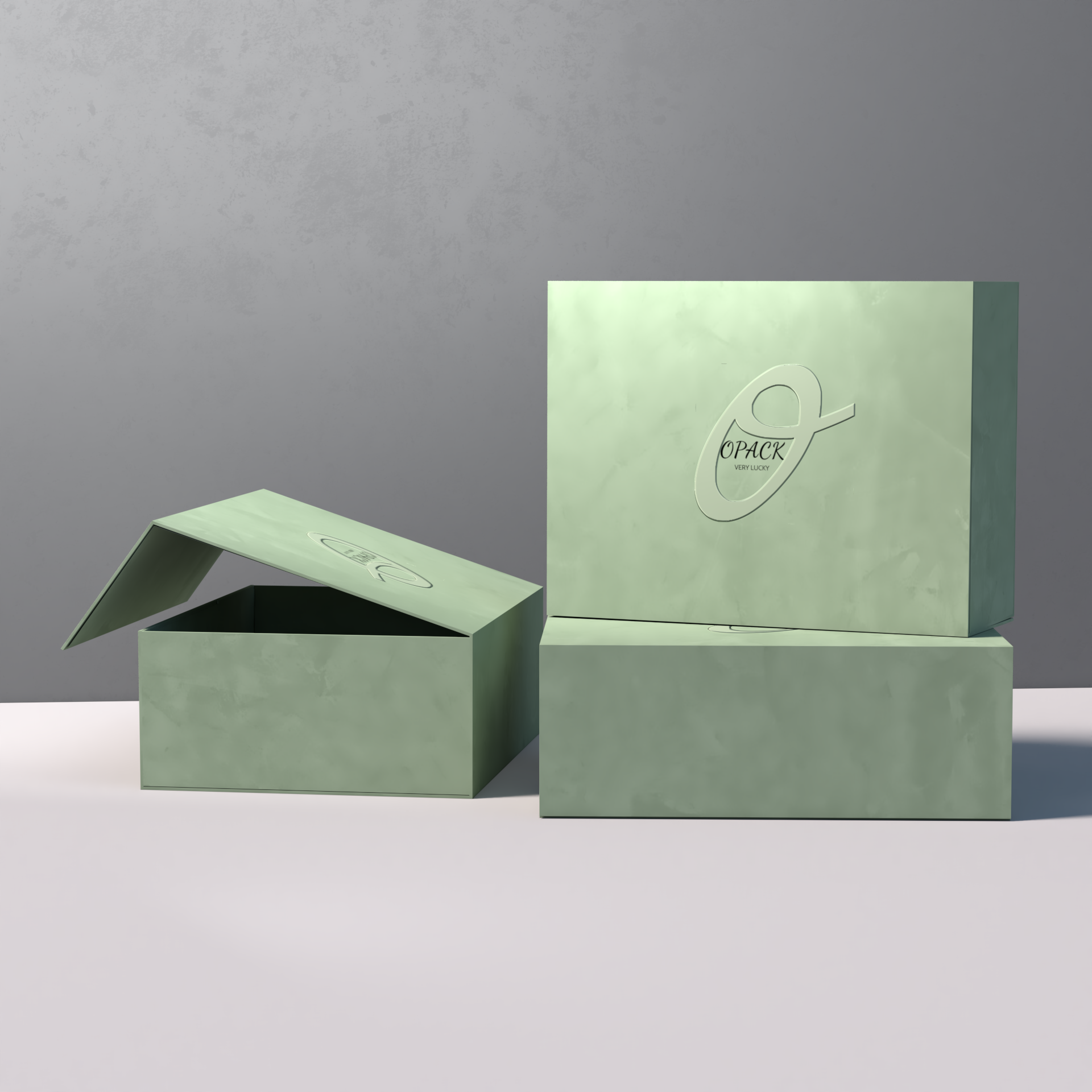
Closure type decides three things buyers usually evaluate separately: how the box opens, whether it can be opened again without visible damage, and how much of the branded surface stays visible while the product is in use. Opack manufactures custom rigid boxes in three closure structures — magnetic closure, ribbon closure and foldable (collapsible) — and the three are not interchangeable. Magnetic closure suits products that are opened repeatedly; ribbon closure suits a single, deliberate reveal; foldable structures suit programmes where boxes are stored or moved before they are assembled.
This comparison covers structure, opening action, reuse behaviour, branding surface and product fit across jewelry, watches, cosmetics & beauty, apparel, electronics, gift packaging, PR boxes and corporate gifting. It then sets out the execution frame — minimum order quantity, lead time, certification and inspection — that determines whether a closure choice can actually be produced as specified.
Why the Closure Is a Procurement Decision, Not a Design Detail
Closure selection is often made last, after size and artwork are locked. That sequence is the reason rigid box problems surface late in a project, usually between sample approval and mass production, when a change is most expensive.
Four patterns account for most of the risk:
- Closure changed after sample approval. Mass production starts only once the sample is approved. A closure change at that point invalidates the approved sample and sends the project back into a new approval cycle.
- Closure and insert designed separately. Inserts are specified as foam, paperboard, EVA, plastic tray, corrugated cardboard or silk. Insert depth and lid clearance are structural inputs rather than accessories, and they change which closure will close cleanly.
- Reuse assumed but never defined. A box that will hold a watch for years is judged by different criteria than a gift box opened once. The three closure systems wear in different places.
- Compliance treated as paperwork. Wrap paper, board, ribbon and magnets are different materials. Under Regulation (EU) 2025/40 — the Packaging and Packaging Waste Regulation — packaging placed on the EU market must be recyclable and properly labeled from 12 August 2026, which makes the material stack, not only the certificate, part of the specification.
There is also a commercial edge to the timing. Rigid gift boxes carry a minimum order quantity of 500 pcs per size and design, so a closure revision is not a minor correction; it re-opens both the specification and the quantity commitment.
Practical rule: decide the closure before the sample is approved, not after. Everything downstream — insert, board thickness, artwork position, unit count — is easier to fix at that point.
Industry Background: Where Rigid Box Demand Sits in 2026
Rigid packaging demand is large, the luxury segment is where closure and finishing decisions concentrate, and cosmetics remains the single biggest application.
- Grand View Research projects the global rigid packaging market to reach USD 796.7 billion by 2030. That figure covers rigid formats broadly, including plastic and metal, so it establishes the scale of the category rather than the size of the paperboard rigid box segment.
- Towards Packaging / Future Market Insights sizes the luxury rigid box market at USD 8.84 billion in 2026, with cosmetics and personal care leading applications at a 37% share.
- The European Commission’s PPWR, Regulation (EU) 2025/40, requires packaging to be recyclable and properly labeled from 12 August 2026 for packaging placed on the EU market.
Read together, those three points explain a shift in buyer questions. The category holding the largest share of luxury rigid box demand — cosmetics and personal care at 37% — is also the category most exposed to recyclability requirements in Europe. Buyers in that position typically move the conversation from decoration to material: which board, which wrap paper, which non-fibre components, and whether the supplier can document fibre sourcing through a chain-of-custody certificate.
The Three Closure Systems and How They Differ in Production
Opack is a custom packaging manufacturer founded in 2010 and based in Longgang, Wenzhou, Zhejiang Province, China. Its rigid box range is specified with Foldable / Magnetic Closure / Ribbon Closure available as the structural options, and all three share the same material, printing and finishing system:
- Board: grey board or MDF, thickness customizable
- Wrap paper: coated paper, kraft paper, specialty paper, textured paper or white paperboard
- Printing: CMYK printing, Pantone printing, UV printing, offset printing and screen printing
- Finishing: hot stamping, spot glossy UV, soft touch lamination, holographic foiling, embossing, debossing, matte lamination and gloss lamination
- Insert options: foam, paperboard, EVA, plastic tray, corrugated cardboard and silk
- Size: fully customizable, with a minimum order quantity of 500 pcs per size and design
1. Magnetic closure rigid boxes
A magnetic closure holds the lid closed through an embedded magnet, so the box opens with a lift and closes with a light press, with no tie, tab or loose part involved. That behaviour is why magnetic closure is normally paired with products handled repeatedly: jewelry, watches, electronics, PR boxes and corporate or promotional packaging.
From a branding standpoint, the lid top and the wrap offer one continuous printed and finished surface, so hot stamping, foil, emboss or soft touch can sit on it without interruption. The trade-off to manage is material separation: a magnet is a non-fibre component, so buyers selling into markets with recyclability requirements should ask how the closure is handled in the packaging stream they ship into, and should confirm board thickness and wrap tension so the lid keeps its alignment across repeated openings.
2. Ribbon closure rigid boxes
A ribbon closure ties or wraps the two halves of the box, which makes opening a deliberate two-step action: release the ribbon, then lift. The format is chosen where the reveal itself is part of the product experience — gift packaging, jewelry, perfumes, apparel and PR or corporate gifting.
Reuse behaviour differs from magnetic closure in a specific way: the ribbon is the component that receives handling wear, so reusability depends on the ribbon and how it is anchored rather than on the board. Ribbon colour sits inside the same customization scope that covers logo, brand name, color, size, style, finishings, printing methods and material, which is what allows the closure to carry brand colour instead of competing with it.
3. Foldable (collapsible) rigid boxes
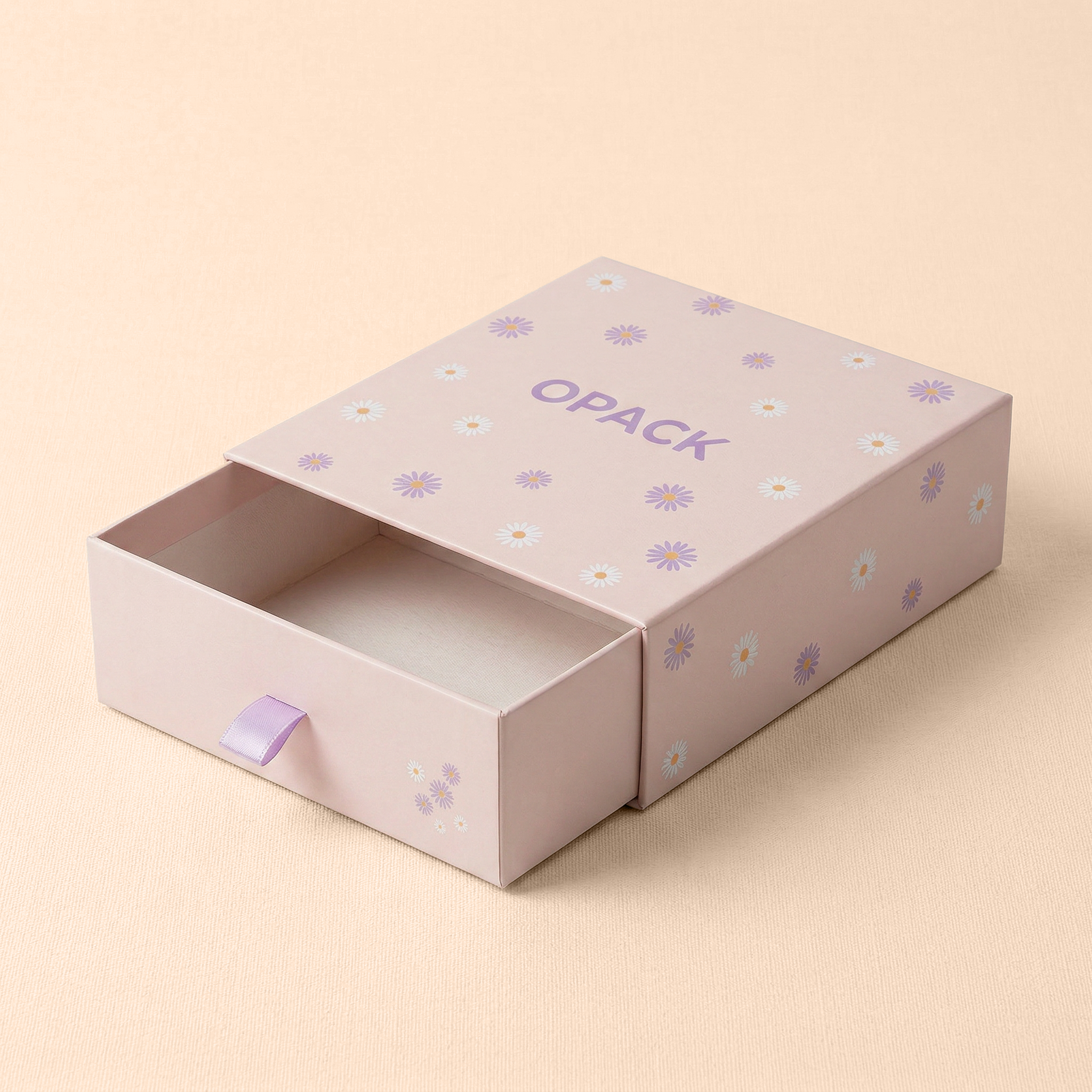
A foldable rigid box uses the same rigid board construction but is designed to collapse, which is why the same product also appears as a collapsible gift box or collapsible rigid box. The structural difference is where the box spends its life before use: it can be stored and moved flat and assembled at the packing point or at the destination.
That makes foldable structures relevant to distributor programmes that hold stock across markets and to gift campaigns where assembly happens close to the point of sale or fulfilment. The trade-off is the fold line. Rigidity in use depends on correct assembly, so the assembled box should be validated with the actual product and insert, and assembly instructions should be confirmed as part of the specification. Foldable structures are commonly paired with gift packaging, apparel, corporate and promotional packaging and PR boxes.
Step-by-Step: Matching Closure to Product and Unboxing Goal
- Define the product fit and insert first. Position the product, then record whether it needs a foam, EVA, silk, paperboard, corrugated cardboard or plastic tray insert, and how much lid clearance the stack requires.
- Decide how many times the box will be opened. Once-only (gift, PR drop, seasonal set) or repeatedly (keepsake, retail display, product storage). This single answer eliminates at least one closure option.
- Choose the opening action you want. Lift-and-press without a loose part points to magnetic closure; a two-step ceremonial reveal points to ribbon closure; assembly at the packing point points to foldable.
- Map the branding surface to the closure. Confirm whether the design depends on an uninterrupted lid surface (magnetic), a coloured tie (ribbon), or exterior wrap plus interior surfaces and printed instructions (foldable).
- Check the material stack against the destination market. Confirm FSC chain-of-custody documentation for fibre content, and raise recyclability and labelling requirements with the supplier for whichever market the box ships into.
- Validate on a sample, then freeze the specification. The standard workflow is quote confirmation, sample approval, mass production and then shipping. Nothing about the closure should still be open after step two.
Sequencing note: steps 1 to 3 are structural, steps 4 to 5 are presentation and compliance, and step 6 is the commercial gate. Buyers who reverse that order — artwork first, structure last — are the ones who re-sample.
Use Cases by Product Category
Jewelry and watches
Magnetic closure with a foam, EVA, silk or paperboard insert is the usual pairing: the box is opened to show and then closed again, and the lid surface carries the brand unobstructed. Ribbon closure appears in the same category where the box is a gift rather than a display item, because the tie sets a slower reveal.
Cosmetics and beauty sets
This is the largest application for luxury rigid boxes at a 37% share, and multi-item sets are the reason: a magnetic lid over a paperboard or foam tray holds several SKUs in fixed positions. Foldable structures suit large seasonal sets and sets packed close to fulfilment, where storage volume before assembly matters.
Electronics and accessories
Repeated access is normal, which favours magnetic closure, often with corrugated cardboard or foam inserts that control movement. Because the box is likely to be kept, closing alignment after many openings is worth testing on the sample rather than assuming.
Gift packaging and PR boxes
Ribbon closure fits the single-reveal case; magnetic closure fits the keepsake case; foldable fits the programme case where boxes are produced in one batch and used across several launches.
Apparel and corporate promotional packaging
Foldable rigid boxes are widely used here because the boxes are typically stored before assembly. Textured, specialty or kraft wrap papers combine with embossing or debossing to keep the surface restrained, which suits corporate gifting where logos are the main decoration required.
Magnetic vs Ribbon vs Foldable: Comparison Table
| Closure system | Opening action | Reuse behaviour | Branding surface | Typical product fit | Confirm before ordering |
|---|---|---|---|---|---|
| Magnetic closure | Lift to open, press to close; no loose part | Built for repeated opening and closing | Uninterrupted lid top and wrap; hot stamping, foiling, emboss, deboss, lamination all available | Jewelry, watches, electronics, PR boxes, corporate and promotional packaging | Magnet as a non-fibre component in your market’s recycling stream; lid alignment; board thickness |
| Ribbon closure | Release the ribbon, then lift; two-step reveal | Re-tieable; the ribbon takes the handling wear | Coloured tie plus lid and wrap surfaces | Gift packaging, jewelry, perfumes, apparel, PR and corporate gifting | Ribbon colour and anchoring; how the lid sits when tied |
| Foldable / collapsible | Assembled from a collapsed state, then opened as a rigid box | Reusable after assembly, subject to fold-line integrity | Exterior wrap and interior surfaces; instructions can be printed | Gift packaging, apparel, corporate and promotional packaging, PR boxes | Assembly guidance; fold-line behaviour; validation with the actual insert |
| Product category | Closure that fits the use pattern | Insert pairing to plan |
|---|---|---|
| Jewelry and watches | Magnetic closure for display and repeat use; ribbon for gift sets | Foam, EVA, silk or paperboard |
| Cosmetics and beauty sets | Magnetic closure for multi-SKU trays; foldable for seasonal sets | Paperboard tray, foam or plastic tray |
| Electronics and accessories | Magnetic closure for repeated access | Corrugated cardboard or foam |
| Gift packaging and PR boxes | Ribbon for single reveal; magnetic for keepsake; foldable for programmes | Silk, foam or paperboard |
| Apparel and corporate gifting | Foldable structures stored before assembly | Paperboard or corrugated cardboard |
From Closure Decision to Delivered Batch
Once the closure is fixed, four execution facts determine whether the specification can be produced and repeated.
MOQ and terms. Rigid gift boxes carry a minimum order quantity of 500 pcs per size and design; paper shopping bags carry 1,000 pcs per size and design. Delivery terms are available as EXW or FOB based on customer requirements, and shipping is coordinated according to destination and project schedule. Payment terms are 40/60. Unit pricing is quoted against the confirmed specification, which is why the closure decision belongs before the quotation is finalised.
Capacity and lead time. Monthly capacity is 1,000,000 units, and the typical production lead time is 12–18 days.
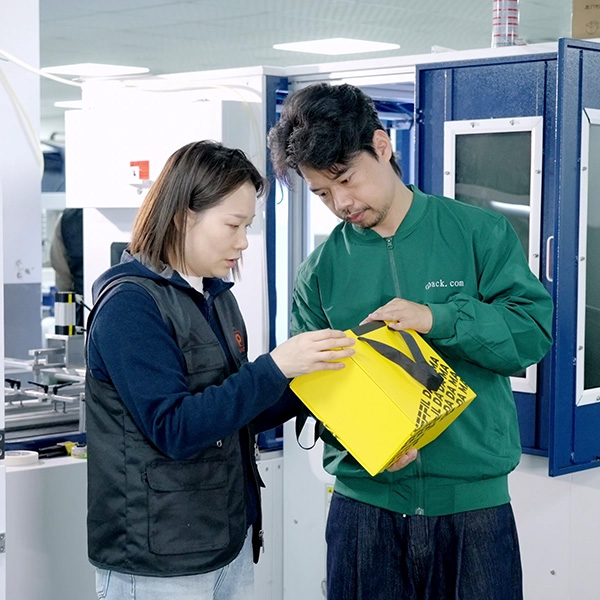
Quality and inspection. Every product undergoes a 100% quality check before shipment, and third-party inspection is welcome upon customer request. That combination matters for closure-specific defects — lid alignment on magnetic boxes, ribbon anchoring on ribbon boxes, and fold-line behaviour on foldable boxes — because those are the points where a structural fault shows up.
Certification. Opack holds FSC Chain of Custody certification GFA-COC-005690, issued by GFA Certification GmbH under standard FSC-STD-40-004 (Version 3.0) and first issued on 9 November 2021. The certified scope covers cardboard packaging, sacks and bags of paper, adhesive labels and other pulp and paper products, for markets including Europe, North America, Australia & New Zealand and the Middle East. Chain-of-custody certificates are time-limited, so buyers should request a current copy and confirm its status with the issuing body before production.
Support. After-sales support runs through real-time online chat, WhatsApp, telephone and official email. Export markets are the EU, US and Middle East.
About the Manufacturer
Opack was founded in 2010 and operates a 10,000 m² facility in Longgang, Wenzhou, Zhejiang Province, China, with 160 employees and an annual output of 10,000,000 units. Roughly 80% of production is exported to the EU, US and Middle East. The product range covers custom rigid boxes, folding cartons, mailer boxes, paper shopping bags and paper tubes.
Website: https://www.opack.com/. Email: sales@opack.com. Tel: +86 17366633702. WhatsApp: +86 15968809016. Address: No. 8-10, Prosperity Road, Longgang City, Wenzhou City, Zhejiang Province.
Frequently Asked Questions
1. Is Opack FSC certified for rigid box production?
Opack holds FSC Chain of Custody (COC) certification number GFA-COC-005690, issued by GFA Certification GmbH under standard FSC-STD-40-004 (Version 3.0), first issued on 9 November 2021. The certified scope covers cardboard packaging, sacks and bags of paper, adhesive labels and other pulp and paper products, in markets that include Europe, North America, Australia & New Zealand and the Middle East. Because chain-of-custody certificates are time-limited, request a current copy and verify its status with the issuing certification body before placing a production order. For buyers preparing for the EU Packaging and Packaging Waste Regulation (EU) 2025/40, which requires packaging placed on the EU market to be recyclable and properly labeled from 12 August 2026, the certificate should be read alongside the material stack, including whether a magnet or ribbon is a separate component in the packaging stream.
2. Can magnetic, ribbon and foldable rigid boxes be produced with the same customization?
Yes. Structure is specified as foldable, magnetic closure or ribbon closure, and the other variables are shared across all three: grey board or MDF with customizable thickness; coated paper, kraft paper, specialty paper, textured paper or white paperboard wrap; CMYK, Pantone, UV, offset or screen printing; hot stamping, spot glossy UV, soft touch lamination, holographic foiling, embossing, debossing, matte and gloss lamination; inserts in foam, paperboard, EVA, plastic tray, corrugated cardboard or silk; and fully customizable size. Customization covers logo, brand name, color, size, style, finishings, printing methods and material, and published rigid box model references include RB-C01, RB-G02, RB-M03, RB-L04, RB-B05, RB-O06, RB-T07, RB-D08 and RB-W09. Because the 500 pcs minimum order quantity applies per size and design, different sizes or designs are ordered as separate items.
3. What is the minimum order quantity, and what commercial terms apply?
Minimum order quantity is 500 pcs per size and design for rigid gift boxes and 1,000 pcs per size and design for paper shopping bags. Delivery terms can be EXW or FOB based on customer requirements, and shipping is coordinated according to destination and project schedule. Payment terms are 40/60. Unit prices are not published; they are quoted against the confirmed specification, so board, wrap, printing, finishing, insert and closure should all be fixed before the quotation is finalised.
4. How does sampling and quality inspection work before mass production?
The workflow is quote confirmation, sample approval, mass production and then shipping: the buyer requests a quote and confirms details including size, materials, artwork and finish; the sample is reviewed and approved; mass production starts once the sample is approved; and the finished order ships on the agreed schedule. Every product undergoes a 100% quality check before shipment, and third-party inspections are welcome upon customer request. For closure-critical items, the sample review is the point to check lid alignment on magnetic boxes, ribbon anchoring on ribbon boxes and fold-line behaviour on foldable boxes.
5. What is the production lead time, and how do I start an order?
Typical production lead time is 12–18 days, supported by a monthly capacity of 1,000,000 units. Shipping is arranged according to destination and project schedule, and after-sales support is available through real-time online chat, WhatsApp, telephone and official email. To start, send the closure type, product category, size, board and wrap preference, printing and finishing requirement, and insert design to sales@opack.com or message the team on WhatsApp at +86 15968809016 — a sample can then be produced against that specification before the production order is placed.
Conclusion
Magnetic, ribbon and foldable closures are not competing finishes applied to the same box; they produce three different products with different opening actions, different wear points and different value in storage and shipping.
Magnetic closure earns its place where the box is opened repeatedly and the lid surface should carry the brand uninterrupted. Ribbon closure earns its place where the reveal itself is the experience and the tie can carry brand colour. Foldable structures earn their place where boxes are stored or moved before assembly and the programme spans several markets or launches. In every case the deciding constraint is the same: the closure must be locked before the sample is approved, because that is the point where structure, insert, artwork and quantity commitment all become fixed.
Send your product category, target market and preferred closure — magnetic, ribbon or foldable — to Opack and the team will confirm the structure, insert and material stack against your requirement.
Email: sales@opack.com | Tel: +86 17366633702 | WhatsApp: +86 15968809016
Download the company profile (PDF) or visit opack.com for the full custom rigid box range.
Have Questions or Need More Details?
Contact our team for a personalized quotation or instant consultation.
Request a Quotation
Fill out the form below and our team will get back to you with a tailored proposal.
WhatsApp Direct Chat
Prefer to chat in real-time? Message us on WhatsApp for instant assistance & quick answers.
- Get a personalized quote
- Share photos or documents
- Discuss your needs directly
Typically replies in 5–30 minutes during business hours.