
Custom Rigid Box Construction: A Technical Guide to Board, Wrap, Closure & Insert Selection
Custom Rigid Box Construction: A Technical Guide to Board, Wrap, Closure & Insert Selection
Fast answer: A custom rigid box is defined by four construction layers, and they are best locked in order — the rigid base (grey board, greyboard, chipboard or MDF), the wrap (coated, kraft, specialty, textured or white paperboard), the closure (foldable, magnetic or ribbon) and the insert (foam, paperboard, EVA, plastic tray or corrugated cardboard). Specifying these four layers before sampling is what lets the same build be reordered identically instead of being re-engineered on every production run.
This guide is written for buyers who are already past the format decision. The box style, the footprint and the artwork are agreed; what is still open is the build itself — the part of the specification that lives below the printed surface and never shows up in a mock-up render. It is also the part that decides whether the tenth reorder from the same supplier matches the first approved sample, which is exactly what long-term supply and distributor programs depend on.
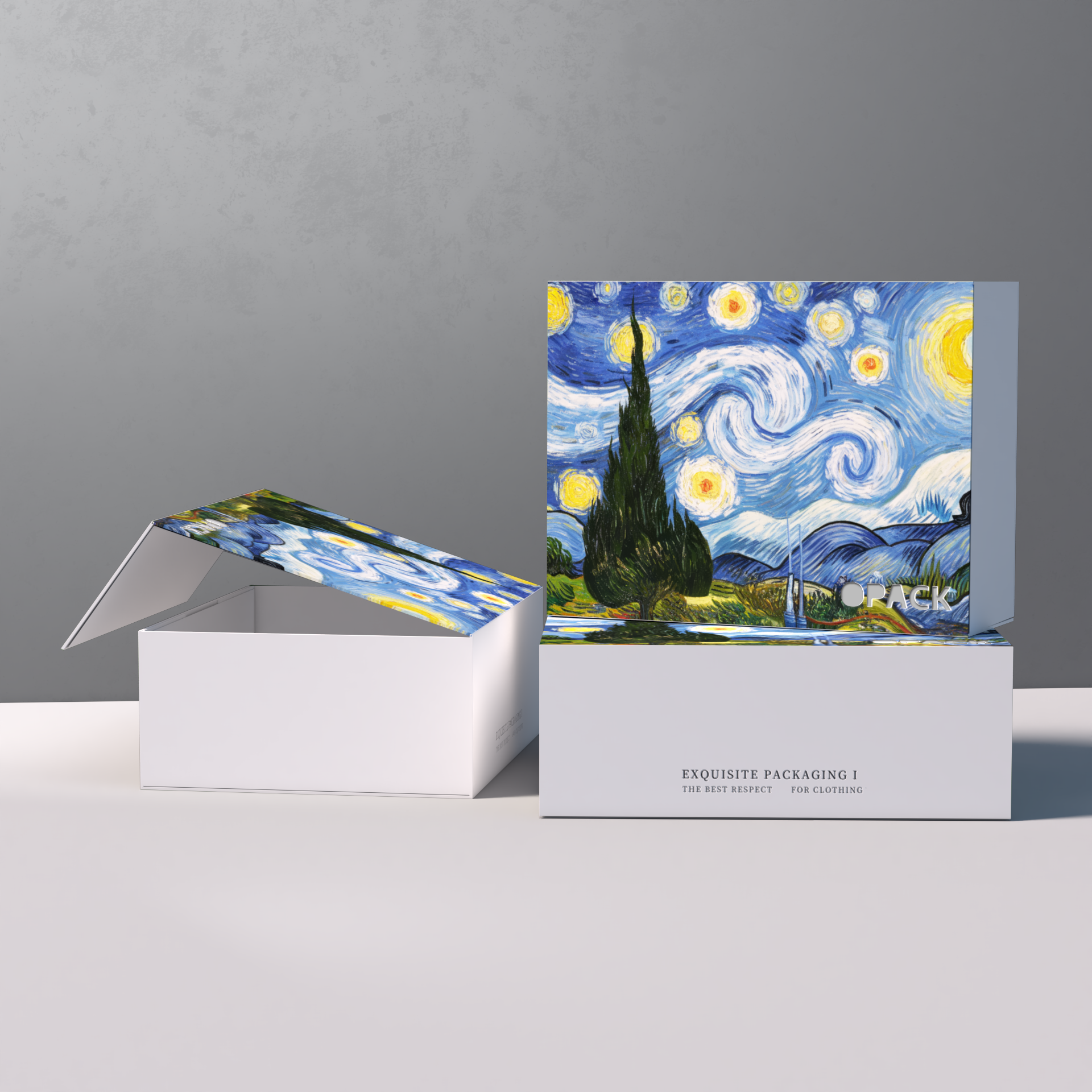
1. Problem Definition: Why Rigid Box Defects Usually Start on the Spec Sheet
Most rigid box complaints are not factory errors. They are specification gaps. A lid that sits loose after the third shipment, a wrap that bubbles in a humid warehouse, a brand color that drifts between production runs, an insert that lets a perfume bottle rattle inside an otherwise beautiful box — each of these traces back to a layer that was never written down.
The recurring gaps look like this:
- Base layer: board caliper and corner construction are left to factory default, so the wall stiffness of run one and run six may not match.
- Wrap layer: paper type is named (for example "textured") but grammage, grain direction and coated versus uncoated surface are not specified.
- Closure layer: the closure style is chosen visually, but magnet pull, magnet alignment and hinge coverage are not defined.
- Insert layer: the insert material is chosen, but cavity tolerance, retention force and the surface that touches the product are not defined.
The commercial consequence is simple: an under-specified layer is a compounding risk. A brand that reorders quarterly from one supplier for several years is effectively repeating whatever the first sample accidentally established. Writing the layers down at the Decision stage turns that accident into a controlled, repeatable specification — and that specification is the backbone of any long-term supplier relationship, distributor program or private-label packaging line.
2. Industry Background: Why Construction Detail Carries More Weight in 2026
Rigid box demand keeps expanding, and the buyer mix is shifting toward categories where the box is treated as part of the product experience rather than as transport protection.
- The luxury rigid box market reached USD 8.84 billion in 2026, according to Future Market Insights / Towards Packaging market research.
- Cosmetics and personal care lead rigid box applications with a 37% share of that demand, per the same 2026 market data.
- For context on the wider category, the broader rigid packaging market — which includes plastic, metal and paperboard rigid formats — is projected to reach USD 796.7 billion by 2030 (Grand View Research).
- China's rigid box exports under HS 481920 reached USD 1.7 billion in trade value in 2023, which is why China-based manufacturing sits inside most premium packaging supply chains.
Regulation is the second shift. Under the EU Packaging and Packaging Waste Regulation — Regulation (EU) 2025/40 — all packaging placed on the EU market must be recyclable and properly labeled from 12 August 2026. That requirement lands on the wrap, the adhesive and the ink, not on the logo. In practice, construction choices that used to be purely aesthetic — lamination type, ink system, whether an insert is paperboard or plastic — are now market-access decisions for EU-facing programs, and increasingly for buyers preparing for similar scrutiny in North America, Australia, New Zealand and the Middle East.
Direction of travel: the box that delivers the best unboxing experience and the box that clears recyclability and labeling requirements are increasingly expected to be the same box. Construction specification is where those two goals are reconciled.
3. The Four Construction Layers, Layer by Layer
The table below maps each layer to the parameters worth writing into a purchase specification. It is deliberately parameter-level, because the layer names alone — "grey board" or "magnetic closure" — do not give a factory enough information to build the same box twice.
| Layer | Options | Parameters worth locking | Primary selection driver |
|---|---|---|---|
| Rigid base | Grey board, greyboard, chipboard, MDF | Board caliper, material grade, corner construction and edge reinforcement, FSC-certified board status | Product weight and box footprint |
| Wrap | Coated paper, kraft, specialty paper, textured paper, white paperboard | Paper type, grammage, grain direction, coated vs uncoated, FSC-certified paper status | Color fidelity and hand feel |
| Closure | Foldable (collapsible) rigid box, magnetic closure, ribbon closure | Closure mechanism, magnet pull and alignment, hinge coverage, ribbon attachment point and tension | Unboxing sequence and freight volume |
| Insert | Foam, paperboard, EVA, plastic tray, corrugated cardboard | Cavity tolerance, retention force, finger notch, contact surface against the product | Protection, presentation and recyclability |
3.1 The rigid base: grey board, greyboard, chipboard and MDF
The rigid base is what separates a rigid setup box from a folding carton. Grey board, greyboard and chipboard refer to the same non-corrugated paperboard family used for paper-over-board construction; MDF belongs to the same structural role but is used where a heavier, more rigid build is required.
Three parameters decide how the base behaves over time. Caliper — board thickness — sets wall stiffness: as box footprint grows, a panel that was firm at a small size starts to flex and the lid no longer sits flat. Corner construction decides how the box survives handling: reinforced corner edges reduce corner failure and keep the lid square. Board certification status decides eligibility, because FSC-certified grey board is specified at board level, not at finished-box level. Together these three parameters are also listed as the reason custom rigid boxes resist warping, delamination and lid misfit during repeated use far better than lightly built alternatives.
3.2 The wrap: coated, kraft, specialty, textured and white paperboard
The wrap carries the brand, so it is usually chosen on aesthetics — but it should be specified on behavior. Wrap type determines three things: how accurately process color reproduces, how the surface feels in the hand, and how finishing techniques (hot stamping, spot UV, lamination) sit on top of it.
- Coated paper gives the most faithful reproduction of CMYK artwork with photographic gradients and detail.
- White paperboard provides a bright, clean base that keeps whites and pastel Pantone spot colors crisp — a common choice for beauty and skincare.
- Kraft delivers a natural, unbleached look; because kraft is more absorbent, spot colors and coatings read differently on it, so it should always be validated on a physical proof.
- Specialty and textured papers add tactility and premium signal, but texture interacts with stamping and lamination, so the finish should be tested on the actual substrate.
Two wrap parameters are routinely forgotten. Grain direction affects how the sheet behaves during wrapping and should be stated rather than left to the factory. Coated versus uncoated affects everything from fingerprint resistance to how a recycled-content claim can be documented. If the program is EU-facing, wrap choice is also where the recyclability and labeling obligation under Regulation (EU) 2025/40 begins.
3.3 Closure mechanics: foldable, magnetic and ribbon
Closure is a logistics decision disguised as a design decision.
A foldable rigid box — also described as a collapsible gift box, custom collapsible rigid box or foldable rigid box — ships flat and is assembled at the point of packing. That reduces freight volume and warehouse space, which matters for e-commerce programs, subscription packaging and distributors holding stock across multiple markets. The trade-off is that assembly moves onto the packing line, so a spec that looks identical to a fixed box costs more handling time.
A magnetic closure delivers the firm, weighted lid that buyers associate with luxury presentation. Magnet pull strength and magnet alignment must be specified, because misalignment is one of the few rigid box issues that becomes visible to the end customer immediately — the lid does not close flush. Scratch-resistant lamination is often specified alongside magnetic closures to keep the wrap clean through repeated opening.
A ribbon closure — ribbon pull or ribbon tie — adds ceremony, and is common in jewelry and perfume packaging where the opening sequence is part of the gift. The ribbon attachment point, ribbon width and tension should be defined, because a ribbon that loosens changes how the lid seats.
3.4 Insert engineering: foam, paperboard, EVA, plastic tray and corrugated cardboard
The insert is the layer that protects the product and choreographs the unboxing. It is also the layer where recyclability and protection tend to pull in opposite directions.
- Paperboard inserts are the lightest and the most straightforward for single-material recyclability. They suit cosmetics, apparel and gift sets with multiple rigid components that need separation.
- Foam inserts hold irregular shapes and absorb minor impact, which is why they are common for perfume bottles and fragile gift items.
- EVA inserts hold their shape under repeated removal and reinsertion and are typically chosen for watches and electronics where the cavity must stay crisp.
- Plastic trays offer dimensional precision, but they complicate a mono-material paperboard setup and should be weighed against the labeling and recyclability requirements of the destination market.
- Corrugated cardboard is used where the insert doubles as cushioning — commonly for heavier electronics or multi-piece sets.
Whichever material is chosen, five insert parameters should be written down: cavity tolerance (how much the product can move), retention force (how firmly it is held), finger notch placement (how easily a customer can lift it out), the contact surface that touches the product, and how many components or SKUs sit in one box.
4. Print Methods: CMYK, Pantone, UV, Offset and Screen
Print method should be selected after the wrap, not before. The substrate sets the ceiling on what any press can achieve.
- Offset printing remains the standard for rigid box wraps, and is the usual choice for photographic imagery, fine gradients and large runs.
- CMYK process printing is used for full-color artwork built from four process inks, and is the most economical route for image-heavy designs.
- Pantone spot color is specified when a brand color must read consistently across runs and across different substrates — the classic case being a signature color that must not shift between a rigid box and its companion shopping bag.
- UV printing cures ink immediately and is used where a raised or high-gloss effect is wanted directly on the surface.
- Screen printing deposits a heavier ink layer, which is useful for bold, opaque color on darker or textured wraps.
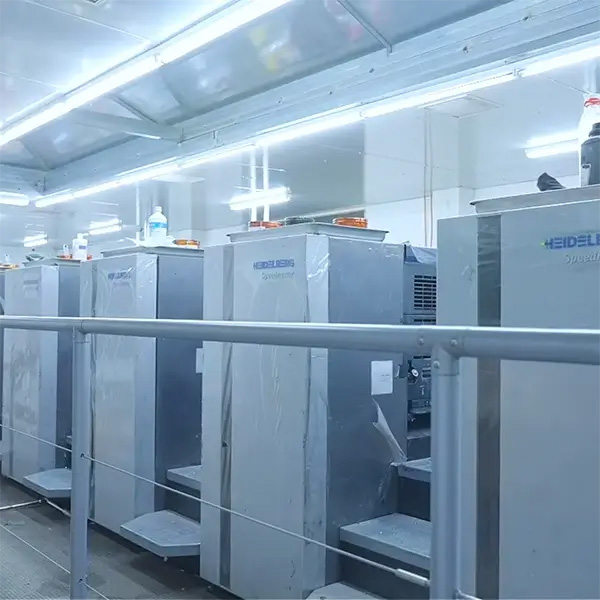
Color control is where print method meets procurement. Production color is monitored with spectrophotometers rather than by eye, with the color difference (ΔE) held within approximately 1.5 — a level that is essentially imperceptible to the human eye. That tolerance is protected by a pre-production color approval step, in-process inspections during printing, final inspection before shipment and batch-by-batch verification, so the second order matches the first.
5. Finishing Options: Hot Stamping, Spot Glossy UV and Soft Touch Lamination
Finishing is applied on top of the wrap and can change both the perceived value and the practical durability of the box.
- Hot stamping applies metallic or pigmented foil to the wrap and is typically used for logos, monograms and product names. Because it is a mechanical transfer, it should be validated on the actual wrap — textured and specialty papers carry foil differently from coated paper.
- Spot glossy UV creates a controlled gloss contrast against a matte background, directing the eye to a specific element without adding a material layer.
- Soft touch lamination gives a matte, velvety surface that reads as premium and hides light fingerprints. Scratch-resistant lamination is a related specification worth considering wherever the box will be opened repeatedly, as it protects the wrap through handling.
For EU-facing programs, finishing is also part of the recyclability conversation: an uncoated paper wrap and a heavily laminated or metallized surface are not the same recycling proposition. Buyers preparing for the August 2026 labeling and recyclability requirement should decide on finishing with that constraint in view rather than retrofitting it later.
6. Step-by-Step: How to Specify and Execute a Rigid Box Build
The execution sequence below is the practical order of operations for a Decision-to-Execution program. It also mirrors the standard order workflow used for custom rigid box production: request a quote and confirm size, materials, artwork and finish; approve the sample; then start mass production and ship to schedule.
- Define the product load, then the internal dimension. Product weight and volume determine board caliper and wall stiffness; the external dimension is a consequence, not an input.
- Lock the base layer. Confirm board type (grey board, greyboard, chipboard or MDF), caliper, corner construction and whether FSC-certified board is required for the destination market.
- Select the wrap and the print method together. Coated, kraft, specialty, textured or white paperboard, matched to CMYK, Pantone, UV, offset or screen printing.
- Choose the closure. Foldable for freight efficiency, magnetic for a firm presentation lid, ribbon for a ceremonial opening — with the mechanism parameters specified.
- Engineer the insert. Foam, paperboard, EVA, plastic tray or corrugated cardboard, with cavity tolerance, retention, finger notch and contact surface defined.
- Build the specification sheet and request a quote. Size, materials, artwork and finish confirmed in writing before sampling begins.
- Approve a physical sample. Review the design, the wrap, the closure behavior and the color approval proof against the specification — not against a screen.
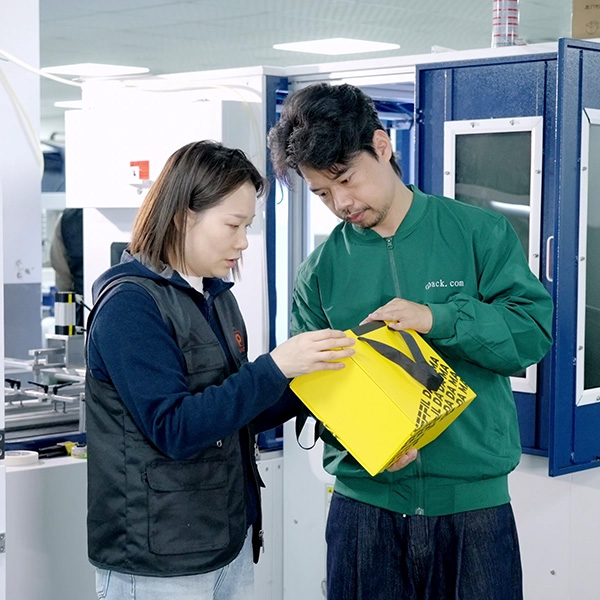
- Manufacture under inspection. Production runs with a 100% quality check on all units, final inspection before shipment, and third-party inspection available on request.
- Plan delivery and inspection terms. Confirm delivery terms, inspection arrangements and the shipping schedule against your own launch date.
7. Use Cases: Matching Construction to Product Category
Construction logic is category-specific. The same four layers produce very different boxes depending on what sits inside.
Jewelry and watches
Small footprints concentrate weight on a small area, so the base layer carries more of the engineering load and corner construction matters disproportionately. Magnetic or ribbon closures pair well with EVA or foam inserts to hold small, high-value items firmly and keep the cavity shape intact through repeated opening.
Perfumes
Glass bottles need restrained, firm retention rather than tight clamping. A rigid base with a foam or paperboard insert holds the bottle without stressing the neck or cap, while a ribbon or magnetic closure supports the ceremonial reveal that fragrance gifting depends on.
Cosmetics and beauty
This is the largest application for rigid boxes, and the most pressed by EU recyclability rules. White paperboard wraps keep pastel and white-based brand colors clean, and paperboard inserts support a straightforwardly recyclable setup — particularly relevant given the 37% share cosmetics and personal care hold in rigid box demand.
Apparel
Larger footprints and lower unit weight favor foldable rigid boxes, which ship flat and reduce freight volume. Board caliper still needs attention because large panels flex, and paperboard inserts handle folded garments and accessory cards.
Electronics
EVA or foam inserts hold the device and its accessories in defined cavities, and corrugated cardboard often appears as the cushioning layer. Magnetic closures are common because the lid must sit flush after repeated opening in retail environments.
PR boxes and gifting
PR and subscription packaging prioritizes the opening sequence and multi-item organization. Rigid boxes with layered inserts, ribbon closures and soft touch lamination are typical, and foldable constructions help when shipments go out in waves.
8. Comparison: Custom Rigid Boxes vs Regular Rigid Boxes
Where a regular rigid box is a standard build, a fully specified custom rigid box changes both cost and outcome. The comparison below reflects documented differences between the two.
| Dimension | Custom rigid boxes |
|---|---|
| Customization | Fully customizable across board, wrap, closure and insert layers |
| Brand visibility | Higher brand visibility than a regular rigid box |
| Unboxing | More memorable unboxing experience |
| Perceived quality | More high-end look |
| Initial cost | 5%–10% higher initial cost |
| Repeat purchase rate | 20%–30% higher repeat purchase rates |
| Customer satisfaction | 10%–30% improvement |
| Customer referrals | 5%–15% increase |
| Social media shares | 5%–10% more shares |
| Durability behavior | Thicker customizable grey board, reinforced corner edges, magnetic closure alignment and scratch-resistant lamination; less warping, delamination or lid misfit during repeated use |
| Environmental profile | Supports FSC-certified grey board, low-VOC adhesives and food-safe, eco-friendly inks; fully recyclable and biodegradable after service life |
| Best suited to | Product launches, retail packaging, gift packaging, e-commerce packaging, corporate events, promotional campaigns, seasonal and holiday packaging, subscription and PR packaging |
The gap that matters most for long-term supply is not the 5%–10% higher initial cost. It is the durability behavior. A construction that resists warping, delamination and lid misfit is a construction that can be reordered without renegotiating the build.
9. Production Constraints Buyers Must Plan Around
Once the layers are locked, four production constraints determine how the order actually runs. These should be planned for at the quotation stage, not discovered at the sampling stage.
Minimum order quantity
The minimum order quantity is 500 pieces per size and design for rigid gift boxes. For comparison, paper shopping bags carry a minimum of 1,000 pieces per size and design. Because MOQ is set per size and design, a multi-SKU program multiplies quickly — consolidating sizes early reduces cost and MOQ pressure.
Standard delivery time
Standard delivery time is 12–18 days. Delivery terms available are EXW and FOB, with shipping arrangements coordinated according to destination and project schedule. Auction-style deadlines and seasonal launches should be planned backwards from this window, with sample approval time included.
Eco requirements: water-based inks and low-VOC adhesives
For programs that need to meet recyclability expectations, construction can be specified with water-based inks and low-VOC adhesives, supported by FSC-certified grey board. These choices are made at the wrap, ink and adhesive layers — none of them can be added after the box is printed.
FSC certification and market coverage
FSC certification GFA-COC-005690 covers the EU, North America, Australia & New Zealand and Middle East markets. For buyers in those regions, the certificate should be verified against the supplier's scope before it is quoted into a compliance file — and it should be checked again whenever a new market is added to the program.
Capacity for long-term supply
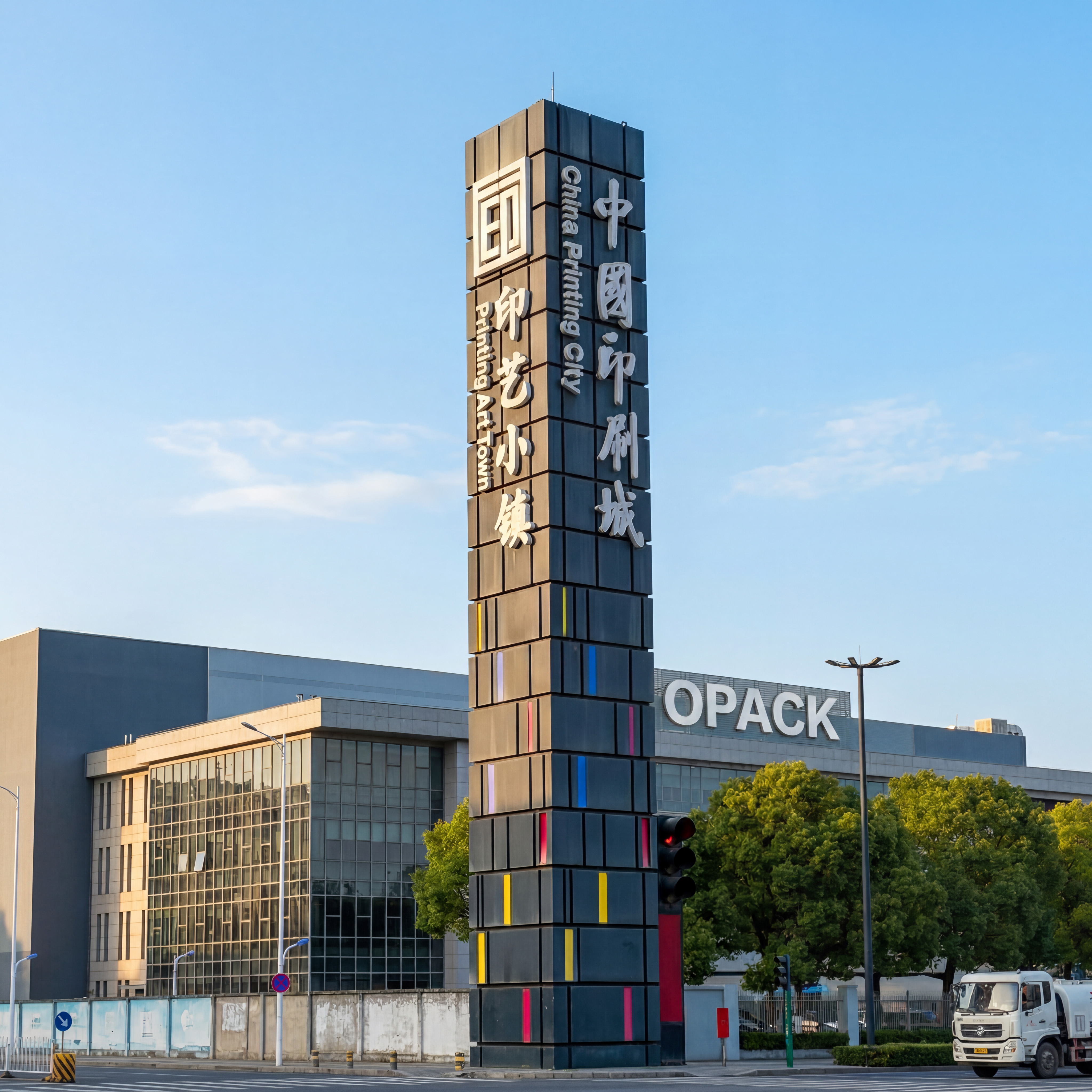
Opack is a custom packaging manufacturer founded in 2010, based in Longgang, Wenzhou, Zhejiang Province, China. The company operates a 10,000 m² facility with 160 employees and produces 10,000,000 units annually, with a monthly production capacity of 1,000,000 units and a 100% quality check on all units. Export accounts for 80% of output, with the main markets being the EU, USA and Middle East — the same regions where rigid box demand and recyclability scrutiny are both rising.
For distributors and brand owners building a multi-year packaging line, capacity, repeatable construction and consistent batch verification matter more than a single low quotation. A build that is fully specified is what makes that multi-year relationship workable: quotes stay comparable, samples stay valid and each reorder repeats the approved reference.
10. FAQ: Rigid Box Construction, Compliance and Ordering
Are custom rigid boxes available with FSC certification, and which markets does that cover?
Yes. FSC certification GFA-COC-005690 covers the EU, North America, Australia & New Zealand and Middle East markets. Certification is applied at material level — FSC-certified grey board and wrap paper — and can be combined with water-based inks and low-VOC adhesives so the finished box supports the recyclability and labeling expectations introduced by Regulation (EU) 2025/40 from 12 August 2026. Buyers should confirm the certificate scope in writing for each destination market.
Can one supplier handle board, wrap, closure and insert construction at scale?
Opack manufactures custom rigid boxes along with custom packaging, custom shopping bags, custom folding cartons and custom mailer boxes. Production runs in a 10,000 m² facility with 160 employees and an annual output of 10,000,000 units, at a monthly production capacity of 1,000,000 units with a 100% quality check on all units. Board, wrap, print method, finishing, closure and insert are specified together, which keeps layer decisions consistent across runs.
What is the minimum order quantity, and how do construction choices affect cost?
The minimum order quantity for rigid gift boxes is 500 pieces per size and design; paper shopping bags start at 1,000 pieces per size and design. Fully customized rigid boxes typically carry 5%–10% higher initial cost than regular rigid boxes, offset by documented gains such as 20%–30% higher repeat purchase rates, 10%–30% improvement in customer satisfaction, 5%–15% more customer referrals and 5%–10% more social media shares. Construction choices that raise cost are usually the ones adding rigidity or finish — heavier board, reinforced corners, laminating and insert complexity. Payment terms are quoted as 40/60.
How does sampling and sample approval work before mass production?
The standard workflow is: request a quote and confirm size, materials, artwork and finish; review and approve the sample; then begin mass production once approved; then ship to the agreed schedule. For color-critical artwork, a pre-production color approval step is included, with color difference monitored by spectrophotometer and held to approximately ΔE 1.5. Approving a physical sample — not a digital proof — is the step that protects the reorder.
What is the standard delivery time, and what terms apply?
Standard delivery time is 12–18 days. EXW and FOB terms are available based on requirements, and shipping arrangements are coordinated according to destination and project schedule. All products undergo internal quality inspection before shipment, and third-party inspections are welcome on request. If you would like to test the construction before committing to a production run, you can request a sample or a quotation — and the full capability and specification overview is available in the company profile.
Conclusion: Specify the Build, Not Just the Box
Custom rigid boxes are not one product. They are a stack of four decisions — base, wrap, closure and insert — sitting on top of a print method and a finishing choice, all constrained by MOQ, delivery time and market compliance. Buyers who write those layers down get a box that can be quoted, sampled, approved and reordered without drifting. Buyers who specify only a size and an artwork file get a box that changes quietly with every run.
For programs heading into 2026 and beyond, the construction specification is also the compliance document. Recyclability under Regulation (EU) 2025/40, FSC coverage across the EU, North America, Australia & New Zealand and the Middle East, and low-VOC, water-based material choices all live inside the same four layers that determine how the box looks and feels.
Next step: sample, quote or distributor pack
Send your product dimensions, target market and preferred closure style, and the team will return a construction recommendation with a quotation for your build. A physical sample can be produced before mass production so the board, wrap, closure and insert are validated together.
Opack
No. 8-10, Prosperity Road, Longgang City, Wenzhou City, Zhejiang Province, China
Email: sales@opack.com | Tel: +86 17366633702 | WhatsApp: +86 15968809016
Website: www.opack.com | Rigid box specifications: custom rigid boxes | Blog: blog.opack.com
Company profile (PDF): download the Opack company profile
Summary of the Construction Checklist
- Base: board type and caliper, corner reinforcement, FSC-certified board status.
- Wrap: coated, kraft, specialty, textured or white paperboard, with grammage and grain direction stated.
- Closure: foldable, magnetic or ribbon, with magnet alignment or ribbon tension defined.
- Insert: foam, paperboard, EVA, plastic tray or corrugated cardboard, with cavity tolerance and retention stated.
- Print and finish: CMYK, Pantone, UV, offset or screen, plus hot stamping, spot glossy UV or soft touch lamination, with color tolerance controlled during production.
- Order: 500-piece MOQ per size and design, 12–18 day standard delivery, EXW or FOB terms, 100% quality check before shipment.
- Compliance: FSC GFA-COC-005690 across the EU, North America, Australia & New Zealand and the Middle East, with water-based inks and low-VOC adhesives where required.
Have Questions or Need More Details?
Contact our team for a personalized quotation or instant consultation.
Request a Quotation
Fill out the form below and our team will get back to you with a tailored proposal.
WhatsApp Direct Chat
Prefer to chat in real-time? Message us on WhatsApp for instant assistance & quick answers.
- Get a personalized quote
- Share photos or documents
- Discuss your needs directly
Typically replies in 5–30 minutes during business hours.