
Kraft vs. Coated Paper Shopping Bags: A Side-by-Side Comparison Guide for Buyers
Kraft vs. Coated Paper Shopping Bags: A Side-by-Side Comparison Guide for Buyers
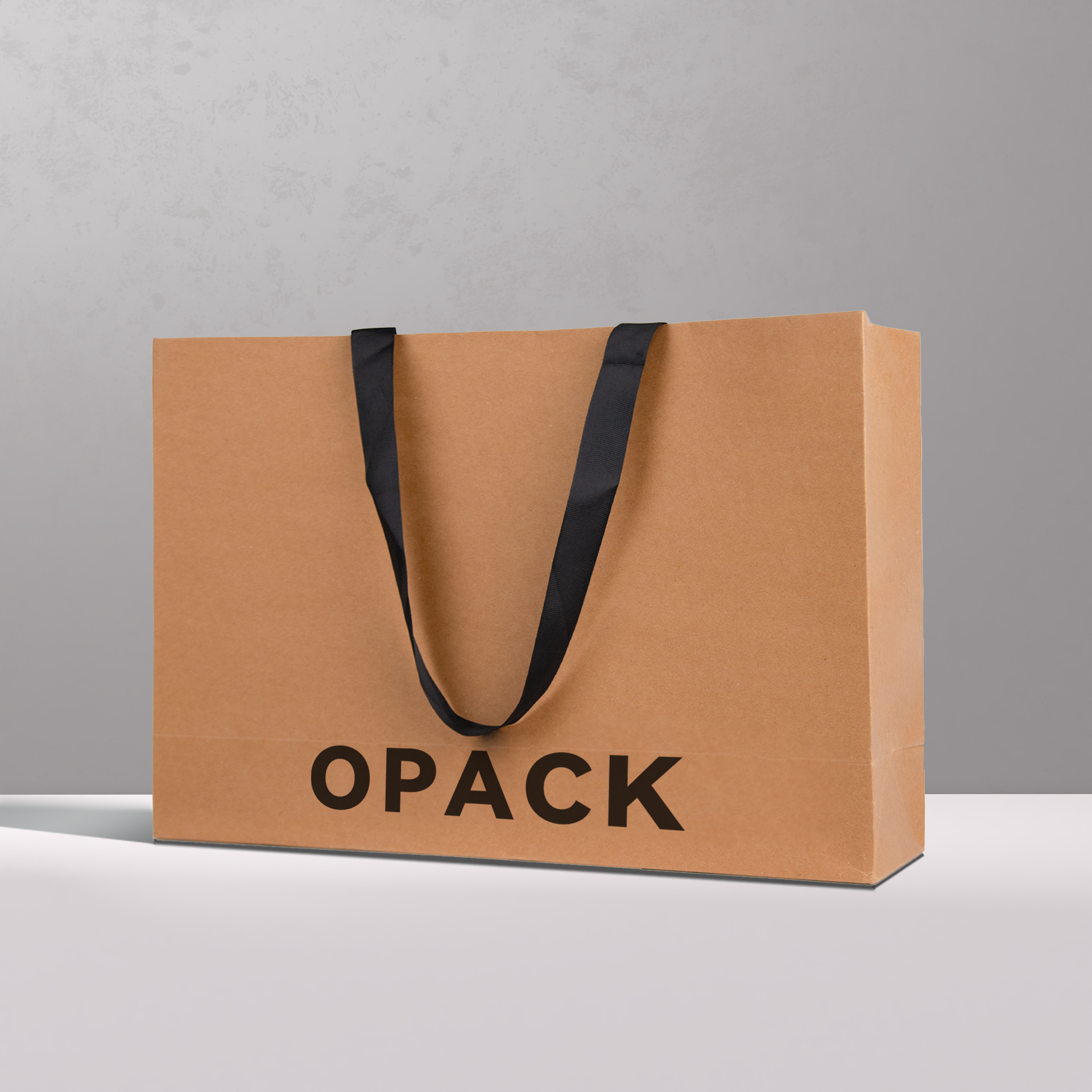
Custom kraft paper shopping bag from Opack PSB range.
Choosing custom shopping bags usually begins with one material question: kraft or coated paper? The answer affects durability, the 2–15 kg carrying range, print appearance, handle selection, and how convincingly a bag supports an eco-positioning story. This side-by-side guide is written for buyers and brand owners who are researching custom printed paper shopping bags before moving into supplier evaluation.
Opack is a custom packaging manufacturer based in Longgang, Wenzhou City, Zhejiang Province, China. The company produces custom packaging such as rigid boxes, folding cartons, mailer boxes, and paper shopping bags. Its standard paper shopping bag model, PSB, can be made with Kraft Paper, Whiteboard Paper, Specialty Paper, or Coated Paper. This comparison focuses on two of those options: Kraft Paper and Coated Paper.
The goal is to help you map material characteristics to a real project scenario, not to declare one material superior in every case.
Why the Kraft vs. Coated Paper Decision Is Not Obvious
When a buyer starts with a search such as “custom shopping bags with logo,” the first results usually show finished photographs. Unless the material surface is clarified, those photographs can be misleading. A design printed on brown kraft paper will not look the same as the same design printed on a coated white sheet. Both are paper, but their structure, surface absorption and color response are not identical.
The real project question is: which substrate fits my product weight, my brand appearance, my printing and finishing plan, and my environmental requirement? In practice, a buyer needs to evaluate durability, printing finish quality, sustainability and load capacity together.
For this article, the load capacity reference is the range published for Opack PSB shopping bags: 2–15 kg depending on paper thickness and structure.
Industry Background: A Market Built on Paper Material Choices
The paper bag market is large and still growing. Grand View Research estimated the global paper bags custom printing market at USD 2.78 billion in 2024, with a projected CAGR of 13.9% through 2030. In the broader paper bag industry, MarketsandMarkets valued the market at USD 6.06 billion in 2024 and expected it to grow to USD 7.81 billion by 2029.
Material choice matters commercially. According to Future Market Insights, brown kraft paper is expected to hold a 58% share of total paper bag material demand in 2026 because of sustainability preferences. This is one reason many buyers assume brown kraft is the default eco bag. Meanwhile, FSC certification is the primary sustainable-sourcing standard referenced by paper packaging and has a 56% global consumer recognition rate, according to the Forest Stewardship Council.
Against this background, choosing between kraft and coated paper is part of a broader purchasing decision, not just a visual preference.
Material Profiles: What You Are Actually Choosing
Kraft Paper Shopping Bags
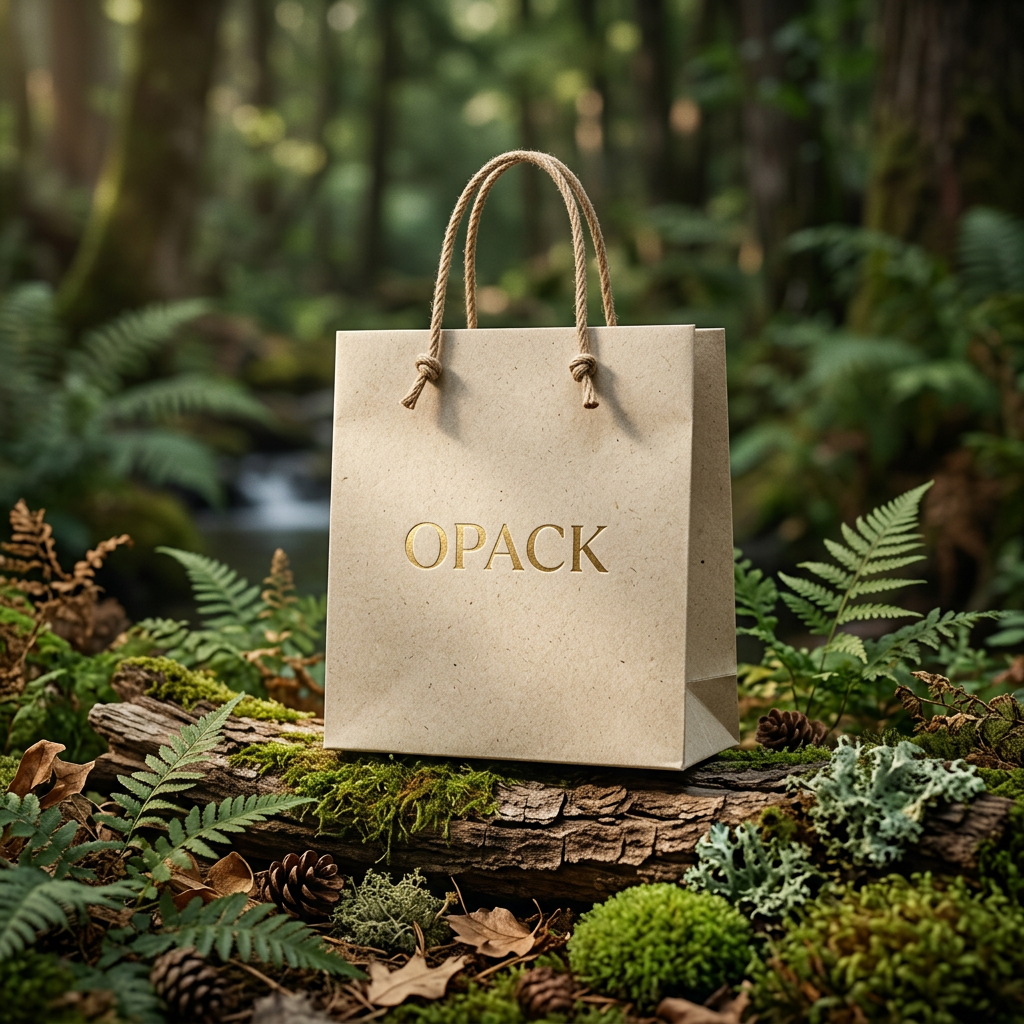
A premium custom paper shopping bag with the kind of clean finish buyers often request on coated paper.
Kraft paper is a brown, natural-looking paper grade made by the kraft pulping process. For custom shopping bag projects, it is often selected for its rustic, eco-friendly appearance. In Opack’s PSB product specification, Kraft Paper is listed as a standard material option.
Brown kraft also has a strong market association with sustainable packaging. As noted, analysts expect it to represent 58% of paper bag material demand in 2026. This does not automatically make every kraft bag sustainable; it means kraft is the category many buyers already understand and trust from a natural positioning standpoint.
Coated Paper Shopping Bags
Coated paper is a paper category with a coating applied to the surface. The coating closes the surface and creates a smoother, more even printing ground. In Opack’s PSB specification, Coated Paper appears as an accepted substrate next to Kraft Paper, Whiteboard Paper and Specialty Paper. Brands that need very clean color fields or a refined tactile result often start with coated paper.
Coated paper is not automatically premium. Its final appearance depends on the base paper, coating type, printed colors, lamination and finishing decisions.
Common Ground Between the Two Materials
Both substrate classes share the same product platform. Opack PSB custom paper shopping bags are fully customizable in size from small to extra-large. Both kraft and coated options can be ordered with paper twisted handles, flat paper handles, cotton rope, ribbon handles or die-cut handles. Both are designed for dry storage and shipping and should avoid long-term high humidity, direct sunlight, rain soaking and chemical contact.
Direct Comparison Criteria for Buyers
1. Durability and Weight Capacity
Durability should be judged by the whole bag structure, not only by the material name. The PSB weight capacity range of 2–15 kg is achieved through a combination of paper thickness and structural design. Kraft and coated paper bags can both be engineered to perform within this range. If the planned product weight is at the upper end, the supplier should recommend a thicker sheet and a bag construction that supports the target load.
Because Opack’s product specification frames the capacity range as “depending on paper thickness and structure,” a professional quote should state the recommended paper weight, dimensions, creasing and handle construction for the intended weight.
2. Printing Finish Quality

Offset printing is one of the available methods for Opack custom paper shopping bags.
For custom printed paper shopping bags, the available print methods at Opack include CMYK printing, Pantone printing, UV printing, Offset printing and Screen printing. The finishing menu includes Hot Stamping, Spot Glossy UV, Soft Touch Lamination, Holographic Foiling, Embossing, Debossing, Matte Lamination and Gloss Lamination. This set is offered across the paper shopping bag program, not reserved for a single substrate.
What changes is the visible result. Ink sits differently on a rough kraft surface than on a coated surface. A subtle logo on brown kraft can look natural and organic, while the same artwork usually appears glossier and more defined when printed on coated stock. For metallic decoration such as hot stamping, the supplier should test the result on the selected paper so the finish is verified before mass production.
3. Eco-Friendliness and Compliance
Eco-friendliness depends on more than surface color. A bag can look natural but still contain highly processed paper or non-eco accessories. Buyers should evaluate the paper source, inks, adhesives and finishing system together.
FSC is the primary certification for verifying sustainable sourcing in paper packaging and has a 56% consumer recognition rate. For custom packaging projects, Opack’s application requirements can include eco-friendly water-based printing inks, low-VOC adhesive materials and FSC-compliant paper options. Buyers who request these features should confirm the full material chain for both kraft and coated stock.
Because brown kraft paper is strongly associated with sustainability, some buyers assume it is automatically better for the environment. Coated paper is sometimes questioned in the same conversation. The consistent approach is to verify certificates and production inputs rather than relying on substrate colour alone.
4. Use Environment and Storage
Paper shopping bags, whether kraft or coated, are designed for dry storage and shipping. The standard recommendation is to avoid long-term high humidity, direct sunlight, rain soaking and chemical contact. For retail and e-commerce projects, storing bags in a dry warehouse helps protect stiffness and appearance before products are loaded.
Both materials also work with custom handles, custom stickers and custom hang tags, which expand the branding area beyond the printed surface.
Step-by-Step: How to Compare Material Options for Custom Paper Shopping Bags
- Define the end use: cosmetics, apparel, retail, gift, trade show or event packaging, or e-commerce packaging.
- Set the load and size requirements: confirm the target weight within the 2–15 kg range and choose a size from small to extra-large.
- Select the surface direction: kraft for a natural tactile look, coated paper for a smooth and more polished print surface.
- List printing and finishing requirements: CMYK, Pantone, UV, Offset or Screen printing; hot stamping, lamination, embossing, debossing or foiling.
- Specify the handle and extra components: paper twisted handle, flat paper handle, cotton rope, ribbon handle or die-cut handle; custom stickers and hang tags.
- Confirm eco and compliance requirements: FSC-compliant paper, water-based inks and low-VOC adhesives.
- Request proofs or physical material samples and evaluate the bag with your actual product.
At Opack, once specifications are clear, a typical order has a lead time of 12–18 days and a minimum order quantity of 1,000 units. Factory monthly capacity is 1,000,000 units and all products receive a 100% quality check.
Use-Case Scenarios for Kraft and Coated Paper Bags
Retail, Fashion and Apparel
A fashion brand with a natural or minimalist identity may choose a brown kraft bag with a twisted paper handle. If the same brand later wants a matte, premium finish, a coated stock with soft-touch lamination may be more appropriate.
Cosmetics, Jewelry and Luxury Gifting
For cosmetics and jewelry packaging, the unboxing moment is part of the brand experience. Hot stamping, spot glossy UV, embossing, debossing and soft-touch lamination can be combined with coated or specialty paper. Because the surface is smooth, logo presentation and color consistency are easier to evaluate before production.
Trade Shows, Events and E-Commerce
Trade-show bags need to carry brochures and small samples. E-commerce parcels need to survive sorting and shipping. In these use cases, load capacity, handle strength and dry storage conditions matter more than surface colour alone. A clear specification is the safest way to compare supplier offers.
Kraft vs. Coated Paper Shopping Bags: Comparison Table
| Comparison Point | Kraft Paper Option | Coated Paper Option | Basis / Evidence |
|---|---|---|---|
| Material type | Brown kraft paper substrate | Coated paper substrate | Opack PSB material menu: Kraft Paper, Whiteboard Paper, Specialty Paper, Coated Paper |
| Market association | Natural and eco-oriented; brown kraft expected to hold 58% of paper bag material demand by 2026 | Often selected when the project needs a smooth, clean printing surface | Future Market Insights; industry general material knowledge |
| Weight capacity | 2–15 kg depending on paper thickness and structure | 2–15 kg depending on paper thickness and structure | Opack PSB weight capacity specification |
| Printing compatibility | CMYK, Pantone, UV, Offset, Screen | CMYK, Pantone, UV, Offset, Screen | Opack PSB printing options |
| Finishing compatibility | Hot Stamping, Spot Glossy UV, Soft Touch Lamination, Holographic Foiling, Embossing, Debossing, Matte Lamination, Gloss Lamination | Same finishing menu; supplier should validate the result on the selected coated grade | Opack PSB finishing options |
| Handle options | Paper twisted handle, flat paper handle, cotton rope, ribbon handle, die-cut handle | Same handle options | Opack PSB handle options |
| Eco requirements | Can be specified with FSC paper, water-based inks and low-VOC adhesives | Can be specified with FSC paper and clean additives; confirm coating chain | Application special requirements; FSC recognition data |
| Recommended storage | Dry environment; avoid high humidity, direct sunlight, rain soaking and chemical contact | Same dry environment requirement | Application working condition |
| Best used when | Brand message is natural, organic, casual or craft-oriented | Brand message is polished, colorful, cosmetic or display-oriented | Decision guidance only |
FAQ
Are kraft and coated paper shopping bags available with FSC-compliant options?
FSC certification is the primary sustainable-sourcing standard in paper packaging and has a 56% global consumer recognition rate. The Opack PSB range lists Kraft Paper, Whiteboard Paper, Specialty Paper and Coated Paper as material options. When a project requires FSC-compliant packaging, production can be specified with eco-friendly water-based printing inks, low-VOC adhesive materials and FSC-compliant materials. Because FSC is a chain-of-custody certification, buyers should verify the exact paper mill and grade.
Which material should a buyer choose for custom paper bags with a logo?
There is no universal better material. Kraft bags express a natural, tactile brand image, while coated paper offers a smoother printing surface for cleaner color reproduction. Both support CMYK, Pantone, UV, Offset and Screen printing. Finishing options such as Hot Stamping, Spot Glossy UV, Soft Touch Lamination, Holographic Foiling, Embossing, Debossing, Matte Lamination and Gloss Lamination can be selected as part of the Opack PSB bag. Ask for material swatches before finalizing the logo treatment.
What affects the price of kraft vs. coated custom shopping bags?
No single material surface is automatically more expensive. Price depends on paper grade and thickness, bag size, handle type, number of print colors, decoration methods such as hot stamping or lamination, order quantity, and special compliance requirements such as FSC certification. Buyers should compare quotes using the same specification list for kraft and coated versions.
Can I request a proof or sample before mass production?
Yes. A physical proof on the exact substrate is the most reliable way to evaluate whether your design suits kraft or coated paper. Print and finishing results can differ even with the same artwork, especially for hot stamping and matte or gloss lamination. Include paper type, printing method, finishing and handle in the sample request.
What is the typical lead time and MOQ for custom shopping bags?
Opack’s standard MOQ for custom shopping bags is 1,000 units, and normal production lead time is 12–18 days. Monthly factory capacity is 1,000,000 units, and all products receive a 100% quality check. For an accurate quote, provide size, material type, handle, printing method, finishing, target quantity and delivery schedule.
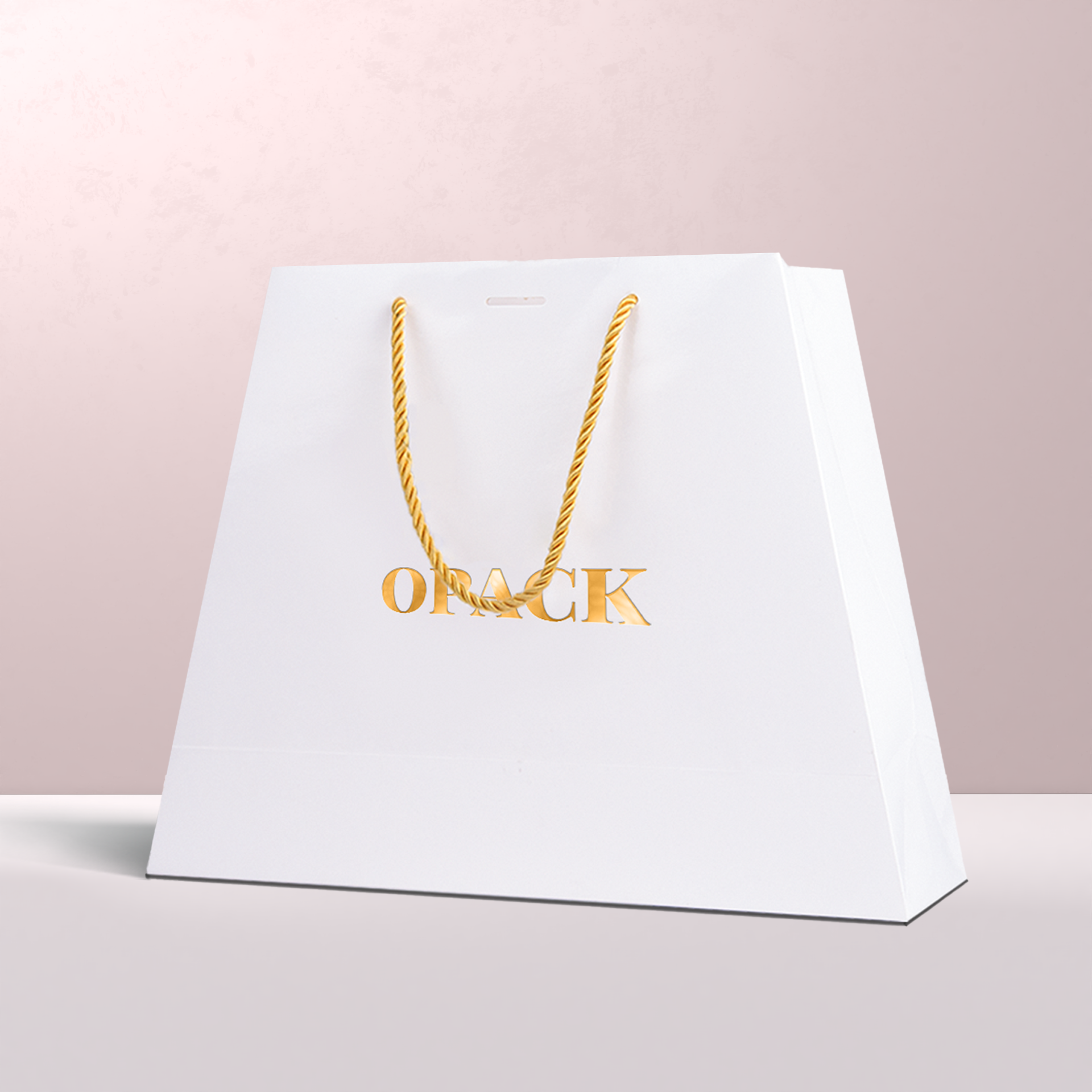
Do you need a real material comparison for your custom shopping bags? Send your project details to Opack and request a quote with kraft and coated paper options.
Email Opack Visit WebsiteHave Questions or Need More Details?
Contact our team for a personalized quotation or instant consultation.
Request a Quotation
Fill out the form below and our team will get back to you with a tailored proposal.
WhatsApp Direct Chat
Prefer to chat in real-time? Message us on WhatsApp for instant assistance & quick answers.
- Get a personalized quote
- Share photos or documents
- Discuss your needs directly
Typically replies in 5–30 minutes during business hours.