
Ranking the Top 5 Handle Styles for Custom Shopping Bags in 2026
Ranking the Top 5 Handle Styles for Custom Shopping Bags in 2026
Handle style is usually the last specification a brand confirms on a custom shopping bag — and the first thing a shopper actually touches. In 2026, as retail and e-commerce programs move toward paper-based packaging, the handle has become a genuine engineering and branding decision rather than a finishing afterthought.
This article ranks the five handle styles published in Opack’s PSB custom shopping bag specification: Paper Twisted Handle, Flat Paper Handle, Cotton Rope, Ribbon Handle, and Die-Cut Handle. Each is assessed against the four criteria that decide retail and e-commerce performance: load capacity, unboxing experience, aesthetic impact, and cost-effectiveness.
Opack is a custom packaging manufacturer established in 2010 in Longgang, Wenzhou City, Zhejiang Province, China. The company produces custom shopping bags, custom rigid boxes, custom folding cartons, and custom mailer boxes for industries including apparel, cosmetics, retail, gifting, and jewelry, from a 10,000 m² facility with approximately 160 staff and an annual production capacity of 10,000,000 units.
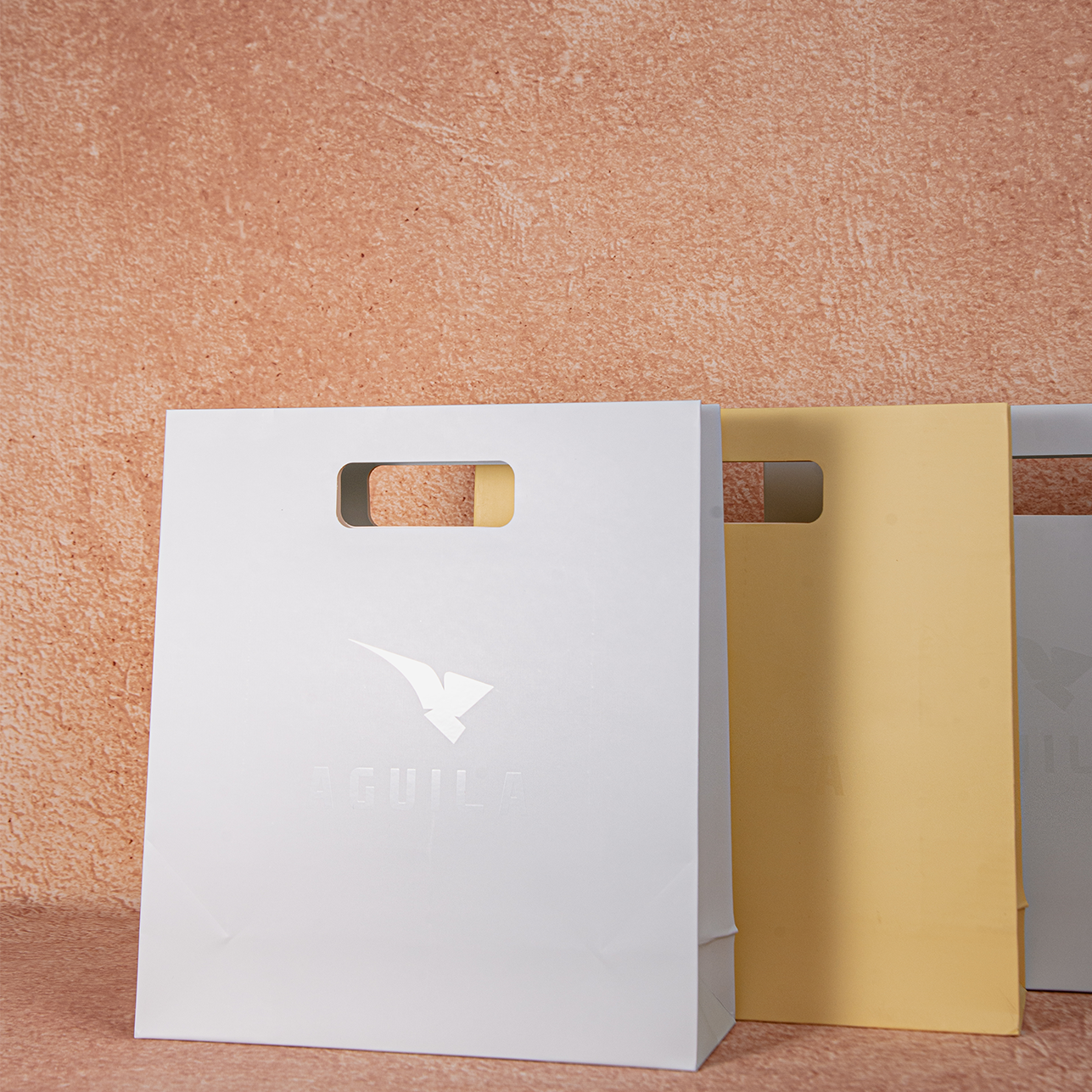 A custom paper shopping bag with handle — the base specification behind this ranking.
The Problem: Handles Are Chosen Last, Then Decide Everything
Most custom shopping bag projects follow the same sequence: size first, then paper, then printing, then branding, and finally the handle. The handle is treated as a small line item. In practice, it is the component that determines whether the bag survives the trip home, how the load transfers into the paper, and how the bag feels in the customer’s hand.
Three failure patterns appear repeatedly in retail and e-commerce programs.
- Load mismatch. The paper thickness and the bag structure set the load window — the published PSB range is 2–15 kg depending on paper thickness and structure. If the handle is selected before the load target is defined, the bag may never reach the upper end of that range.
- Unboxing mismatch. A bag finished with hot stamping or soft-touch lamination can still feel inexpensive if the handle is thin relative to the weight of the contents.
- Specification mismatch. A handle is a separate component. The same application data that lists custom handles also lists custom stickers and custom hang tags as matched equipment, which means the handle belongs to a configured system rather than being a standalone add-on.
Ranking handles is therefore not about which one is inherently superior. It is about which handle behaviour fits the load, the shopping journey, and the brand message you are paying for.
Industry Background: Why Handle Specifications Moved Up the Agenda in 2026
Several structural signals explain why buyers are examining handles, materials, and finishing more closely this year.
- The global paper bags custom printing market was valued at USD 2.78 billion in 2024 and is projected to grow at a CAGR of 13.9% through 2030 (Grand View Research).
- The broader paper bags market reached USD 6.06 billion in 2024, with expectations to grow to USD 7.81 billion by 2029 (MarketsandMarkets).
- China is the world’s leading exporter of paper sacks and bags, with total exports valued at approximately USD 1.91 billion in 2023 (UN Comtrade / WITS).
- Brown kraft paper remains the dominant material segment, estimated to hold a 58% share of total material demand by 2026, driven by sustainability preferences (Future Market Insights).
- Asia Pacific is the largest regional market for paper bags, accounting for over 36.5% of the global share in 2025 (IMARC Group).
- Forest Stewardship Council (FSC) certification is the primary industry standard for verifying sustainable sourcing, with a 56% global consumer recognition rate (Forest Stewardship Council).
Published market sizes vary by report scope — IMARC Group sizes the paper bags market at USD 6.2 billion, while Grand View Research sizes the kraft paper bag segment at USD 4.5 billion — which is why any single figure should be treated as directional rather than exact.
Two practical conclusions follow for buyers. First, custom printing is the fastest-growing slice of the paper bag market, which means more brands are investing in printed bags and competing on how the finished object feels, not only on how it looks. Second, material direction matters: kraft dominance coexists with premium coated and specialty paper programs, and Opack’s PSB specification covers all four material families — kraft paper, whiteboard paper, specialty paper, and coated paper — so the handle choice has to be evaluated against whichever material family the project uses.
How This Ranking Was Built
The five handle styles were ranked on four buyer criteria that map directly to retail and e-commerce performance:
- Load behaviour — how the handle transfers weight into the bag body and how comfortable the grip is under carried load.
- Unboxing experience — how the handle feels at handover and how much it contributes to the perceived value of the packaging.
- Aesthetic impact — how much the handle supports the brand message and how well it pairs with the approved finishing list.
- Cost-effectiveness — how many separate components and assembly steps the handle introduces.
The rating scale used below is deliberately qualitative — Strong, Moderate, or Situational — because no verified per-handle load or price figures are published for the PSB specification. Any load or cost figure for a real project has to be confirmed against the actual paper thickness, structure, finishing, and order quantity at quotation.
Scope note: this ranking covers only the five handle options listed in Opack’s PSB custom shopping bag specification and the four approved paper materials. No handle, material, or finishing option outside that published list is evaluated here.
The Top 5 Handle Styles for Custom Shopping Bags, Ranked
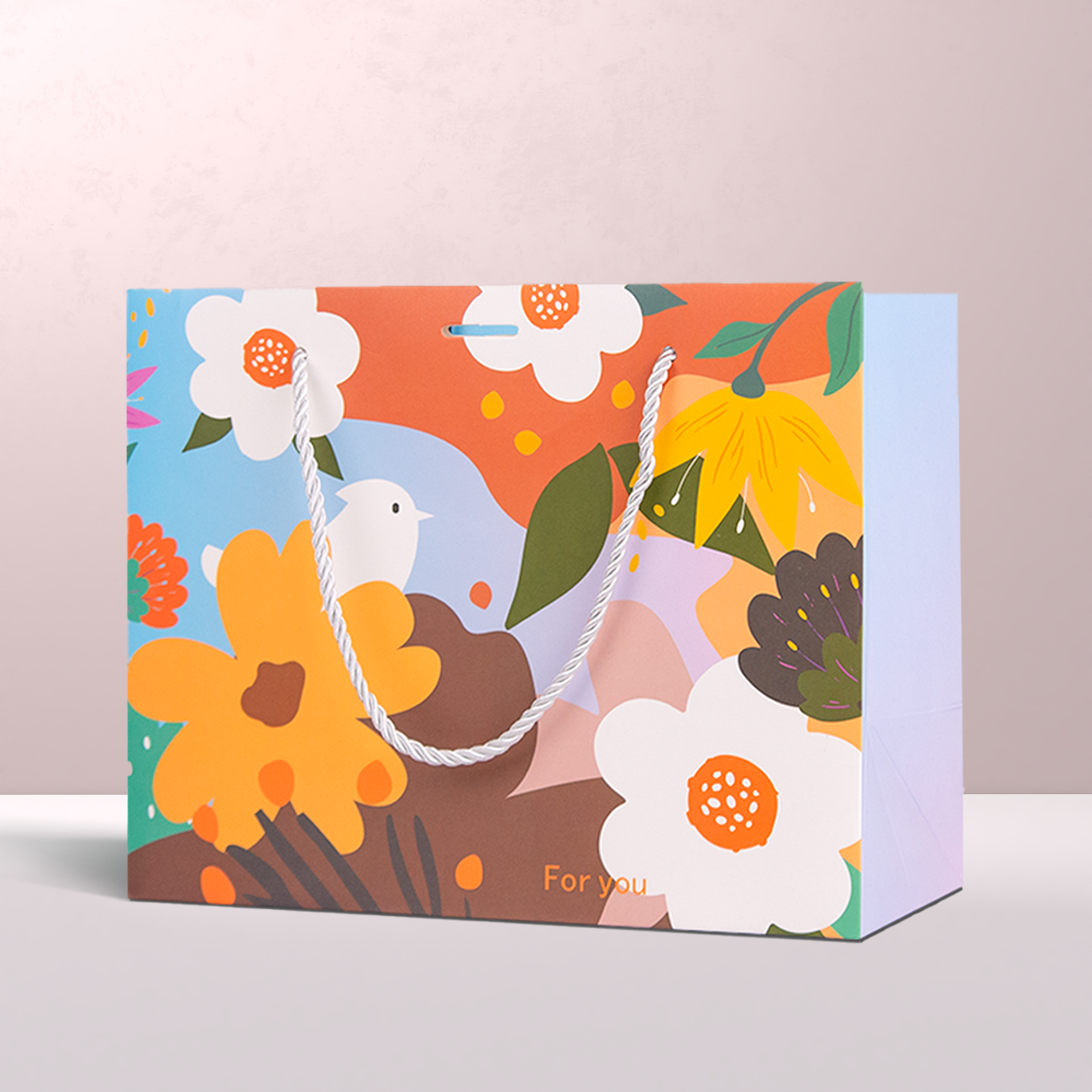 A custom printed shopping bag: printing and handle style are specified together, not sequentially.
#1 Paper Twisted Handle — The Most Versatile for Retail and E-Commerce
The paper twisted handle is a twisted paper cord formed into a handle and attached at the top edge of the bag. It takes first place because it is the option that performs credibly in both counter-service retail and parcel-based e-commerce while keeping the bag inside a single paper-first material system.
Load behaviour. A twisted cord keeps a rounded, comfortable grip and distributes the carried weight along the bag’s top edge, which is why it is widely specified for medium-weight retail and shopping applications. As with every handle on this list, the real ceiling comes from paper thickness and structure: Opack publishes a 2–15 kg window for the PSB bag depending on those two variables, not on the handle alone.
Unboxing experience. Predictable and reassuring. Shoppers recognise the format instantly, which reduces handling hesitation at the counter, and it fits the reusable paper packaging mode described in the product’s application data.
Aesthetic impact. The handle can be produced in a matching or contrasting paper, and it does not restrict the approved finishing list — hot stamping, spot glossy UV, holographic foiling, embossing, debossing, soft touch lamination, and matte or gloss lamination all remain available on the bag body.
Cost-effectiveness. Strong. It introduces no non-paper component and relies on a well-established assembly step, which keeps quotations straightforward across kraft, whiteboard, specialty, and coated paper.
Where it loses. In luxury gifting, a twisted paper handle reads as practical rather than precious. At the top of the load window, the top-edge structure and paper thickness must be specified deliberately rather than assumed.
#2 Cotton Rope Handle — The Strongest Unboxing and Reuse Signal
A cotton rope handle replaces the paper cord with a soft rope that is anchored through the bag top. It ranks second because it delivers the strongest tactile and reuse signal of the five while remaining compatible with the same bag body and the same print and finishing options.
Load behaviour. Rope is comfortable across the palm and is a common specification for apparel and lifestyle bags carrying soft goods. Because rope is a separate component anchored at two points, anchor placement and top-edge structure are where specification discipline matters most.
Unboxing experience. This is where cotton rope wins. The texture interrupts the all-paper surface, which reads as considered and premium at handover, and a bag the customer keeps continues to carry the brand after purchase.
Aesthetic impact. Strong, particularly in apparel, cosmetics, and gifting. It also aligns with the sustainability direction of the market: FSC certification, the primary standard for verified sustainable sourcing, carries a 56% global consumer recognition rate, and many brands specify a rope handle when they want the packaging to look as responsible as it claims.
Cost-effectiveness. Moderate to higher. Cotton rope adds a second material category and an additional assembly step. Because cotton is not a paper fibre, brands communicating a single-material recycling story should confirm material handling with their supplier before publishing that claim.
Where it loses. Top-tier gifting may prefer ribbon for its decorative range, and high-volume promotional programs may find it hard to justify against a die-cut handle.
#3 Flat Paper Handle — The Best Surface for Large-Format Branding
A flat paper handle is a paper strip folded and bonded flat against the top of the bag, giving the widest contact surface of any option in the list.
Load behaviour. The flat strip spreads pressure across the palm instead of concentrating it, which makes it comfortable for bulkier contents and larger bag formats where the load is wide rather than dense.
Unboxing experience. Clean and neutral. It does not draw attention to itself, which is exactly the point when the print on the bag body is meant to be the hero.
Aesthetic impact. The flat handle is the largest uninterrupted surface at the top of the bag, so it can carry colour, a repeat logo, or a pattern. For brands ordering custom paper bags with logo printing across every visible surface, this is the handle that contributes rather than competes.
Cost-effectiveness. Strong, because it uses the same paper stock as the bag and introduces no additional material category.
Where it loses. Tactile appeal is lower than a twisted paper or rope handle, and the bond between handle and top edge is critical — specify it loosely and the handle can feel weak even when the bag itself is robust.
#4 Die-Cut Handle — The Most Efficient for E-Commerce Parcels
A die-cut handle is cut directly into the bag body, with the remaining paper forming the grip. There is no separate handle component at all.
Load behaviour. The handle is only as strong as the surrounding paper, so die-cut openings are typically specified for lighter contents or for structures where the paper is thick enough to hold the cut edge. For heavier programs, a separate handle is normally the safer route — always confirm against the 2–15 kg window for the actual structure.
Unboxing experience. Minimal and modern. It reads as engineered rather than decorated, which suits pared-back brand identities and works well in e-commerce, where the bag often sits inside or alongside a shipping parcel.
Aesthetic impact. The opening becomes part of the visible design, so print registration and artwork placement matter a great deal. When the cut is aligned to the printed layout, the result looks deliberate and precise.
Cost-effectiveness. High, because it removes an entire component and its assembly step — the main reason it dominates high-volume, lighter-load retail and promotional programs.
Where it loses. It offers the least flexibility if load requirements change later, and it cannot be upgraded after production. Choosing it is a one-way decision.
#5 Ribbon Handle — Highest Aesthetic Impact, Narrowest Load Window
A ribbon handle uses ribbon as the carrying element, usually threaded through reinforced openings at the top of the bag.
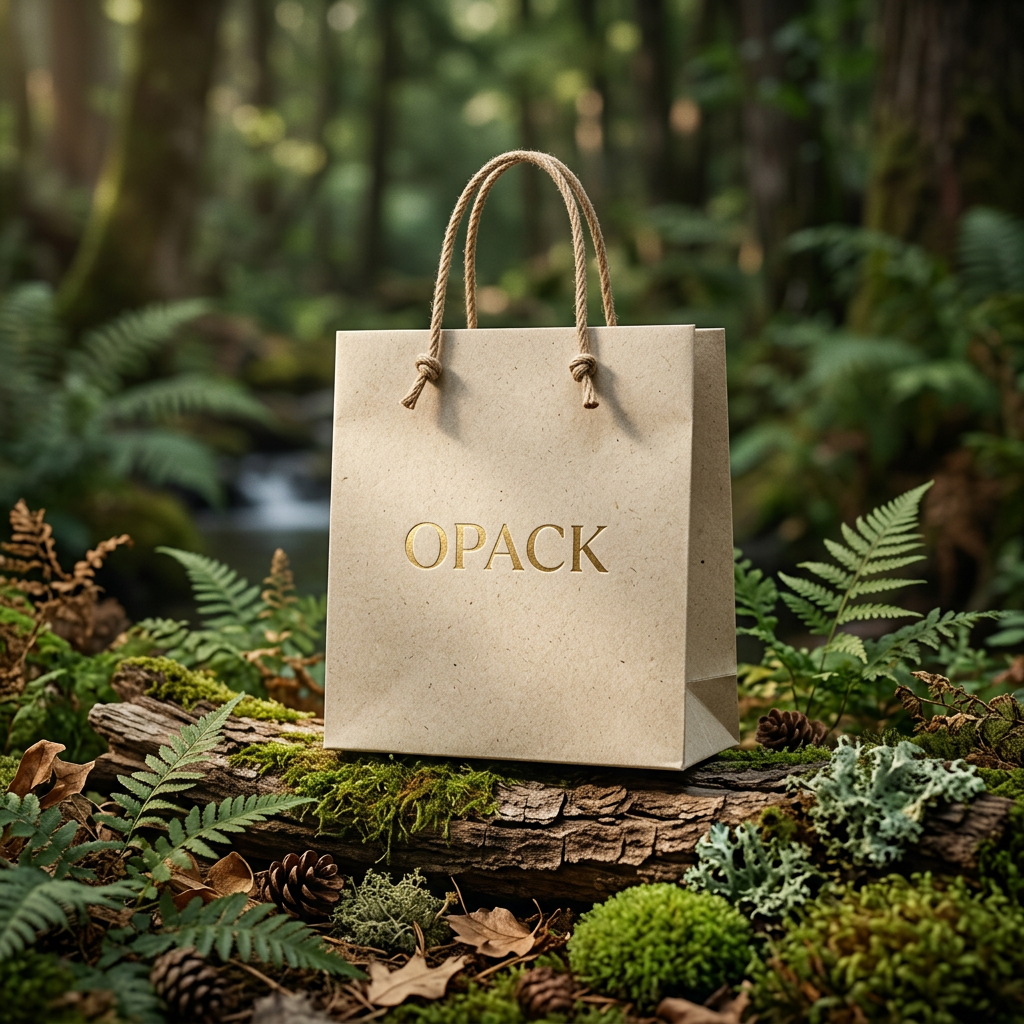 Custom luxury paper bag — the gifting and boutique retail context where ribbon handles are most often specified.
Load behaviour. Ribbon is a narrow, soft component, so it is typically specified for lighter contents relative to a twisted paper or cotton rope handle. If the load target sits in the middle or upper part of the 2–15 kg window, a twisted paper or rope handle is normally the safer specification.
Unboxing experience. The highest of the five for gifting. A ribbon handle turns handover into a moment, which is why it appears most often in cosmetics, jewellery-adjacent retail, and gift programs.
Aesthetic impact. Strongest of the five, and the easiest to match to seasonal or brand colours. It pairs naturally with the premium end of the finishing list — hot stamping, holographic foiling, embossing, debossing, and soft touch lamination.
Cost-effectiveness. Component- and assembly-driven. Ribbon specification and the extra assembly step determine the cost, so this handle should always be quoted against the actual project rather than estimated from a generic list.
Where it loses. It is the least suited option for heavy or utilitarian loads, and it is the handle most likely to be over-specified for a bag whose contents never justify it.
Step-by-Step: Choosing a Handle Style for Your Next Order
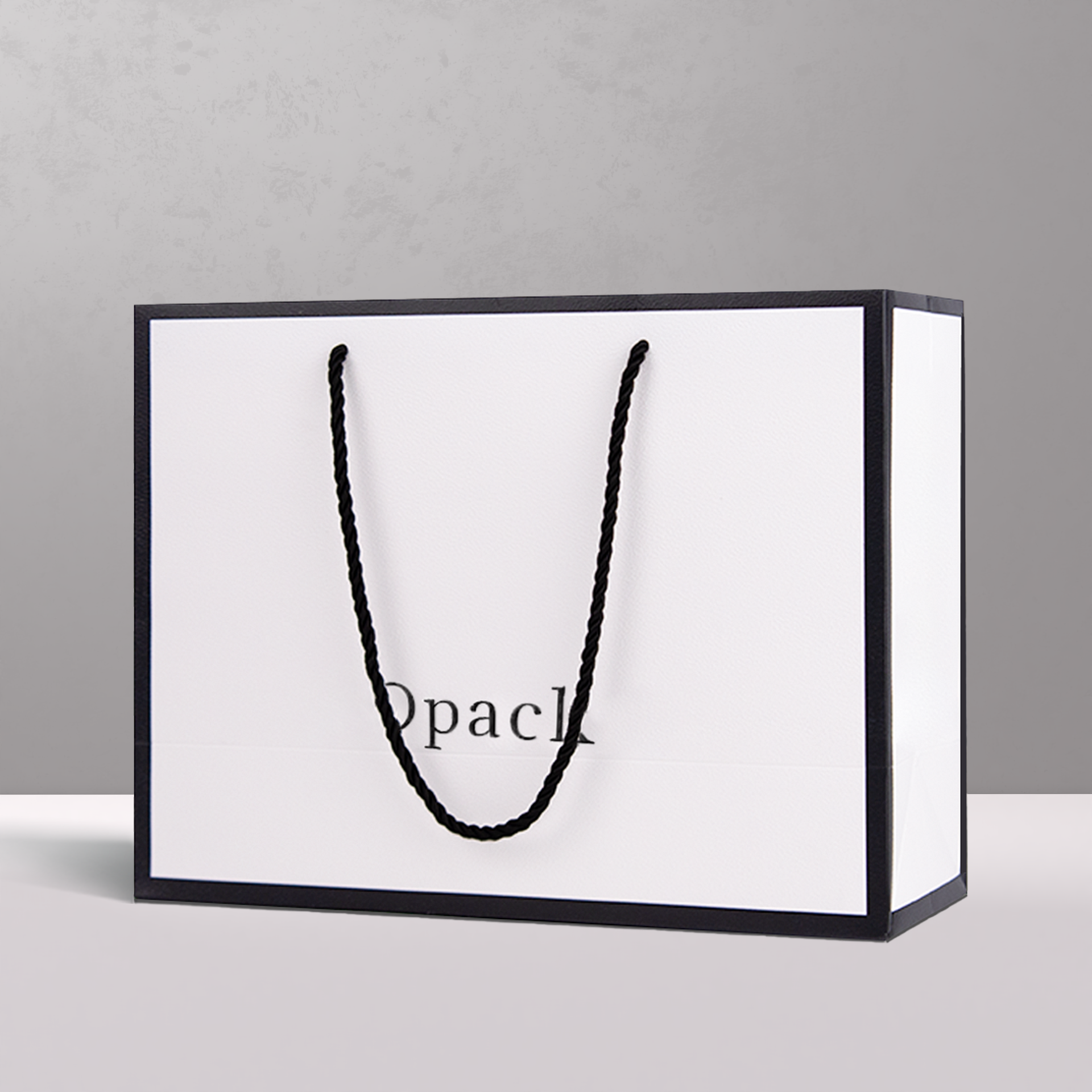 Custom paper shopping bag with logo — handle, material and print should be specified as one system.
The ranking above is only useful if it is applied in the right order. Use this seven-step sequence to move from an undefined bag to a specification you can quote.
- Define the load target in kilograms first. Write down the heaviest realistic contents, not the average. The PSB window is 2–15 kg depending on paper thickness and structure, so the load target has to exist before the handle is chosen.
- Select the paper material second. Kraft paper, whiteboard paper, specialty paper, and coated paper each change stiffness, surface and print behaviour. Material decides whether the load window is even reachable.
- Decide the surface treatment third. Hot stamping, spot glossy UV, holographic foiling, embossing, debossing, soft touch lamination, and matte or gloss lamination are specified on the bag body, but they shape perceived value together with the handle.
- Match the handle to the shopping journey. Counter retail, parcel e-commerce, and gift handover put different demands on the same bag. Use the ranked list above as a decision shortcut, not as a fixed rule.
- Confirm the size range and structure. Sizes are fully customizable across small, medium, large, and extra large, and structure determines whether the handle can deliver the load behaviour you expect.
- Validate with a sample before committing. Ask for a pre-production sample that combines the exact handle, material, printing, and finishing, then test it with the real contents.
- Place the production order. The published minimum order quantity for the PSB custom shopping bag is 1,000 pieces, at which point the validated sample becomes the reference for the production run.
Use Cases: Matching Handle Style to Retail and E-Commerce Scenarios
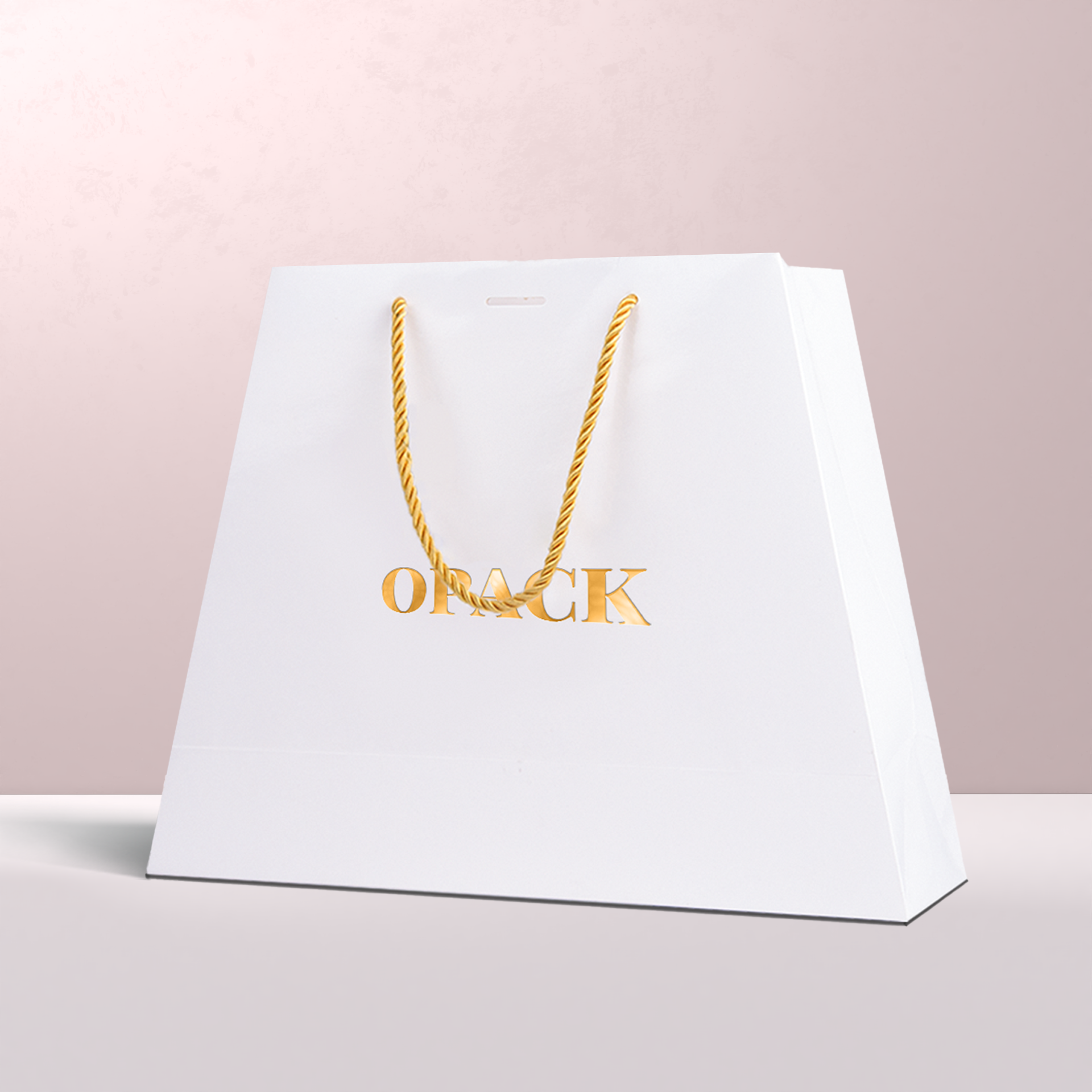 A custom shopping bag with hot stamping — premium finishing usually raises expectations for the handle as well.
Apparel retail
Soft goods keep loads moderate but bags are carried for long periods, so grip comfort matters more than raw strength. A paper twisted handle or a flat paper handle is usually the practical default, while cotton rope lifts perceived value for higher price points.
Cosmetics and beauty
Bags are small, contents are light, and the packaging often becomes a keepsake. Ribbon and cotton rope handles support that positioning; a die-cut handle is the efficient alternative for high-volume promotional runs.
Gifting and seasonal programs
The bag is part of the gift. Ribbon handles deliver the strongest handover moment, and the approved foil, embossing, and soft touch options let the handle match the gifting finish rather than fight it.
Trade shows and events
Volumes are high, contents are usually light, and giveaway bags are handled briefly. Die-cut and paper twisted handles keep the specification economical while still carrying logo printing.
E-commerce packaging
Bags travel inside or alongside parcels, so structure and consistency matter more than decoration. Die-cut handles remove a component and reduce assembly, while twisted paper handles remain the safer choice when contents are denser.
Large-format flagship retail
Wide bags with wide loads suit flat paper handles, which spread pressure across the palm and offer the largest continuous surface for brand graphics at the top of the bag.
Comparison Table: Five Handle Styles Side by Side
| Rank | Handle style | Load behaviour | Unboxing & aesthetic impact | Cost drivers | Best-fit applications |
|---|---|---|---|---|---|
| 1 | Paper Twisted Handle | Strong — rounded grip, load distributed along the top edge | Moderate to strong — familiar, dependable, works with all approved finishes | Paper stock only; established assembly step | Retail, e-commerce, apparel, general shopping programs |
| 2 | Cotton Rope | Strong — comfortable across the palm; anchor placement is critical | Strong — premium texture and the clearest reuse signal | Second material category plus extra assembly | Apparel, cosmetics, gifting, reuse-oriented programs |
| 3 | Flat Paper Handle | Strong for wide, bulky loads; pressure spread across the palm | Moderate — neutral look, largest printable top-edge surface | Same paper stock as the bag; bonding quality is the variable | Large-format retail, logo-heavy branding programs |
| 4 | Die-Cut Handle | Situational — limited by surrounding paper; best for lighter contents | Moderate — minimal, engineered look; artwork alignment matters | Lowest component count; no separate handle to attach | E-commerce, trade shows, high-volume promotional runs |
| 5 | Ribbon Handle | Situational — narrow, soft component; best for lighter contents | Strongest — highest decorative and gifting impact | Ribbon specification plus additional assembly step | Gifting, cosmetics, boutique and luxury retail |
Load, cost and application entries in this table are editorial assessments based on Opack’s published PSB handle list and material specification. They are not measured performance data. Confirm load and cost for your own specification at quotation.
Frequently Asked Questions
Are custom shopping bags with these handles FSC compliant?
The published application data for Opack’s custom shopping bag states that the production scenario incorporates eco-friendly water-based printing inks, low-VOC adhesive materials for safe and eco-friendly production, and compliance with FSC standards. FSC certification is the primary industry standard for verifying sustainable sourcing, with a 56% global consumer recognition rate. Because certification scope applies to specific materials and supply chains, confirm the exact documentation for your chosen paper, handle and finishing combination before you publish a compliance claim.
Which handle styles can be produced on Opack’s PSB custom shopping bag?
The published specification lists five handle options: Paper Twisted Handle, Flat Paper Handle, Cotton Rope, Ribbon Handle, and Die-Cut Handle. The same model can be produced in kraft paper, whiteboard paper, specialty paper, or coated paper, with CMYK printing, Pantone printing, UV printing, offset printing, or screen printing. Sizes are fully customizable across small, medium, large, and extra large, and the bag carries a 2–15 kg weight capacity depending on paper thickness and structure.
Does the handle style change the price or the minimum order quantity?
The published minimum order quantity for the PSB custom shopping bag is 1,000 pieces, and that figure does not change with the handle style. What changes is the specification behind the cost: a paper twisted handle uses only the bag’s paper stock, while a cotton rope or ribbon handle adds a second material and an additional assembly step. Because unit pricing depends on material, size, printing, finishing, and quantity together, the accurate approach is to request a quotation against the exact specification rather than compare handle styles in isolation.
Can we validate a handle choice before committing to 1,000 pieces?
Yes, and it is the recommended step. Request a pre-production sample that combines the actual handle style with the chosen paper material, printing method, and finishing, then test it with the real contents rather than representative weights. Sampling is the only reliable way to judge grip comfort, top-edge behaviour, and how the handle looks against the printed artwork — and a validated sample then becomes the production reference for the full run.
How do we start a handle specification with Opack?
Send your load target, size, material preference, print and finishing requirements, and approximate quantity, and the team will map them to the PSB specification. You can reach Opack at sales@opack.com, by telephone on +86 17366633702, or via WhatsApp at +86 15968809016. A downloadable company profile with product and capability details is available here: Opack Company Profile (PDF).
Conclusion
The handle is a small line item that quietly decides three things at once: whether the bag can carry the contents, how the customer feels at handover, and how much of the packaging budget delivers visible value. Ranked for retail and e-commerce in 2026, the paper twisted handle takes first place for versatility, cotton rope takes second for the strongest unboxing and reuse signal, the flat paper handle third for large-format branding, the die-cut handle fourth for e-commerce efficiency, and the ribbon handle fifth because it delivers the highest aesthetic impact within the narrowest load window.
The decision rule that matters more than the ranking is sequence. Set the load target first, choose the paper material second, then select the handle against the application, and validate the combination with a sample before production. That sequence keeps the specification inside the published 2–15 kg window and prevents the most common outcome in custom shopping bag projects — a bag that looks premium and carries poorly.
Next Step: Sample Your Handle Specification
Opack produces custom shopping bags, custom rigid boxes, custom folding cartons, and custom mailer boxes for apparel, cosmetics, retail, gifting, and jewelry brands, with export business accounting for 80% of sales across the EU, USA, and Middle East.
Send your load target, size, material, and preferred handle style to sales@opack.com, message us on WhatsApp at +86 15968809016, or download the company profile and visit Opack to review the full paper bag range.
Have Questions or Need More Details?
Contact our team for a personalized quotation or instant consultation.
Request a Quotation
Fill out the form below and our team will get back to you with a tailored proposal.
WhatsApp Direct Chat
Prefer to chat in real-time? Message us on WhatsApp for instant assistance & quick answers.
- Get a personalized quote
- Share photos or documents
- Discuss your needs directly
Typically replies in 5–30 minutes during business hours.