
Rigid Box vs. Corrugated Box: Which Structure Fits Your Premium Product?
Rigid Box vs. Corrugated Box: Which Structure Fits Your Premium Product?
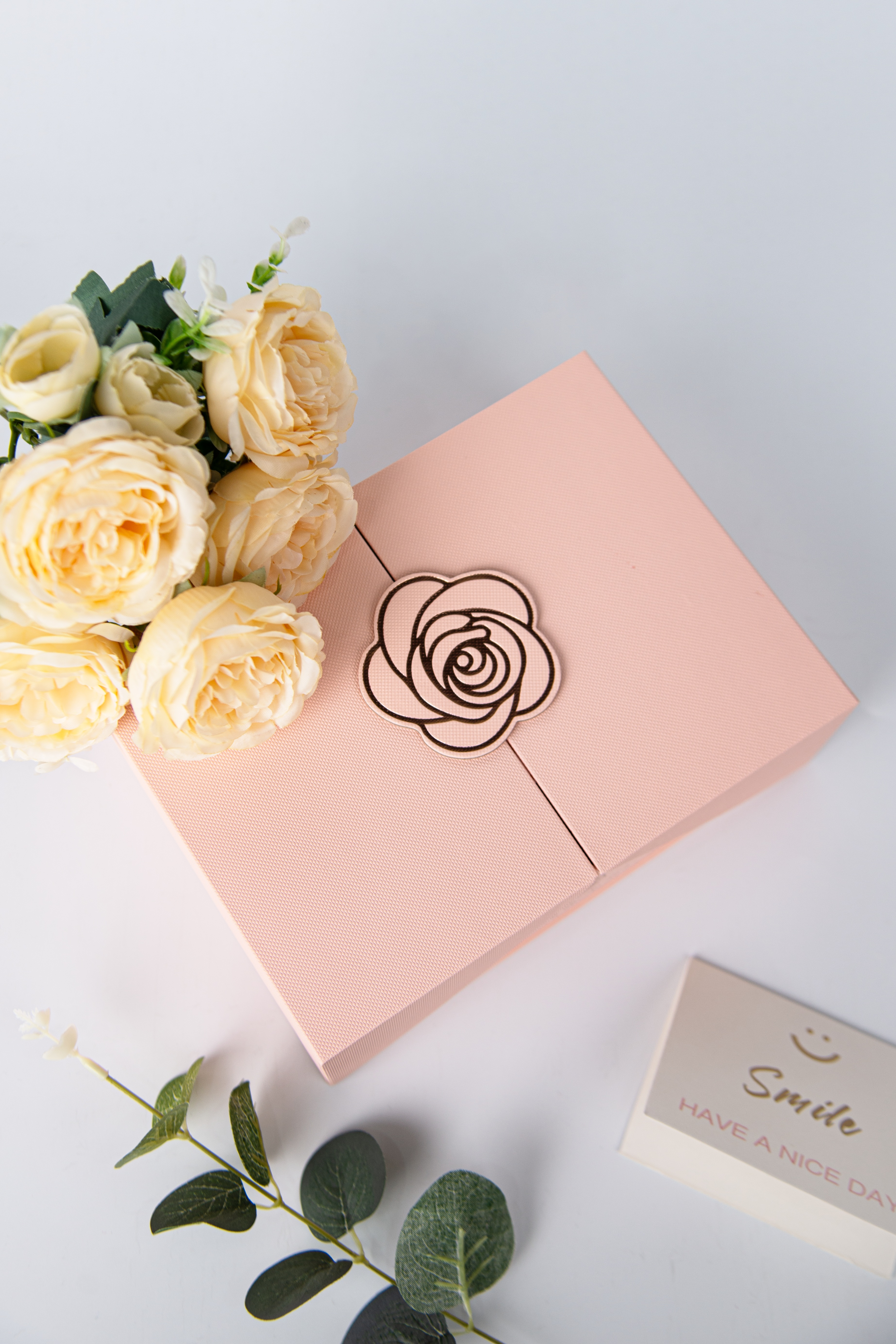
Choose a rigid box when the packaging has to present, protect and be kept. Choose a corrugated box when the packaging only has to survive the journey. In premium categories — jewelry, watches, perfume, cosmetics and gift sets — the two structures rarely compete for the same job: they sit in the same program, with a rigid setup box facing the customer and a corrugated outer carrying the load through distribution.
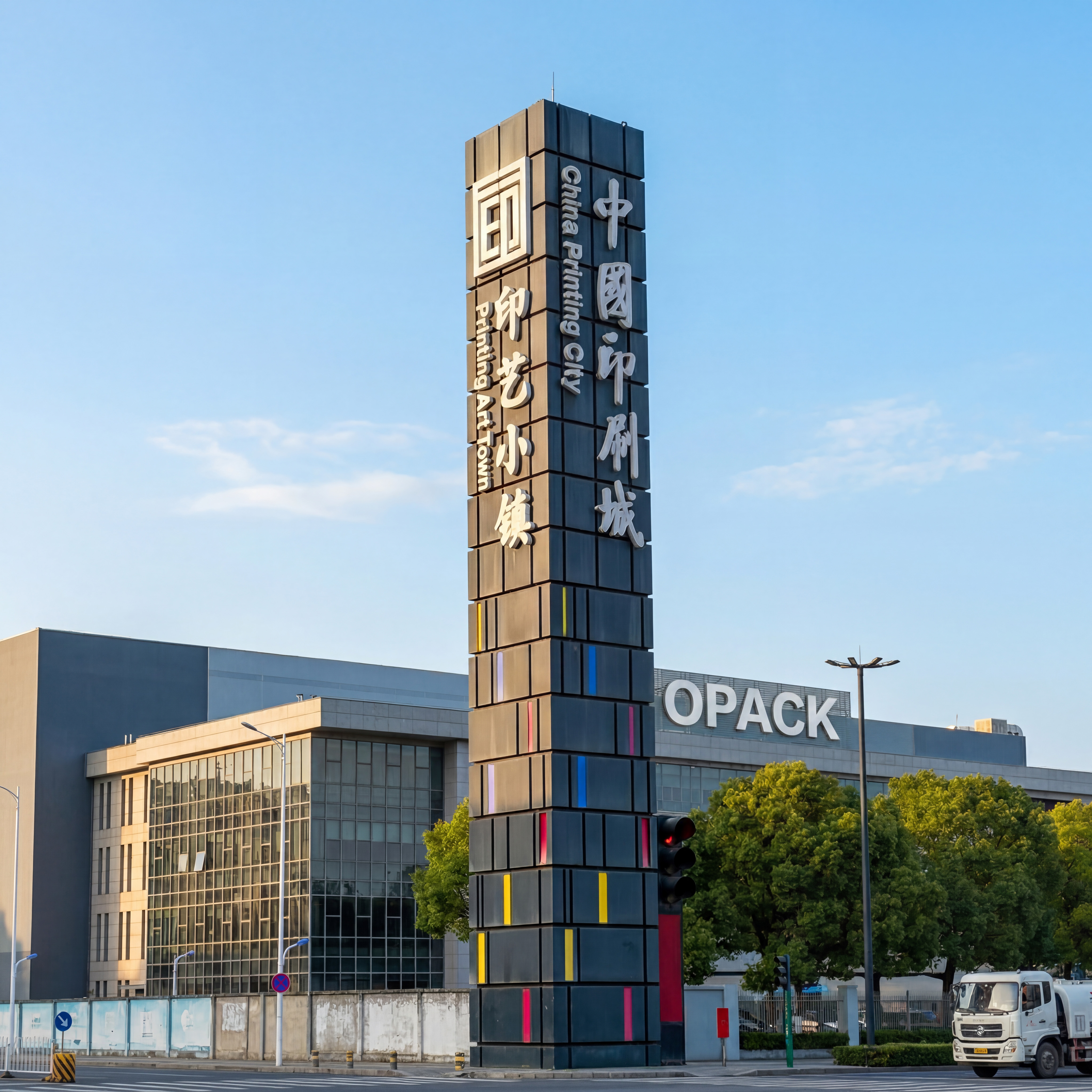
Opack is a custom packaging manufacturer based in Longgang, Wenzhou, China — the Printing City of China — producing custom rigid boxes, folding cartons, mailer boxes, paper shopping bags and paper tubes since 2010. Its custom rigid box range (models RB-C01, RB-G02, RB-M03, RB-L04, RB-B05, RB-O06, RB-T07, RB-D08 and RB-W09) is built on grey board or MDF with a separately applied wrapping layer, and the company exports to EU, US and Middle East markets. That published product data is the reference point for the structural comparison below.
Short answer: if the box is merchandised on a shelf, opened in front of a customer, or kept after purchase, specify a rigid box. If the box is opened once and discarded, specify corrugated. If both statements are true for the same product, specify both structures and dimension them as one packaging system.
Why the Structure Decision Comes Before the Design Decision
Structure determines what the design is allowed to do. Board grade, wall build, closure type, insert cavity and the printable surface are all fixed by the structural choice, and each one constrains artwork. A foldable rigid box presents a continuous wrap panel; a magnetic closure box presents a lid edge; a corrugated transit case presents a liner surface that will not accept the same finishing set.
Buyers who start with artwork usually pay for it twice. The finishing specification — hot stamping, spot glossy UV, holographic foiling, embossing — is only feasible on the surfaces the structure provides, and the insert that holds a watch or a perfume bottle has to be defined before the internal depth is locked. A structure-first sequence reduces re-quoting and the risk that a validated sample cannot be reproduced in mass production.
Three questions separate the two formats faster than any specification sheet:
- Who opens the box, and in what condition does the product need to be when they do?
- Does the box travel alone, or inside a second pack?
- Is the box expected to be kept, or is it disposal?
Industry Background: Where Rigid and Corrugated Demand Stands
The two structures are usually discussed as separate markets, but their growth is linked. Global Market Insights values the global rigid boxes market at USD 31.2 billion in 2025 and projects USD 48.9 billion by 2035. Grand View Research projects the rigid box segment within the broader corrugated market to expand at a 9.2% CAGR from 2026 to 2033, driven by e-commerce and premium packaging needs — a useful way to read the relationship, because corrugated growth is carrying a premium sub-segment with it.
Regional demand is uneven. Asia Pacific dominated the global rigid packaging market with a revenue share of 48.2% in 2023, while Europe remains the largest specific market for luxury rigid boxes. Material choice is moving in the same direction: paper and paperboard account for approximately 55.4% of total rigid box material revenue as brands shift toward recyclable substrates (Future Market Insights).
Regulation is now part of the structure decision rather than a downstream formality. The EU Packaging and Packaging Waste Regulation (PPWR), Regulation (EU) 2025/40, becomes mandatory on 12 August 2026 and requires all packaging to be recyclable and properly labeled. For a brand selling into the EU, that pushes the fibre question toward paper: rigid boxes and corrugated boxes both sit inside the fibre stream, so the decisive issues become material sourcing, chain of custody and labelling. Custom rigid boxes fall under HS Code 481920 (folding cartons and non-corrugated boxes), a major export category in which China is a primary global supplier (UN Comtrade).
Structural Rigidity: How the Two Constructions Behave
The structures differ at the level of the core, not the print. An Opack custom rigid box uses grey board (also written greyboard or chipboard) or MDF as the structural core, with a separately applied wrapping layer of coated paper, kraft paper, specialty paper, textured paper or white paperboard. Board thickness is customizable. Because the wall is a bonded board panel rather than a fluted sheet, the box holds a straight edge and a defined corner through handling, and the wrapped surface is the surface the customer sees.
Corrugated board is engineered around a different objective. A liner-and-flute construction is designed to absorb impacts and carry stacking load with less fibre per unit of protection, which is why it dominates shipping, distribution and e-commerce fulfilment. It is the more efficient structure when the box has to survive a journey; it is generally the less suitable structure when the box has to sit open on a retail counter, carry foil stamping across a lid edge, or be kept by the customer afterwards.
Neither construction is unconditionally better. Rigid boxes add weight and cube, which changes freight and storage planning — a point that matters when buyers compare landed cost rather than unit price. Corrugated boxes rarely deliver the presentation grade a premium counter requires. The practical reading: match the structure to the box's job, then manage that structure's known trade-off instead of paying for capability the box will never use.
Reusable Presentation Mode: What Happens After the Sale
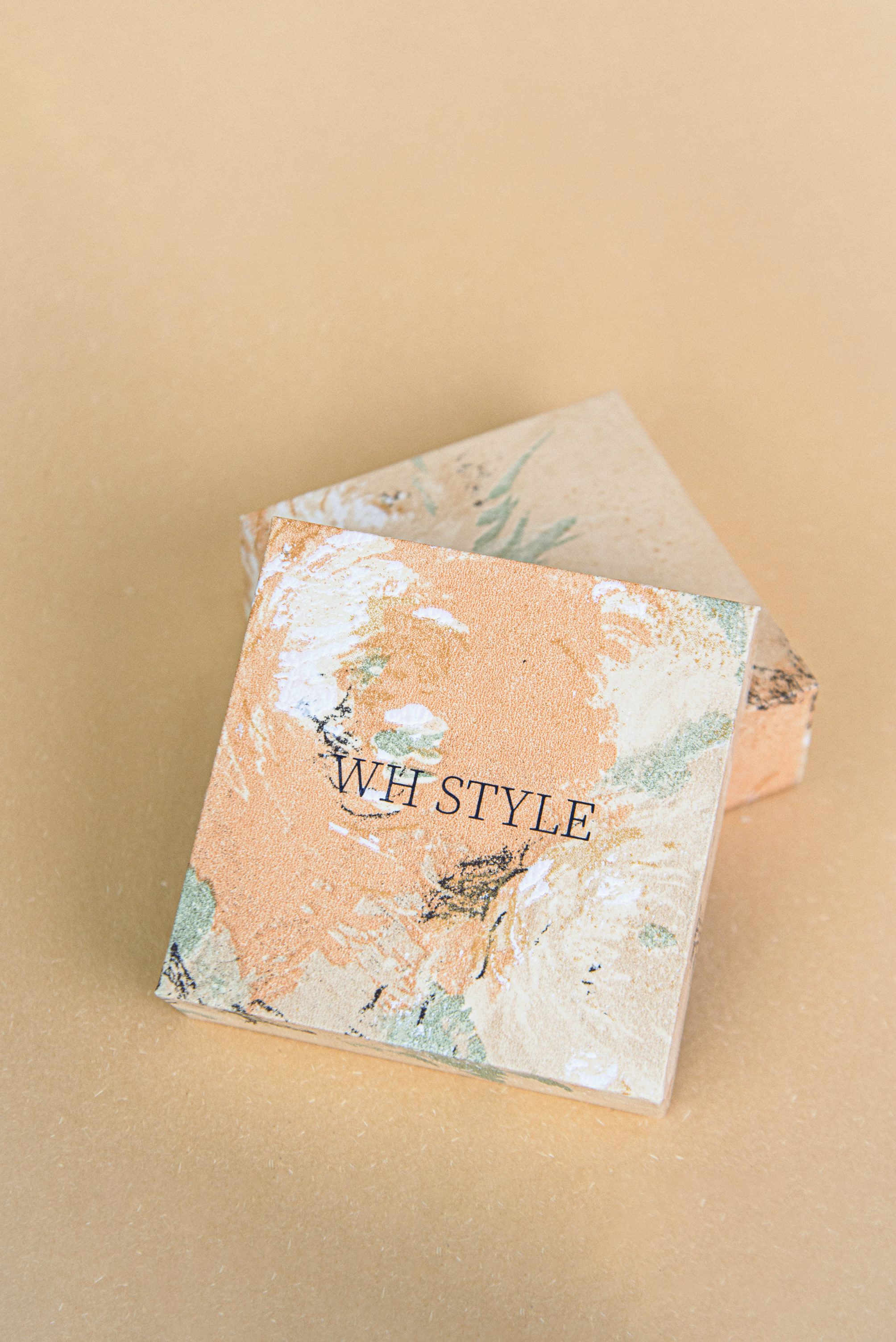
Rigid boxes are often specified for what happens after purchase. A rigid setup box with a magnetic or ribbon closure can be opened and closed repeatedly without losing shape, which makes it usable as a keepsake, a storage case for the product, or a second display surface inside a retail environment. That is why jewelry, watches, perfumes and cosmetics & beauty are standard rigid box applications.
Corrugated packaging is normally opened once and recycled. That is an efficient outcome for a transit pack and a poor outcome for a gift pack: the moment a customer is asked to keep a box, the structural requirement shifts from impact performance to shape retention, and corrugated board no longer satisfies it.
Closure choice belongs to this decision. Opack's rigid box structures are available with foldable, magnetic or ribbon closures. A collapsible (foldable) rigid box keeps the rigid wall but collapses before use, which is relevant when storage volume in the customer's or distributor's warehouse matters; a magnetic closure is the common choice for a reusable presentation pack; ribbon closure is typically used where the opening sequence itself is part of the brand experience.
Customization Depth on a Custom Rigid Box: Closures, Printing, Finishing and Inserts
The customization set on a rigid box is broader than on a transit case, and it is worth specifying item by item rather than accepting a supplier's default. Opack's published custom rigid box specification covers:
- Core material: grey board or MDF, with customizable thickness.
- Wrapping paper: coated paper, kraft paper, specialty paper, textured paper or white paperboard.
- Printing: CMYK printing, Pantone printing, UV printing, offset printing and screen printing.
- Finishing: hot stamping, spot glossy UV, soft touch lamination, holographic foiling, embossing, debossing, matte lamination and gloss lamination.
- Structure: foldable, magnetic closure or ribbon closure.
- Size: fully customizable based on product requirements.
- Insert options: foam, paperboard, EVA, plastic tray, corrugated cardboard or silk.
- Minimum order quantity: 500 pcs.
Two details are easy to miss. First, the insert list includes corrugated cardboard, which means a rigid box and a corrugated component can coexist inside a single pack: the rigid shell carries presentation, the corrugated fitment carries the product. Second, customization is not limited to surface treatment — logo, brand name, colour, size, style, finishing, printing method and material are all configurable on Opack's custom packaging production lines, so the structure can be adjusted around the insert rather than the other way round.
Step-by-Step: Choosing a Structure for a Premium Product Line
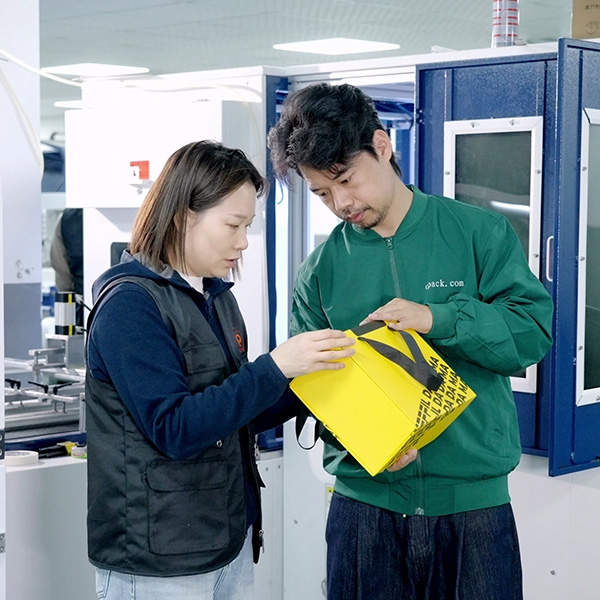
Working through this sequence in order avoids the most expensive mistake in premium packaging — approving a design that the chosen structure cannot deliver.
- Characterize the product. Note weight, fragility, surface sensitivity and whether the item must be held in a fixed position. A watch or a perfume bottle needs a cavity; a folded textile may not.
- Map the journey. A box moving through distribution, retail and a customer's handbag is doing three jobs. Decide which of them the box itself must do and which one a transit pack should absorb.
- Decide the presentation mode. Shelf display, hand-over at counter, unboxing video or courier delivery — each implies a different requirement for shape retention and opening sequence.
- Set the closure. Foldable, magnetic or ribbon. This choice drives lid geometry and how the pack feels when it is reused.
- Define the insert. Foam, paperboard, EVA, plastic tray, corrugated cardboard or silk. Insert depth then fixes the internal box dimension.
- Select printing and finishing only after the surface exists. Hot stamping, foiling and embossing need a specific wrapped surface; matching a finishing plan to a structure after the fact is the usual cause of redesign.
- Check compliance and sourcing. Confirm chain-of-custody documentation for fibre materials, and confirm recyclability and labelling obligations for the destination market — particularly for EU-bound shipments after 12 August 2026.
- Validate with a physical sample, then schedule production. Verify closure action, insert fit, colour and finishing on the sample, and confirm the production window against the launch date.
Use Cases: Jewelry, Watches, Perfume, Cosmetics and PR Boxes
Jewelry and watches. These are the clearest rigid box applications: small, high-value items that need to sit in a fixed position, be handed over in a controlled opening sequence, and be stored afterwards. A silk or EVA insert with a magnetic closure is the standard configuration. Corrugated is normally used only as the outer transit case.
Perfume and cosmetics. Bottle weight and glass fragility make the insert the critical component. Rigid walls resist lateral compression on the shelf, while the wrapped surface carries hot stamping or holographic foiling. Opack lists perfumes and cosmetics & beauty among the standard applications of its rigid box line.
Gift and PR boxes. Brand gifting programs, PR boxes and corporate & promotional packaging are rigid box territory because the box is photographed, unboxed on camera and kept. A collapsible rigid box is a frequent compromise here: rigid presentation with a different storage and freight profile.
Hybrid programs. Where a premium line also ships direct to consumers, the practical answer is a two-part system — rigid box for retail and gifting, corrugated or a mailer for the transit leg. The two structures then have to be dimensioned together, so the rigid box does not move inside its outer.
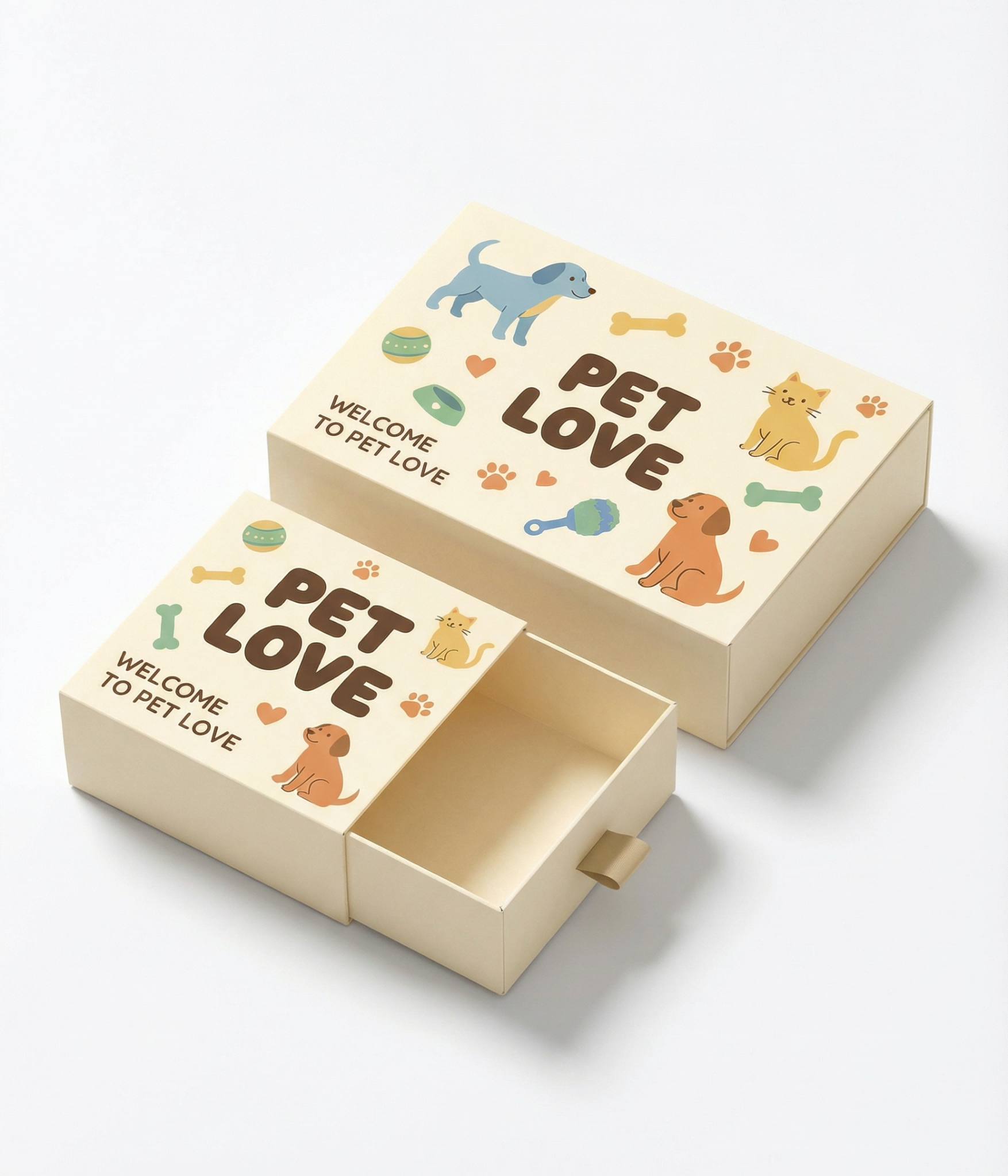
Rigid Box vs. Corrugated Box: Side-by-Side Comparison
| Decision dimension | Custom rigid box (Opack RB series) | Corrugated box (general construction) |
|---|---|---|
| Core material | Grey board or MDF; thickness customizable | Liner-and-flute board built for transit cushioning and stacking load |
| Surface / wrapping | Separate wrap in coated paper, kraft paper, specialty paper, textured paper or white paperboard | Liner surface, typically printed directly; decorative wrapping is not part of the standard construction |
| Closure options | Foldable (collapsible), magnetic closure, ribbon closure | Tuck, glued or taped transit closure |
| Printing | CMYK, Pantone, UV, offset and screen printing | Print method varies by converter; not part of the rigid box specification set above |
| Finishing | Hot stamping, spot glossy UV, soft touch lamination, holographic foiling, embossing, debossing, matte and gloss lamination | Presentation-grade finishing is uncommon in standard transit construction |
| Insert options | Foam, paperboard, EVA, plastic tray, corrugated cardboard, silk | Corrugated dividers and fitments, generally functional rather than decorative |
| Typical uses | Jewelry, watches, perfumes, cosmetics & beauty, apparel, gift packaging, electronics, PR boxes, corporate & promotional packaging | Transit protection, shipping and e-commerce fulfilment |
| After-purchase behaviour | Designed to hold shape and be kept as part of the product presentation | Typically recycled or discarded after delivery |
| MOQ | 500 pcs | Set by the individual converter |
| Lead time | 12–18 days (Opack production) | Set by the individual converter |
| Certification | FSC Chain of Custody (COC), certificate no. GFA-COC-005690, valid until 2026-10-09 | Depends on the converter's own chain-of-custody certification |
The rigid box column reflects Opack's published custom rigid box data (models RB-C01 to RB-W09) and its capability data. The corrugated column describes general structural characteristics of corrugated board rather than any specific supplier's specification, because board grade, closure and print method vary by converter. Confirm corrugated specifications against a converter's own data sheet before running a transit-performance comparison.
Frequently Asked Questions
Is Opack's rigid box production FSC certified, and how does that relate to the EU packaging regulation?
Opack holds FSC Chain of Custody (COC) certification, certificate number GFA-COC-005690, issued by GFA Certification GmbH under the standard FSC-STD-40-004 (Version 3.0), issued on 9 November 2021 and valid until 9 October 2026. The certified scope covers cardboard packaging, sacks and bags of paper, adhesive labels and other pulp and paper products, and the recognised markets include Europe, North America, Australia & New Zealand and the Middle East. The EU deadline is a separate matter: the EU Packaging and Packaging Waste Regulation (PPWR), Regulation (EU) 2025/40, becomes mandatory on 12 August 2026 and requires all packaging to be recyclable and properly labeled. Buyers should treat FSC documentation as evidence of fibre sourcing and the PPWR as the design constraint, and request both when a rigid box specification is quoted.
What can be customized on a custom rigid box compared with a corrugated alternative?
Opack's custom rigid boxes are configurable across material (grey board or MDF), board thickness, wrapping paper (coated, kraft, specialty, textured or white paperboard), printing (CMYK, Pantone, UV, offset, screen), finishing (hot stamping, spot glossy UV, soft touch lamination, holographic foiling, embossing, debossing, matte and gloss lamination), closure (foldable, magnetic, ribbon), size (fully customizable), insert (foam, paperboard, EVA, plastic tray, corrugated cardboard, silk) and branding elements including logo, brand name, colour and style. That combination is what a corrugated transit case generally does not attempt: a corrugated box is optimised for protection and stacking efficiency, so its decorative and closure options are narrower by design rather than by supplier choice.
What drives the cost difference between a rigid box and a corrugated box?
The gap comes from the material set and specification depth, not from a single line item. A custom rigid box combines a structural core (grey board or MDF) with a separate wrapping layer, so the material list is longer than a single corrugated sheet and the presentation surface has to be applied rather than printed directly onto a liner. Cost then moves with board thickness, wrapping paper grade, closure type (foldable, magnetic or ribbon), insert choice (foam, paperboard, EVA, plastic tray, corrugated cardboard or silk), print method and finishing selection. Order volume affects unit cost in both formats. Opack's custom rigid box MOQ is 500 pcs, which is the reference point for quoting a rigid program; corrugated MOQs are set by the individual converter.
Should I validate the structure with a physical sample before ordering?
Buyers should validate the structure with a physical sample before committing to production. A pre-production sample lets the buyer check four things that most often change between concept and production-ready rigid box: closure action (magnetic, ribbon or foldable), insert fit around the actual product, print colour against the approved reference, and finishing appearance on the wrapped surface. All four are cheaper to correct on a sample than after mass production. Sample requirements for a specific size, closure and insert can be discussed with the Opack team by email at sales@opack.com or through WhatsApp at +86 15968809016.
What MOQ, lead time and capacity should I plan for?
For Opack custom rigid boxes, the minimum order quantity is 500 units and the stated production lead time is 12–18 days. Capacity is sized for repeat programs rather than one-off runs: 1,000,000 units per month and 10,000,000 units per year, with 100% quality check during production. Buyers planning a seasonal launch should add sample approval and shipping time on top of the production window, because the 12–18 day figure starts once the specification and artwork are approved. Opack's full company profile — product lines, factory and export information — is available in the downloadable brochure, and specification or quotation requests can be sent to sales@opack.com.
Conclusion: Match the Structure to the Job, Not to the Category
Rigid boxes and corrugated boxes are not competitors for the same slot in a packaging program. The rigid box earns its cost when the box has to hold shape, carry presentation-grade finishing, protect a fragile item in a fixed cavity, and stay in the customer's hands after the sale. The corrugated box earns its cost when the box has to absorb impact, stack efficiently and disappear into the recycling stream. Most premium lines need both, dimensioned together so the retail pack does not move inside its outer.
The decision settles quickly once the questions are asked in the right order: what the product is, where the box travels, who opens it, whether it is kept, and which market regulations apply. Specification follows from those answers — grey board or MDF, wrapping paper, closure, insert, printing and finishing — and a rigid box program can then be quoted against a fixed structure instead of an open design brief.
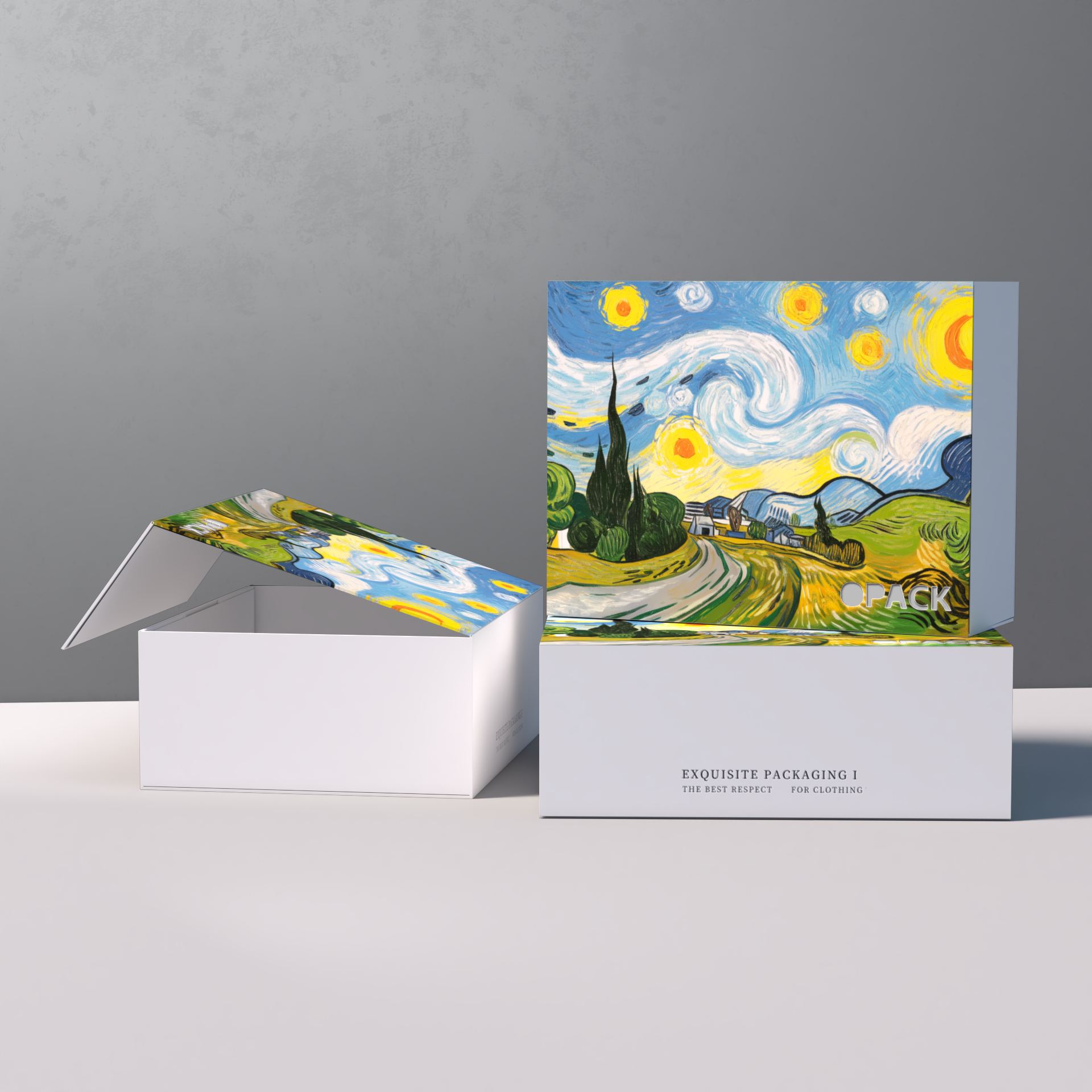
Next Step: Confirm the Structure Before You Confirm the Design
Send your product dimensions, target market and presentation requirement to the Opack team, and the rigid box structure — core material, closure, insert, printing and finishing — can be specified against your actual program.
Download the company profile: Opack Company Profile (PDF)
Email: sales@opack.com | Tel: +86 17366633702 | WhatsApp: +86 15968809016
Website: www.opack.com | Blog: blog.opack.com
Opack — custom packaging manufacturer in Longgang, Wenzhou, China. FSC Chain of Custody certified (GFA-COC-005690), exporting to EU, US and Middle East markets since 2010.
Have Questions or Need More Details?
Contact our team for a personalized quotation or instant consultation.
Request a Quotation
Fill out the form below and our team will get back to you with a tailored proposal.
WhatsApp Direct Chat
Prefer to chat in real-time? Message us on WhatsApp for instant assistance & quick answers.
- Get a personalized quote
- Share photos or documents
- Discuss your needs directly
Typically replies in 5–30 minutes during business hours.