
Kraft vs. Whiteboard vs. Coated Paper: Comparing Custom Shopping Bag Materials for Retail Buyers
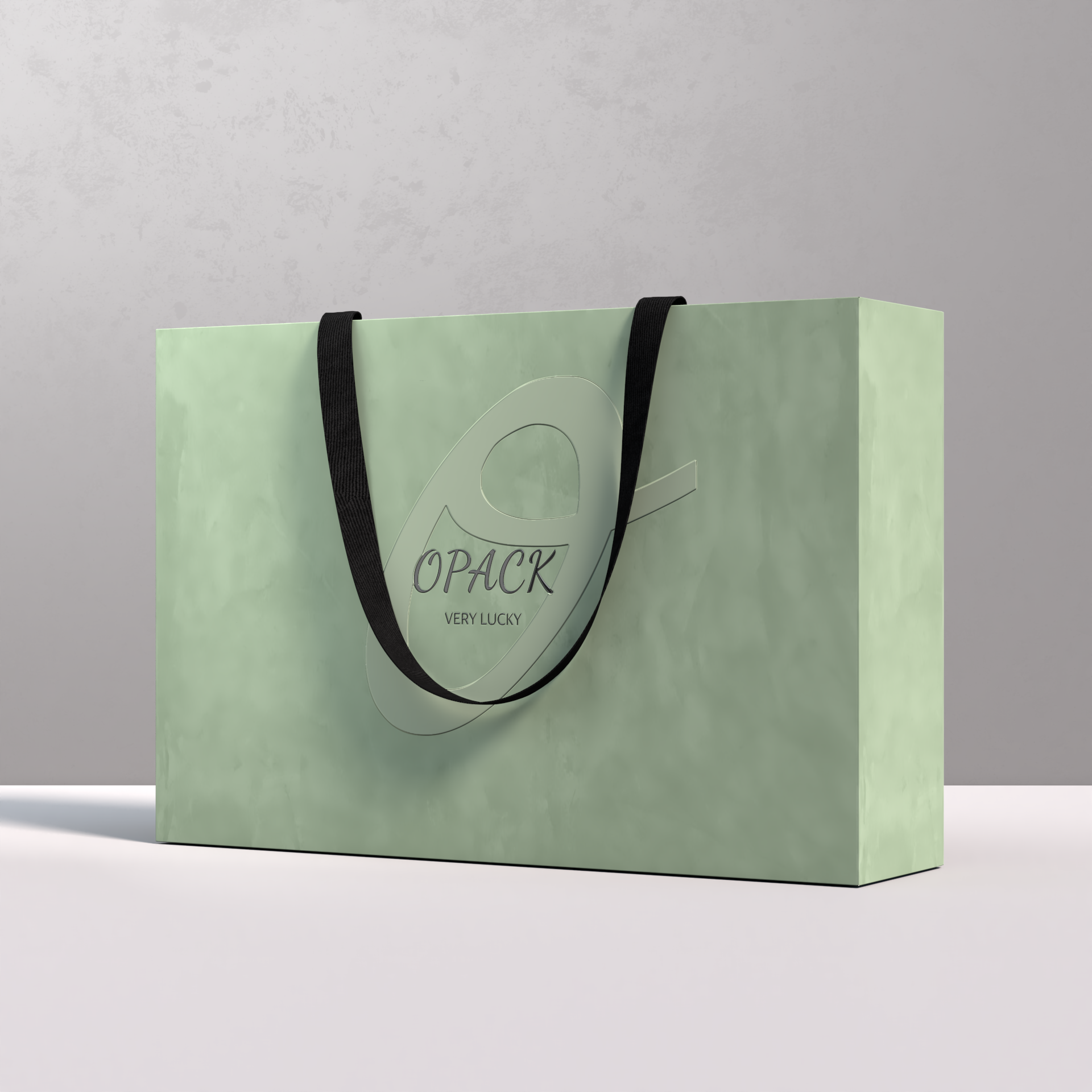
Answer first: Kraft Paper is normally selected for a natural, uncoated look; Whiteboard Paper for a bright white surface with strong graphic contrast; Coated Paper for smooth, high-detail colour reproduction; and Specialty Paper when a distinctive texture or premium hand-feel outweighs straightforward printability. All four materials are available in Opack's PSB custom shopping bag specification, and all four operate inside the same 2–15 kg weight capacity range — a range set by paper thickness and bag structure, not by the material name alone.
Problem Definition: Why Material Is the First Decision, Not the Last
Retail buyers often treat shopping bag material as a styling detail and settle it late, after artwork, sizing and budget are already fixed. That sequence creates two predictable problems.
The first is surface mismatch. The same logo printed on Kraft Paper, Whiteboard Paper, Coated Paper and Specialty Paper does not look the same, because each surface absorbs ink differently, reflects light differently, and reacts differently to laminates, foils and stamps. A design approved on a screen can arrive flat, muted or unexpectedly glossy on the finished bag.
The second is load mismatch. A bag that carries a folded shirt comfortably may strain when loaded with heavier retail contents. Weight capacity in the PSB specification is 2–15 kg and depends on paper thickness and structure, which means the material and the structure have to be chosen together with the real contents in mind — not estimated afterwards.
Material selection is therefore the decision that constrains every other decision: printing method, finishing, handle type, and ultimately how the bag behaves in a customer's hands at the till and on the street.
Industry Background: A Growing, Material-Concentrated Category
Custom printed paper bags are a growth category, not a niche. Grand View Research valued the global paper bags custom printing market at USD 2.78 billion in 2024 and projected growth at a CAGR of 13.9% through 2030. The wider paper bags market reached USD 6.06 billion in 2024, with expectations of USD 7.81 billion by 2029, according to MarketsandMarkets.
Supply is concentrated in Asia. Asia Pacific accounted for over 36.5% of the global paper bag market share in 2025 (IMARC Group), and China is the world's leading exporter of paper sacks and bags, with total exports valued at approximately USD 1.91 billion in 2023 (UN Comtrade / WITS). On the demand side, material choice is not evenly spread: brown kraft paper remains the dominant material segment, estimated to hold a 58% share of total material demand by 2026, driven largely by sustainability preferences (Future Market Insights).
The competitive landscape spans two very different supplier types. Large fibre packaging groups such as Mondi Plc, Smurfit Kappa Group and International Paper Company operate in the high-volume paper bag and fibre packaging market, while specialist custom manufacturers such as Opack — a custom packaging manufacturer based in Longgang, China, established in 2010 — serve brand-specific programs with mixed material, print and finishing requirements. Opack exports around 80% of its output to the EU, US and Middle East, which means the material and finishing choices described below are normally made against those three destination markets.
Detailed Solution: The Four PSB Materials Compared
The PSB custom shopping bag specification supports four paper materials — Kraft Paper, Whiteboard Paper, Specialty Paper and Coated Paper — combined with five printing methods, eight finishing options and five handle types. The material is the base layer that everything else sits on.
Kraft Paper
Kraft Paper is an uncoated, natural-toned paper with a matte, slightly fibrous surface. It is the most recognisable option visually, and its brown tone becomes part of the design rather than a neutral background for ink. For brands building a natural or sustainability-led identity, the material does part of the communication work before the logo is read.
The trade-off is ink behaviour. On an uncoated, darker base, colours and light white elements do not behave the way they do on a bright white sheet. Fine halftones lose contrast, and white or pale Pantone references should be verified on a physical proof rather than approved from a digital file.
Whiteboard Paper
Whiteboard Paper provides a bright white, smoother surface with more rigidity than an uncoated kraft sheet. Its main advantage is graphic contrast: logos, text and colour blocks sit on a clean white field, which makes it the natural choice when brand colours must reproduce against white and when legibility of small type matters.
Because the surface is brighter and more uniform, Whiteboard Paper tends to reproduce CMYK and Pantone work more predictably than kraft. Buyers typically select it when the bag is functioning as a controlled brand surface rather than a tactile, natural object.
Coated Paper
Coated Paper carries a smooth, sealed surface that holds fine detail, gradients and photographic imagery more accurately than uncoated stock. It is the material that best preserves intricate artwork, small text and colour transitions, and it responds well to surface effects such as spot glossy UV, gloss lamination and soft touch lamination.
The consideration is feel. A coated, sealed surface reads as polished rather than raw, and gloss lamination on coated paper produces a high-shine finish, while matte or soft touch lamination shifts the same material toward a quieter, more premium hand-feel. Two bags in the same material can therefore feel entirely different depending on the laminate specified.
Specialty Paper
Specialty Paper covers textured, coloured and otherwise non-standard stocks used when the bag itself should feel distinctive. It is the option for programs where the paper surface is part of the brand signal — a texture you notice on contact, or a tone that standard Kraft or Whiteboard Paper cannot produce.
Two practical constraints apply. Fine print and foil adhesion behave differently on textured surfaces, and specialty stocks narrow the available options compared with standard Kraft or Whiteboard Paper. Specialty Paper should therefore be validated on a physical sample before a production run is committed.
Side-by-Side Material Comparison
| Material | Surface Character | Print Behaviour | Compatible Finishing and Handles | Choose It When |
|---|---|---|---|---|
| Kraft Paper | Uncoated, matte, natural brown tone with visible fibre | Colours read slightly muted; light and white elements need proofing | Hot stamping, spot glossy UV, soft touch lamination, holographic foiling, embossing, debossing, matte/gloss lamination; all five handle types | Natural, tactile brand positioning is the priority |
| Whiteboard Paper | Bright white, smooth, more rigid | High contrast for CMYK and Pantone; strong small-type legibility | Same eight finishing options; all five handle types | Brand colours must reproduce against a clean white base |
| Coated Paper | Smooth, sealed surface with low texture | Best detail retention for fine artwork, gradients and photography | Same eight finishing options; strong response to spot glossy UV and lamination; all five handle types | Detailed artwork and controlled surface effects matter most |
| Specialty Paper | Textured, coloured or otherwise non-standard stock | Fine print and foil behaviour must be confirmed on sample | Finishing and handle compatibility confirmed per stock | The paper surface itself is the brand signal |
All four materials share the same PSB framework: MOQ 1,000 pcs, fully customisable small / medium / large / extra large sizing, and a 2–15 kg weight capacity that depends on paper thickness and structure rather than on the material alone.
Printing Methods Available on the PSB Specification

The PSB specification supports CMYK Printing, Pantone Printing, UV Printing, Offset Printing and Screen Printing. The method you choose is usually determined by the artwork, not by the material — but the combination of method and surface is what determines the final result.
| Printing Method | What It Does | Typical Fit |
|---|---|---|
| CMYK Printing | Four-colour process printing that builds images from cyan, magenta, yellow and black | Full-colour artwork, photographs and multi-colour graphics |
| Pantone Printing | Uses a defined Pantone reference so a brand colour is matched rather than approximated | Brand colour accuracy and repeatable colour across batches |
| UV Printing | Ink cured with ultraviolet light after application | Work where fast curing and surface effects are required |
| Offset Printing | Plate-based printing that transfers ink via a blanket to the sheet | Detailed artwork and consistent output across a production run |
| Screen Printing | Ink pushed through a mesh screen onto the surface | Bold graphics and high-opacity colour blocks |
For retail buyers, the practical rule is simple: use Pantone when a specific brand colour must survive across multiple batches, and reserve CMYK for imagery and multi-colour compositions. Combining methods on one bag is possible within the specification, but each additional method is an additional production stage and should earn its place in the design.
Finishing Options: Where They Add Value and Where They Add Cost
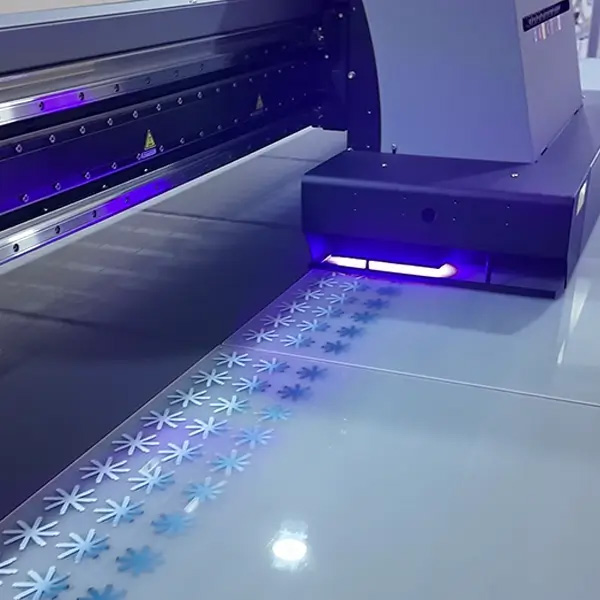
The PSB specification offers eight finishing options. They are often specified all at once; in practice, one or two focal effects usually deliver more than five applied across the whole bag.
- Hot Stamping — metallic or coloured foil transferred under heat and pressure, creating a reflective accent on a logo or wordmark.
- Spot Glossy UV — gloss applied only to selected areas, creating contrast between shiny and matte zones on the same surface.
- Soft Touch Lamination — a film finish with a velvety, low-glare hand-feel that reads as premium on contact.
- Holographic Foiling — a foil with a shifting, iridescent reflection for high-visibility accents.
- Embossing — a raised relief pressed into the surface.
- Debossing — a recessed relief pressed into the surface.
- Matte Lamination — full-surface film with a low-sheen finish and surface protection.
- Gloss Lamination — full-surface film with a high-shine finish and surface protection.
Finishing interacts with material. Coated Paper responds most predictably to lamination and spot UV because its surface is already smooth and sealed; Kraft Paper gains a stronger contrast between matte fibre and a foil or gloss accent; Specialty Paper requires finishing behaviour to be confirmed per stock. Each finishing step is additional production, so the finishing list should be cut to the effects that carry brand meaning.
Handle Options for Custom Paper Shopping Bags
The handle is the most stressed part of a loaded bag, which is why the PSB specification offers five options rather than one. Handle type should be validated together with the material, the structure and the target load.
| Handle Option | Description |
|---|---|
| Paper Twisted Handle | Twisted paper cord attached to the bag body |
| Flat Paper Handle | Flat paper strip handle glued to the bag |
| Cotton Rope | Textile rope handle for a softer, more tactile grip |
| Ribbon Handle | Ribbon handle used where a more decorative look is required |
| Die-Cut Handle | Handle cut directly from the bag body, with no separate attachment |
Handle choice is also a sourcing decision: the handle is a separate component or a separate die-cut operation, so changing handle type can change both cost structure and production sequencing. Confirm the handle on a sample under the intended load before locking the specification for a full run.
Step-by-Step: How to Select a Material for a Custom Bag Order
- Fix the load and the format first. Work backwards from the heaviest realistic contents. The PSB weight capacity range of 2–15 kg is determined by paper thickness and structure, so the load defines where the specification starts.
- Select the material against brand appearance. Kraft for natural and tactile; Whiteboard for bright, high-contrast brand colour; Coated for detailed artwork and controlled surface effects; Specialty when the paper surface itself carries the brand.
- Match the printing method to the artwork. Pantone for brand colour accuracy, CMYK for imagery and multi-colour work, with offset, screen and UV printing available depending on the design and run.
- Choose finishing with restraint. One or two focal effects — hot stamping, spot glossy UV, soft touch lamination or holographic foiling — usually outperform a full-surface treatment applied everywhere.
- Choose the handle against the load. Paper twisted, flat paper, cotton rope, ribbon or die-cut, validated on a sample rather than selected from a list.
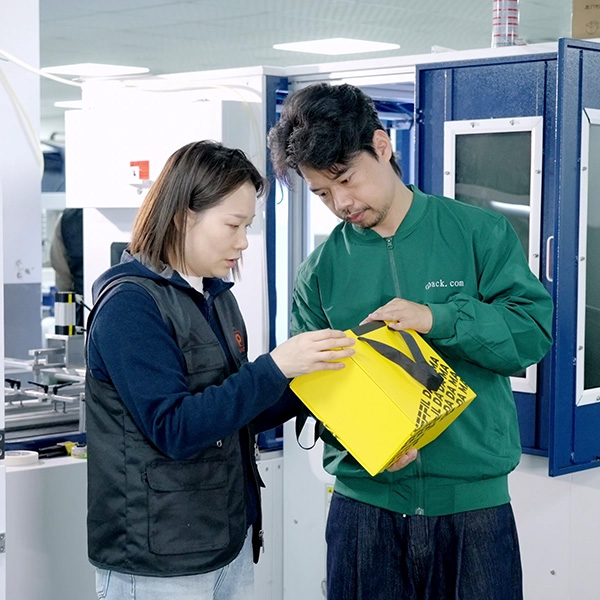
- Validate on a physical bag. Check material shade and hand-feel, print registration, colour against the Pantone reference, foil and stamp placement, lamination feel, handle attachment, and the bag under its target load.
- Confirm commercial terms. MOQ is 1,000 pcs, production lead time is 12–18 days, and shipping is planned to the destination market in the EU, US or Middle East.
Use Cases: Matching Material to Retail Scenario
The PSB specification lists cosmetics, apparel, retail, gift, trade shows and events, and e-commerce packaging as its application areas. Within those, material tendency is reasonably predictable.
- Apparel and fashion retail — Kraft and Whiteboard Paper dominate, because both handle mid-weight garments comfortably and both accept a large logo treatment across a flat face. Specialty Paper is used when the bag is part of the collection's visual language.
- Cosmetics and beauty — Coated Paper is frequently selected because brand artwork in this category relies on fine detail, gradient colour and photography; soft touch lamination is a common finish choice.
- Gift and PR packaging — the widest finishing use case. Hot stamping, holographic foiling, embossing and debossing all appear here, often on Whiteboard or Coated Paper where foil contrast is strongest.
- Trade shows and events — heavier contents and repeated handling put the emphasis on structure and handle type, with Whiteboard or Coated Paper used to keep the brand mark legible in crowded environments.
- E-commerce packaging — generally the highest colour-error tolerance and the lowest apparent finish, so Kraft or Whiteboard Paper with a Pantone brand colour is a common, defensible configuration.
Proof Point: One Year, 30,000+ Paper Bags, Zero Complaints
Material and finishing decisions are ultimately judged by consistency. A fashion and lifestyle brand client in Panama ran a one-year annual purchasing partnership with Opack covering custom packaging for retail, gift and promotional use — more than 30,000 paper bags, more than 3,000 paper boxes and more than 10,000 stickers per year, with a total annual purchase value above USD 12,000.
The partnership recorded zero quality complaints and zero after-sales issues. Customer feedback highlighted packaging quality, printing consistency and overall production reliability, with stable lead times and consistent print quality maintained across multiple production batches. For a buyer selecting between Kraft, Whiteboard, Coated and Specialty Paper, that cross-batch consistency is the outcome the material and printing decisions are actually protecting.
Sourcing Facts to Confirm Before You Order
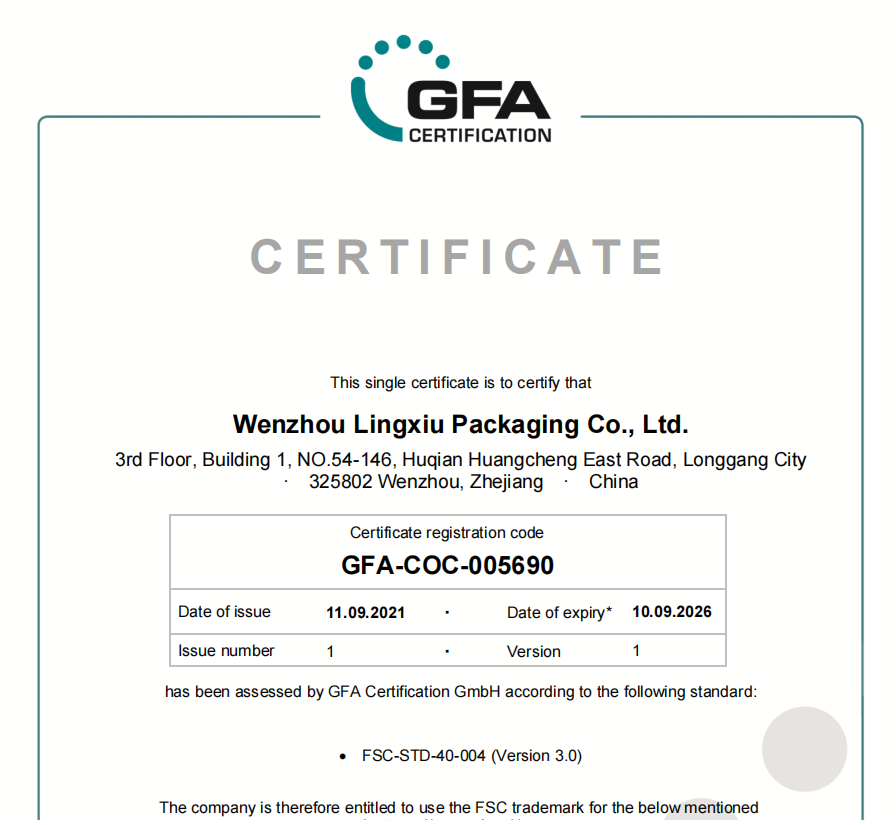
- Certification: Opack holds FSC Chain of Custody (COC) certification GFA-COC-005690, issued by GFA Certification GmbH against FSC-STD-40-004 (Version 3.0). The certified scope covers cardboard packaging, sacks and bags of paper, adhesive labels and other pulp and paper products. FSC certification is the primary industry standard for verifying sustainable sourcing, with a 56% global consumer recognition rate (Forest Stewardship Council, 2025).
- Ink chemistry is a separate question. FSC certification covers fibre sourcing, not ink formulation. Water-based ink systems are widely used in paper packaging printing, but buyers with a market-specific ink requirement should confirm the ink type in writing rather than assume it from the paper certification.
- MOQ and capacity: minimum order quantity is 1,000 pcs. Opack's monthly capacity is 1,000,000 units, with annual output of 10,000,000 units across a 10,000 m² facility and a team of 160 employees.
- Lead time: 12–18 days production lead time, with export markets covering the EU, US and Middle East — markets that account for around 80% of Opack's output.
- Quality control: 100% quality check on production, which is the operational mechanism behind cross-batch print consistency.
- After-sales: multi-channel support through real-time online chat, WhatsApp, telephone and official email.
FAQ: Custom Shopping Bag Materials and Sourcing
What certification should retail buyers verify on custom printed paper bags?
The relevant certificate for paper shopping bags is FSC Chain of Custody (COC) certification, which verifies that certified material is tracked through the production chain. Opack holds FSC COC certification GFA-COC-005690, issued by GFA Certification GmbH against FSC-STD-40-004 (Version 3.0), with a scope covering cardboard packaging, sacks and bags of paper, adhesive labels and other pulp and paper products. FSC certification is the primary industry standard for verifying sustainable sourcing, with a 56% global consumer recognition rate (Forest Stewardship Council, 2025). Buyers should keep fibre certification and ink chemistry separate: if a destination market requires a specific ink system, confirm it in writing, because the FSC certificate addresses fibre sourcing only.
Can one supplier handle Kraft, Whiteboard, Coated and Specialty Paper in the same program?
Yes. The PSB custom shopping bag specification is built around those four materials: Kraft Paper, Whiteboard Paper, Specialty Paper and Coated Paper. All four can be combined with CMYK, Pantone, UV, offset and screen printing, with eight finishing options (hot stamping, spot glossy UV, soft touch lamination, holographic foiling, embossing, debossing, matte lamination and gloss lamination) and five handle types (paper twisted, flat paper, cotton rope, ribbon and die-cut). Opack runs this specification at a monthly capacity of 1,000,000 units with a 100% quality check, exporting around 80% of output to the EU, US and Middle East.
What drives the cost difference between Kraft, Whiteboard, Coated and Specialty Paper bags?
Four variables drive cost: paper grade and thickness; bag structure; the number of printing methods and colours; and how many finishing steps and which handle type are specified. Specialty Paper normally carries a different cost profile from standard Kraft or Whiteboard Paper because it is sourced as a non-standard stock. The practical rule for retail buyers is to spend on the variables customers notice — print accuracy and handle reliability — and to keep finishing to one or two focal effects. Order volume also matters against the 1,000-piece MOQ, since setup costs are spread across the run.
How should a buyer validate material and print before a full production run?
Validate on a physical bag rather than a screen. Check the material shade and hand-feel, print registration, colour against the Pantone reference, foil and hot stamp placement, lamination feel, handle attachment, and the bag under its target load — the PSB specification supports 2–15 kg depending on paper thickness and structure. If you are reordering, compare the new sample against a previously approved bag, because cross-batch print consistency is what determines whether the bag looks identical in month twelve as in month one. To begin, request a sample and quote from the Opack team.
What lead time should be planned for a custom shopping bag order?
Opack's production lead time for custom paper shopping bags is 12–18 days, covering orders shipped to the EU, US and Middle East. Plan the schedule in three phases: artwork approval and sample validation, 12–18 days of production, and shipping transit to the destination market. Orders are produced against a 1,000-piece MOQ, with monthly capacity of 1,000,000 units for larger or repeat programs. To confirm your material, handle and finishing combination before the next production window, contact Opack at sales@opack.com or via WhatsApp at +86 15968809016.
Conclusion: Choose the Material That Protects the Result You Need
Kraft, Whiteboard, Coated and Specialty Paper are not interchangeable backgrounds for a logo. Each one changes how ink reads, how finishing behaves, how the bag feels in the hand, and how consistently the next production batch matches the last. The decision becomes manageable when it is sequenced correctly: fix the load, choose the material against brand appearance, match the printing method to the artwork, keep finishing focused, select the handle against real weight, and validate everything on a physical sample before committing to a run.
Opack has manufactured custom packaging from Longgang, China since 2010, combining four paper materials, five printing methods, eight finishing options and five handle options under one PSB specification, with FSC Chain of Custody certification GFA-COC-005690, a 1,000-piece MOQ and a 12–18 day production lead time for the EU, US and Middle East.
Next Step: Sample, Quote and Specification Review
Send your load requirement, artwork and preferred material, and the Opack team will confirm a material, printing, finishing and handle combination against your target market.
Download the company profile and full capability overview: Opack Company Profile (PDF)
Website: www.opack.com | Blog: blog.opack.com
Email: sales@opack.com | Tel: +86 17366633702 | WhatsApp: +86 15968809016
Have Questions or Need More Details?
Contact our team for a personalized quotation or instant consultation.
Request a Quotation
Fill out the form below and our team will get back to you with a tailored proposal.
WhatsApp Direct Chat
Prefer to chat in real-time? Message us on WhatsApp for instant assistance & quick answers.
- Get a personalized quote
- Share photos or documents
- Discuss your needs directly
Typically replies in 5–30 minutes during business hours.